Why Does Goodbye Hurt So Much? The Science of Attachment, Love, and Letting Go
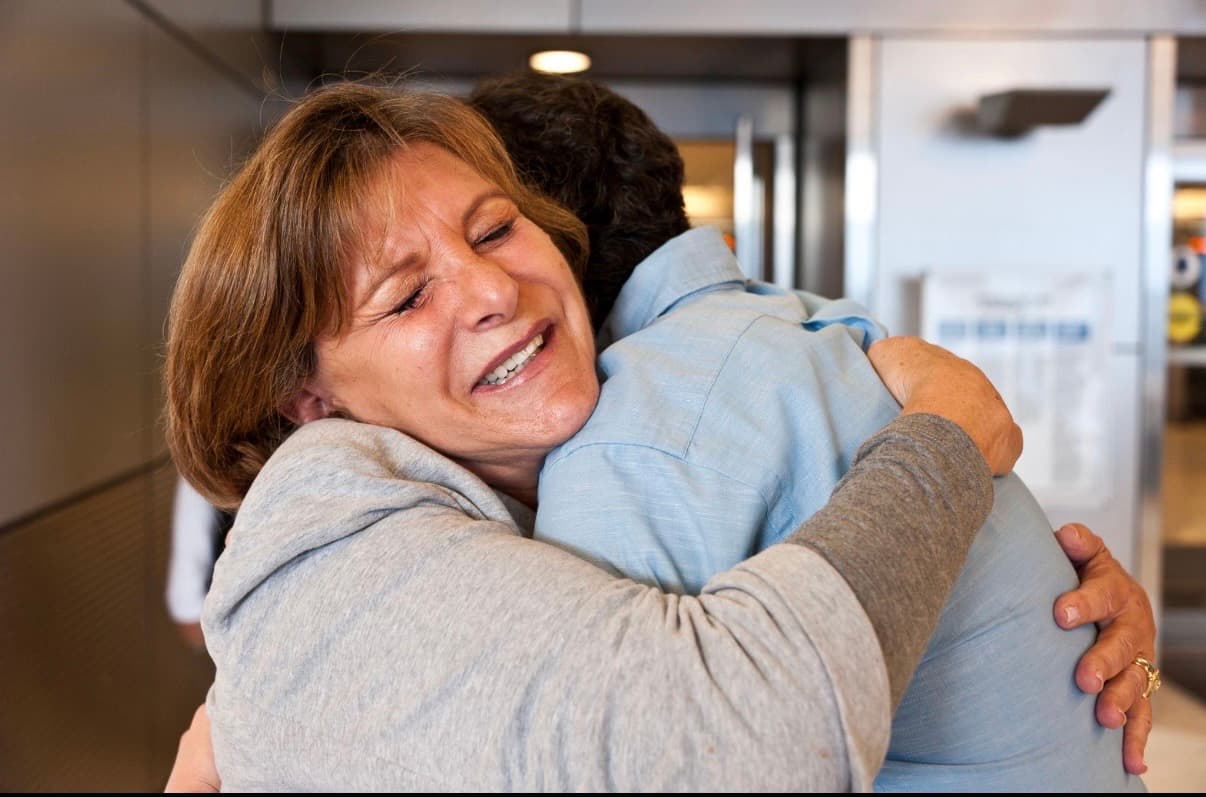
From a child refusing to share a favorite toy to a parent crying at an airport, attachment shapes our lives. But why does something as beautiful as love sometimes become a source of unbearable pain?
By Dr. Vijay Kumar, MD, MPH, PhD
An evidence-based reflection on human connection, separation, grief, and the art of loving without possessing.
An Airport, a Security Line, and a Lesson About Human Nature
I am standing in an airport security line, waiting for my turn to go through the checkpoint. Around me, hundreds of people are moving in different directions. Some are rushing to catch flights, some are checking their passports, and others are trying to fit one last item into an already overstuffed carry-on bag.
But what captures my attention is not the airport's activity. It is the emotion unfolding around me.
A mother is hugging her grown son, holding him a few seconds longer than necessary. A father is trying to remain composed, but his eyes reveal what his face is attempting to hide. A young couple is saying goodbye, whispering words that only they can hear. An elderly woman is wiping tears from her cheeks as a family member walks toward the security checkpoint.
Some people wave repeatedly until their loved ones disappear from sight. Others turn away quickly, perhaps because another second would make the separation even harder.
Watching these moments, I find myself thinking about a fascinating aspect of human nature:
Why does separation hurt so much?
After all, many of these people are not saying goodbye forever. Their loved ones may return in a few weeks or months. They can communicate through phone calls, text messages, and video chats. Yet the tears are real.
When someone dies, families grieve because a loved one has been separated from them permanently. When marriages end, people may experience tremendous emotional suffering because a relationship that once provided belonging and security has disappeared. When children leave home for college, parents sometimes struggle with the sudden emptiness.
Even when we lose a pet, a cherished possession, a childhood home, or a familiar way of life, we may experience grief.
The circumstances differ, but one underlying theme connects them: attachment and the pain of losing what has become part of our lives.
This raises an important question.
Is attachment a blessing, a burden, or both?
1. Attachment Begins Long Before We Understand Love
To understand why adults cry at airports, we must first understand the emotional world of a child.
Imagine a toddler playing with a favorite toy. Another child approaches and reaches for it.
Immediately, the toddler pulls the toy closer and declares:
"Mine!"
Sometimes the child cries, screams, or becomes upset when someone attempts to take it away.
Adults may interpret this behavior as selfishness. But something more interesting is happening developmentally.
Young children are beginning to understand ownership, identity, personal boundaries, and control over their environment. The word mine represents an emerging distinction between the self and the outside world.
Research on early childhood development suggests that sharing increases considerably during the second year of life. As children develop, they become increasingly capable of understanding another person's needs and responding generously.
Interestingly, the same child who loudly declares "mine" can also demonstrate generosity.
Attachment to possessions is not identical to emotional attachment to people. However, both involve something psychologically significant: the meaning we assign to what belongs in our personal world.
As children grow, the objects change.
A toy becomes a bicycle. A bicycle becomes a car. A car becomes a house. Later, we may become deeply attached to our professional identity, social status, relationships, traditions, and memories.
The objects become more sophisticated, but the emotional language often remains remarkably familiar.
My house. My family. My career. My reputation. My community.
Possession itself is not necessarily harmful. It can create responsibility, stability, and identity.
The difficulty begins when we believe that our happiness or personal worth cannot survive without something we consider ours.
2. The Science of Attachment: Why Humans Need Each Other
Human beings are biologically social creatures.
Unlike many animals that can function independently shortly after birth, human infants remain dependent on caregivers for an unusually long period. A newborn cannot feed, protect, or regulate itself adequately without assistance.
For human survival, closeness to caregivers is essential.
British psychiatrist and psychoanalyst John Bowlby developed attachment theory to explain how early relationships provide safety, comfort, and emotional security.
His work helped establish that attachment is not simply a learned preference or an emotional weakness. It is a fundamental developmental system.
Babies seek proximity to familiar caregivers because closeness offers protection.
Selective attachment bonds typically become clearly observable during infancy. Babies may seek familiar caregivers, become distressed during separation, and demonstrate wariness toward unfamiliar people.
Think about a baby crying when the mother leaves the room.
The mother may be only a few feet away, but the infant cannot fully understand the situation as an adult would.
The crying is a biological communication system. It effectively announces:
I need my source of security.
As we grow older, the expression of attachment changes, but our need for meaningful human relationships does not disappear.
The infant who cries when a parent leaves the room may become the teenager who misses friends, the adult who struggles after a breakup, or the elderly spouse who feels lonely after losing a lifelong companion.
Our relationships evolve, but our need for belonging continues.
3. Why Separation Can Actually Feel Physically Painful
Have you ever heard someone say:
"My heart is broken."
"I feel an emptiness in my chest."
"I cannot eat or sleep since they left."
These expressions are more than poetic descriptions.
Emotional distress can produce genuine physical sensations.
In a landmark 2003 study published in Science, researchers Naomi Eisenberger, Matthew Lieberman, and Kipling Williams examined brain activity during social exclusion.
Participants took part in a virtual ball-tossing game while their brain activity was monitored. When they were excluded, activity increased in brain regions associated with distress, including the anterior cingulate cortex.
The researchers found an association between activity in this region and participants' reported emotional distress.
Later studies suggested that some neural systems involved in physical pain and social rejection overlap. However, scientists continue to debate precisely what that overlap means. Emotional pain and physical injury are not neurologically identical.
Nevertheless, these findings help explain why losing a meaningful relationship can feel physically overwhelming.
During significant emotional distress, people may experience changes in sleep, appetite, concentration, muscle tension, and autonomic nervous system activity.
That sensation of a heavy chest during a goodbye may be part of a real physiological stress response.
Of course, severe or unexplained chest pain should never automatically be attributed to emotional distress. It may require urgent medical evaluation.
Our bodies and emotions are interconnected.
Perhaps this is why a simple airport farewell can sometimes feel more powerful than an entire conversation.
The mind understands that the separation may be temporary. The emotional system responds to the loss of immediate closeness.
4. Why Some People Cry and Others Remain Silent
Returning to the airport, I notice something else.
Not everyone expresses sadness in the same way.
One person cries openly. Another smiles and waves. Someone else becomes unusually quiet. A parent may spend the final minutes giving practical instructions:
"Did you pack your medicine?"
"Keep your passport safe."
"Call me when you land."
These instructions may sound ordinary, but they can be expressions of love.
Psychologists recognize that individuals differ in their attachment patterns, emotional regulation, personalities, cultural expectations, and previous experiences.
Some people are comfortable expressing vulnerability. Others have learned to conceal their feelings.
Research on attachment identifies patterns commonly described as secure, anxious, avoidant, and disorganized, although adult attachment is more complex than four rigid categories.
A securely attached individual may experience sadness during separation while maintaining confidence in the relationship.
Someone with greater attachment anxiety may experience intense fear of abandonment or need frequent reassurance.
Someone with avoidant tendencies may suppress or minimize outward emotional expression.
These patterns are not permanent labels or diagnoses. They can vary across relationships and change with experience.
Importantly, the absence of tears does not mean the absence of love.
The father who walks away silently may be experiencing as much emotional pain as the mother who cries openly.
Sometimes the deepest feelings are expressed without a single tear.
5. When Separation Becomes Permanent: Understanding Grief
Temporary separation is painful because we miss someone.
Death introduces another dimension: the realization that physical reunion is no longer possible.
A spouse who has shared forty years of marriage may suddenly find the other side of the bed empty.
A parent may continue setting an extra plate at the dinner table out of habit.
Someone may instinctively reach for the phone to call a loved one before remembering that the person has died.
These experiences reveal how deeply relationships become woven into our daily routines, memories, and identities.
Grief is not simply sadness. It may involve anger, guilt, disbelief, loneliness, relief, numbness, or even moments of happiness.
People grieve differently depending on their relationship, circumstances, culture, beliefs, and support systems.
There is no universal timetable for mourning.
Some people gradually adjust within months. Others experience waves of grief for years, particularly around anniversaries, birthdays, holidays, and meaningful family occasions.
Not every grief reaction is a mental health disorder. However, persistent and disabling grief sometimes requires professional support.
Prolonged grief disorder is a recognized clinical condition involving persistent intense longing or preoccupation following a death, accompanied by significant impairment and symptoms that extend beyond expected cultural and social norms.
Seeking help does not diminish love or disrespect the deceased.
It acknowledges that the human mind sometimes needs assistance adapting to profound loss.
6. Divorce: Grieving Someone Who Is Still Alive
Death is not the only separation that produces grief.
Divorce can create a particularly complicated emotional experience because the person we have lost may still be living nearby.
A couple may have shared a home, raised children, celebrated holidays, traveled together, and built decades of memories.
When the relationship ends, the loss extends beyond the individual.
People may also grieve the future they had imagined.
The retirement they planned.
The home they expected to grow old in.
The family celebrations they believed they would always share.
The identity of being someone's husband or wife.
Research examining adult attachment and romantic loss suggests that separation distress is closely related to the disruption of established attachment bonds and the need to reorganize emotional relationships.
This helps explain why divorce can be painful even when both individuals recognize that the relationship was unhealthy.
A person may intellectually understand that separation is necessary while emotionally struggling to accept it.
But an important distinction must be made:
Attachment is not always evidence that a relationship should continue.
People can become attached to relationships that are controlling, emotionally harmful, or abusive.
The fear of separation should never be used to justify remaining in an unsafe situation.
Healthy love includes respect, dignity, trust, and freedom.
Attachment without these qualities can become a source of suffering rather than security.
7. Is Attachment the Same as Love?
This is perhaps the most important question in our discussion.
We frequently use love and attachment interchangeably, but they are not identical.
Love may involve affection, compassion, commitment, intimacy, concern, and the desire for another person's well-being.
Attachment involves an emotional bond and a tendency to seek closeness, comfort, and security.
The two often coexist.
But attachment can also involve fear, dependency, jealousy, or possessiveness.
Consider two statements:
"I love you, and I want you to be happy."
"I love you, and I cannot tolerate your independence."
Both may be described as love, but they represent very different emotional experiences.
Healthy attachment creates a secure foundation from which people can grow.
Unhealthy possessiveness may restrict growth.
A parent who loves a child wants to protect that child, but also wants the child to become independent.
A spouse who genuinely loves a partner respects the partner's individuality.
A friendship becomes stronger when people can maintain closeness without constant control.
Perhaps mature love is not about holding someone tightly enough that they can never leave.
It is about creating a relationship secure enough that distance does not destroy trust.
8. The Empty Nest: When Children Grow Up and Leave
Few experiences demonstrate the complexity of attachment more clearly than watching children become independent adults.
Parents spend years caring for their children.
They teach them to walk, speak, read, and navigate the world. They celebrate their achievements and worry about their struggles.
Then one day, the same child who once needed help tying shoelaces leaves home for college, employment, marriage, or a new life in another city or country.
The parents have achieved what they worked so hard to accomplish.
Their child has become independent.
Yet the achievement can bring unexpected sadness.
The bedroom is quiet.
The dinner table has an empty chair.
The daily conversations become occasional phone calls.
Parents may feel pride and grief simultaneously.
This is sometimes described as empty-nest distress, although it is not a universal experience. Many parents also experience greater freedom, satisfaction, and opportunities for personal growth after their children leave home.
The important lesson is that a child's independence does not represent the end of parental attachment.
It represents a transformation of the relationship.
Parents gradually move from directing their children's lives to supporting their choices.
Love remains, but its expression changes.
Perhaps one of the greatest accomplishments of parenthood is raising children who are confident enough to leave, while ensuring they always feel welcome to return.
9. Technology Connects Us, but Cannot Eliminate Separation
Today, we live in an extraordinary technological era.
A parent in America can video-call a child in India within seconds.
Grandparents can watch their grandchildren grow through digital photographs.
Families separated by continents can celebrate birthdays, festivals, and important milestones virtually.
Technology has undoubtedly reduced some of the practical barriers created by distance.
Yet airport goodbyes remain emotional.
Why?
Because communication and physical presence are not identical experiences.
A video call allows us to see someone's face, but it cannot fully reproduce the experience of sitting beside that person, sharing a meal, or offering a reassuring hug.
Human relationships involve sensory experiences, familiar routines, shared environments, and physical closeness.
Digital communication can preserve connection, but it does not necessarily eliminate longing.
At the same time, technology can create new emotional challenges.
When someone does not answer a message immediately, an anxious individual may interpret the silence as rejection.
A delayed response can trigger unnecessary worry.
Healthy digital relationships therefore require trust, realistic expectations, and respect for one another's responsibilities.
A missed call is not automatically evidence of declining affection.
Sometimes love means allowing someone to be temporarily unavailable without questioning the relationship.
10. What Spiritual Traditions Teach About Attachment
Long before modern neuroscience studied attachment, philosophers and spiritual teachers explored the relationship between desire, possession, impermanence, and suffering.
In Indian philosophical traditions, particularly the teachings of the Bhagavad Gita, attachment to outcomes is examined as a potential source of emotional disturbance.
One important teaching encourages individuals to perform their responsibilities sincerely without becoming excessively dependent on specific results.
This principle is sometimes misunderstood as a recommendation to stop loving people or caring about the world.
I interpret it differently.
We can love deeply while recognizing that we cannot control every outcome.
We can care for our children without controlling their futures.
We can cherish our relationships without treating people as possessions.
We can appreciate material comforts while remembering that possessions are temporary.
Buddhist teachings also explore impermanence and the suffering associated with clinging to changing experiences.
These philosophical perspectives should not be confused with scientific explanations, but they offer valuable opportunities for reflection.
Life constantly changes.
Children grow.
Parents age.
Friendships evolve.
Careers end.
Relationships transform.
And eventually, every human life reaches its conclusion.
Accepting impermanence does not mean becoming indifferent.
It means appreciating what exists without assuming that it will remain unchanged forever.
Perhaps awareness of impermanence can actually deepen gratitude.
When we recognize that moments are temporary, we may become more attentive to the people sharing them with us.
11. Can We Learn to Love Without Suffering?
It would be unrealistic to suggest that human beings can eliminate the pain of separation.
Nor should that necessarily be our goal.
If relationships are meaningful, their disruption will often produce sadness.
The objective is not to become emotionally detached from everyone.
The objective is to develop the resilience to experience separation without losing our capacity to live meaningfully.
Psychological resilience does not mean never crying.
It means being able to adapt, seek support, and gradually restore emotional balance.
Secure relationships can help people tolerate temporary distance because trust continues even when physical closeness is interrupted.
Emotional independence also matters.
When our entire identity depends on one relationship, separation can become overwhelming.
Maintaining friendships, meaningful work, interests, spiritual practices, and personal goals provides additional sources of purpose.
This is not about replacing loved ones.
It is about recognizing that human beings are capable of multiple meaningful connections.
We can miss someone and still enjoy life.
We can grieve a loss and eventually experience happiness again.
We can cherish the past while remaining open to the future.
These experiences are not contradictions.
They are part of emotional maturity.
12. Practical Ways to Cope With Separation
Understanding attachment is helpful, but applying that knowledge to everyday life is equally important.
Here are several practical approaches that can make separation more manageable.
Acknowledge your feelings. If you feel sad when a loved one leaves, allow yourself to experience that emotion. Crying is not a sign of weakness. Neither is remaining composed.
Create meaningful goodbye rituals. A hug, a photograph, a shared meal, or a simple promise to call after arrival can provide reassurance and continuity.
Maintain connection without excessive monitoring. Agree on reasonable communication expectations. Constantly checking someone's location or demanding immediate responses can increase anxiety rather than reduce it.
Preserve your routines. Exercise, sleep, nutritious meals, hobbies, and social interaction support psychological and physical well-being during emotionally difficult periods.
Practice mindfulness. Mindfulness can help individuals notice feelings of sadness or fear without immediately reacting to them. It does not erase grief, but it may improve emotional regulation.
Encourage independence in children. Help children develop confidence through age-appropriate responsibilities, predictable routines, and reassurance that trusted caregivers remain available.
Seek support when needed. Persistent depression, severe anxiety, inability to function, or prolonged disabling grief deserves professional attention.
Finally, remember that healing does not always mean forgetting.
Sometimes it means learning to carry a relationship differently.
13. The Paradox of Human Attachment
As I continue standing in the airport security line, I begin to appreciate the paradox unfolding around me.
We spend our lives forming attachments.
We become attached to parents, siblings, friends, spouses, children, homes, careers, communities, and traditions.
These attachments give life meaning.
They create belonging.
They motivate us to care for one another.
They provide comfort during difficult times.
Yet the same attachments make us vulnerable to separation.
The stronger the emotional bond, the more significant its disruption may feel.
Does this mean we should avoid becoming attached?
I do not believe so.
A life without meaningful relationships might contain fewer painful goodbyes, but it would also lack much of the companionship, affection, and shared experience that make life worthwhile.
The challenge is not to eliminate attachment.
It is to distinguish healthy connection from unhealthy clinging.
Healthy attachment allows love and independence to coexist.
Unhealthy attachment can make another person's presence feel essential to our very existence.
Healthy attachment says, "You matter deeply to me."
Possessiveness says, "You belong to me."
Healthy attachment encourages growth.
Possessiveness fears change.
Understanding this difference may help us build stronger families, healthier marriages, more supportive friendships, and more resilient communities.
14. A Personal Reflection: What the Airport Teaches Us
Airports are remarkable places.
They bring together people from different countries, religions, cultures, languages, and economic backgrounds.
Yet despite these differences, human emotions often look remarkably similar.
A mother's tears need no translation.
A father's quiet embrace requires no explanation.
A child waving goodbye understands separation long before understanding geography.
A husband and wife holding hands for one final moment communicate something that words cannot always express.
Standing here, I realize that the security checkpoint represents more than a boundary between passengers and visitors.
It is a place where human beings confront a small but meaningful truth about life.
We cannot always remain physically close to the people we love.
Sometimes distance is necessary for education, employment, opportunity, responsibility, or personal growth.
Sometimes separation is temporary.
Sometimes relationships end.
And sometimes death makes separation permanent.
But the meaning of a relationship is not measured only by physical proximity.
Love can continue across distance.
Memories can remain meaningful after loss.
Gratitude can coexist with grief.
And genuine affection can survive changes in circumstances.
Perhaps the most valuable lesson is to appreciate people while they are present rather than waiting until separation reminds us of their importance.
Call your parents while you can.
Spend time with your children while they are growing.
Express appreciation to your spouse.
Reconnect with an old friend.
Resolve unnecessary disagreements.
Do not assume there will always be another opportunity.
Life is uncertain, but that uncertainty should inspire appreciation rather than constant fear.
Conclusion: The Beauty and Pain of Letting Go
As the security line moves forward, another family completes its farewell.
There is one final embrace.
A few tears.
A reassuring smile.
Then the traveler turns toward the checkpoint while the family slowly walks away.
I wonder how many similar scenes unfold at airports around the world every single day.
Millions of people leaving.
Millions waiting.
Millions hoping to meet again.
And I return to the question that first entered my mind.
Why does goodbye hurt?
Perhaps because human beings are not designed merely to exist beside one another.
We are designed to connect.
We form emotional bonds that become part of our sense of safety, identity, and belonging. When physical closeness disappears, even temporarily, we feel the change.
That pain does not necessarily mean something is wrong.
Often, it means something meaningful exists.
But love must also make room for freedom.
A child must eventually release the toy.
Parents must eventually allow their children to explore the world.
Partners must respect one another's individuality.
And all of us must gradually learn that caring deeply does not give us control over life's uncertainties.
The greatest expression of love may not be how tightly we hold someone, but how sincerely we wish them well when life requires us to let go.
So the next time you witness someone crying at an airport, do not see only sadness.
See a lifetime of memories.
See relationships that have shaped identities.
See the invisible emotional bonds connecting human beings across generations and continents.
And remember that every goodbye carries two stories: the pain of separation and the beauty of having someone worth missing.
Perhaps attachment makes separation painful. But without attachment, would reunion ever feel so beautiful?
About the Author
Dr. Vijay Kumar, MD, MPH, PhD, writes about human psychology, relationships, health, personal experiences, and the many dimensions of human well-being. Through reflections informed by professional experience and everyday observations, he explores the connections between science, human behavior, and meaningful living.