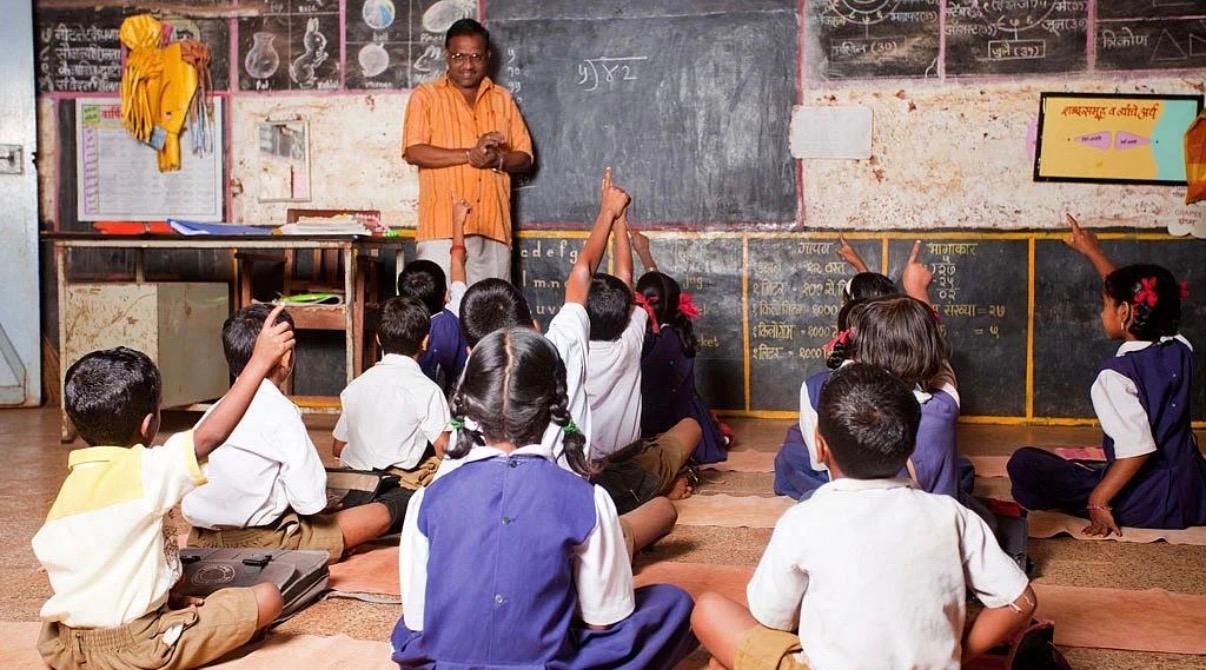
Educated but Unemployable: Is India’s Education System Producing Degrees Instead of Knowledge?
From weak foundations in middle school to questionable academic standards in higher education: Why India’s graduate employment crisis may begin years before students enter the job market.
Introduction: We Are Looking at the End of the Problem, Not Its Beginning
India is producing millions of graduates, yet many young people continue to struggle to find meaningful employment.
Every year, families celebrate when their children complete school, enter college, and eventually earn university degrees. Parents invest their savings, sometimes take loans, and make enormous personal sacrifices because they believe education will secure their children's future.
But what happens when that promise remains unfulfilled?
A student graduates with a bachelor's degree, engineering qualification, master's degree, or MBA, only to discover that employers are not impressed by the certificate alone.
Employers want practical knowledge, communication abilities, critical thinking, problem-solving skills, and the capacity to perform actual work.
Many graduates find themselves unprepared.
Society frequently blames the student. We hear statements such as:
Today's graduates have no practical skills.
They cannot communicate effectively.
They have degrees but no knowledge.
They are not employable.
But I have been observing this problem from a different perspective.
What if the real problem does not begin when a student graduates from college? What if it begins much earlier, in middle school or high school?
What if our education system, at certain stages, becomes more concerned with passing students than ensuring they actually learn?
And what if some colleges face similar pressures, allowing students to graduate without adequately demonstrating the competencies their degrees are supposed to represent?
These are uncomfortable questions. But if India wants to address graduate unemployment seriously, we must be willing to ask them.
1. My Observation: The Problem Begins in Middle School and High School
Over the years, I have noticed what I believe may be one of the most overlooked weaknesses in our educational system.
Many students progress from one grade to the next without necessarily developing a strong understanding of the subjects they have studied.
A student may complete middle school without mastering mathematics, reading comprehension, scientific reasoning, or written communication.
The same student enters high school, where the curriculum becomes increasingly demanding. But the foundational gaps remain.
Instead of addressing those weaknesses, the system may continue moving the student forward.
Eventually, the student passes the final school examinations and becomes eligible for college admission.
The family celebrates. The school reports another successful graduate.
But has the student genuinely acquired the knowledge necessary for higher education?
That is the question we must ask.
A student can be promoted academically without progressing intellectually at the same rate.
This does not mean every promoted student is inadequately prepared. It means advancement alone is not proof of mastery.
2. The Pressure on Government Schools: Are We Measuring the Right Outcomes?
Government schools play an essential role in providing education to millions of Indian children, particularly those from economically disadvantaged families.
Many government teachers work under difficult circumstances, including large classrooms, limited resources, administrative responsibilities, and inadequate infrastructure. Their contribution deserves recognition.
However, I am concerned about how institutional performance is sometimes evaluated.
Enrollment numbers, attendance, retention rates, examination results, and pass percentages become important performance indicators.
But what happens when these indicators receive greater attention than actual learning?
If a school's success is judged primarily by how many students advance or pass, there is a risk that maintaining favorable statistics becomes more important than identifying academic deficiencies.
Funding arrangements, administrative targets, and performance expectations may also create incentives that deserve examination.
I am not suggesting that government teachers routinely pass students to protect salaries or benefits. Such a claim would require specific evidence.
My concern is broader: when an institution is rewarded for favorable numbers without equally rigorous measures of learning, its incentives can become misaligned with educational quality.
A school reporting a high pass percentage may still have students who struggle with basic reading or arithmetic.
The objective should not be to increase failure rates. It should be to ensure that students receive the support needed to meet meaningful academic standards.
3. Private Schools: When Education and Business Interests Intersect
Private educational institutions operate under a different set of pressures.
Many private schools provide outstanding education, maintain rigorous academic standards, and prepare students exceptionally well.
However, private schools also have financial responsibilities. They depend on enrollment, tuition revenue, institutional reputation, and parental confidence.
A school with consistently poor examination results may find it difficult to attract new admissions.
Parents naturally want their children to succeed, and a school's reported academic performance can influence enrollment decisions.
This creates a potential conflict.
What happens when maintaining an attractive pass percentage becomes more important than measuring genuine academic competence?
Could some institutions become reluctant to fail students because doing so might damage their reputation or discourage future enrollment?
Could academic standards gradually weaken when financial incentives and educational responsibilities come into conflict?
These are questions worth investigating, not conclusions that should automatically be applied to all private schools.
Education should never become a business in which certificates are the product and learning is optional.
Financial sustainability matters, but academic integrity must remain nonnegotiable.
4. The Evidence: India's Foundational Learning Crisis Is Real
My observations are not proof of why particular institutions promote students. However, independent educational assessments confirm that foundational learning gaps are a serious national challenge.
The Annual Status of Education Report (ASER) 2024 examined learning outcomes among children in rural India.
Its findings are revealing:
Only approximately 48.8% of Class 5 children in surveyed rural areas could read a Class 2-level text.
About 30.7% of Class 5 children could solve a basic division problem.
Approximately 71.1% of Class 8 children could read a Class 2-level text.
These figures also contain encouraging news: learning outcomes improved between 2022 and 2024, particularly in government primary schools.
But the remaining gaps are substantial.
Consider what it means when a child reaches Class 5 but struggles to read material intended for Class 2.
How will that child understand increasingly complex textbooks? How will the student learn science, mathematics, history, or other subjects that require reading comprehension?
And if the gaps remain uncorrected, what happens when the student reaches college?
The ASER findings support a serious concern: grade progression and actual learning are not always aligned.
They do not, by themselves, establish that institutional pressure to pass students caused those gaps.
Nevertheless, they demonstrate why India must measure learning outcomes, not merely enrollment and promotion.
Source: ASER Centre, Annual Status of Education Report (Rural) 2024.
5. The Compounding Effect: A Weak Foundation Follows Students Into College
Education is cumulative.
A student who does not understand fractions may struggle with algebra. A student who lacks algebraic knowledge may find advanced mathematics difficult. A student with weak reading comprehension may struggle with textbooks, research papers, and technical instructions.
These weaknesses do not disappear when a student enters college. They become more consequential.
Imagine a student who has passed every examination but has never developed a strong understanding of basic scientific concepts.
When that student enters an engineering, healthcare, or science program, the curriculum assumes foundational knowledge that may not exist.
The student now faces two challenges simultaneously: learning advanced material and compensating for years of inadequate preparation.
Some students overcome these disadvantages through exceptional determination, supportive teachers, tutoring, and independent learning. Others struggle.
They may begin memorizing examination answers rather than developing conceptual understanding.
By graduation, the student may have completed the prescribed coursework without developing the practical competencies expected by employers.
The college is often blamed for the graduate's weaknesses, but the academic deficiencies may have accumulated over many years.
This is why educational reform must begin early.
6. Do Colleges Face the Same Pressure to Graduate Students?
The next stage of my observation concerns higher education.
When students arrive at college with weak academic foundations, institutions face a difficult responsibility.
They must teach advanced subjects while supporting students who may lack essential prerequisite knowledge.
Ideally, colleges should provide remedial instruction, academic counseling, tutoring, and additional practical training.
But such support requires money, qualified faculty, and institutional commitment.
Some colleges may instead face pressure to maintain graduation rates, retain tuition-paying students, and protect their reputations.
In certain circumstances, that could create incentives to lower academic expectations rather than strengthen student learning.
The concern becomes especially serious when degrees are awarded without reliable assessments of professional competence.
A student may complete a business degree without being able to analyze a financial statement.
An engineering graduate may understand theoretical definitions but struggle to apply engineering principles to practical problems.
A computer science graduate may pass examinations without developing the ability to build or troubleshoot working software.
A healthcare graduate may require substantial additional supervised training before becoming competent in practical settings.
These examples are illustrative, not descriptions of all graduates.
The underlying question is whether educational institutions are adequately verifying what their qualifications claim to represent.
A degree should certify competence, not merely attendance and successful completion of examinations.
7. The Employer Becomes the Final Examiner
Eventually, graduates enter the labor market. And here the expectations change.
An employer needs employees who can perform tasks, communicate effectively, exercise judgment, solve problems, and adapt to changing circumstances.
A company cannot always afford to hire someone solely because the person holds a university degree. It must evaluate whether the candidate can contribute productively.
This is where the weaknesses of an examination-focused education may become apparent.
A student who has spent years memorizing answers may struggle when asked to solve an unfamiliar problem.
A graduate with impressive academic marks may have difficulty explaining ideas clearly or applying knowledge independently.
The employer becomes, in effect, the final examiner of the education system.
And unlike an academic examination, the workplace often presents problems without predetermined answers.
This helps explain why employers frequently value practical experience, portfolios, internships, and demonstrable skills.
8. What Graduate Employability Research Reveals
The graduate skills problem is not merely anecdotal.
Mercer | Mettl's India's Graduate Skill Index 2025 reported an overall employability assessment figure of 42.6% among evaluated graduates applying for jobs.
The report drew on assessments involving more than one million students across over 2,700 campuses.
That finding should be interpreted carefully.
It does not mean that 57.4% of all Indian graduates are unemployed. Employability assessments and official unemployment statistics measure different things.
Nevertheless, it raises legitimate concerns about the gap between educational qualifications and employer expectations.
The International Labour Organization and Institute for Human Development's India Employment Report 2024 also examined the difficult transition from education to employment and the need for stronger links between skills and labor-market opportunities.
The evidence points toward a broader national challenge.
India must improve both the preparation of its graduates and the availability of suitable jobs.
A well-trained graduate cannot obtain a position that does not exist. Likewise, a growing economy cannot achieve its full potential if employers struggle to find appropriately trained workers.
9. Why Graduates From Top-Tier Colleges Often Have an Advantage
One pattern I have observed is that employers often place greater confidence in graduates from highly reputed institutions.
India's Indian Institutes of Technology, Indian Institutes of Management, leading medical colleges, and other prestigious universities benefit from competitive admissions, institutional reputation, professional networks, and industry relationships.
Employers may regard these institutions as signals of academic preparedness.
Their students may also have greater access to internships, laboratories, research projects, and recruitment opportunities.
But this creates an important concern.
Does a student graduating from an ordinary college necessarily possess less intelligence or potential?
Certainly not.
Talented students exist throughout India, including rural districts, smaller towns, and lesser-known colleges.
Many lack the financial resources, educational preparation, or opportunities necessary to attend elite institutions.
Employers should recognize demonstrated ability regardless of institutional prestige.
At the same time, universities must improve the quality and credibility of their programs so that graduates from less prestigious institutions can compete fairly.
Talent is distributed far more widely than opportunity.
10. Rural and Urban Educational Inequality
The challenges become even more serious when we examine differences between rural and urban education.
A student attending a well-resourced school in Bengaluru, Delhi, Mumbai, or Hyderabad may have access to modern laboratories, technology, experienced teachers, extracurricular activities, and career counseling.
A student in a remote village may have far fewer resources.
These differences can begin in childhood and compound throughout the educational journey.
The rural student may face challenges involving internet access, English-language instruction, transportation, laboratory facilities, and professional networks.
When both students eventually compete for the same employment opportunities, their starting positions may be very different.
India cannot claim educational equality merely because both students are eligible to enroll in college.
True equality requires meaningful access to quality learning.
Investing in rural schools, district colleges, teacher development, digital infrastructure, and practical training must be a national priority.
11. Are We Teaching Students to Pass Examinations Rather Than Think?
India has a strong examination culture.
Students spend years preparing for board examinations, university assessments, professional entrance tests, and competitive government examinations.
Examinations are important. They provide a mechanism for assessing academic knowledge and selecting candidates.
But education becomes incomplete when examination performance is treated as its primary purpose.
Students may learn to memorize information without understanding how to apply it. They may become skilled at reproducing textbook answers but struggle with open-ended questions.
This is particularly concerning in an era when artificial intelligence can retrieve and summarize vast amounts of information almost instantly.
The human advantage increasingly depends on reasoning, creativity, judgment, collaboration, and the ability to use knowledge responsibly.
Schools should encourage students to ask questions, participate in discussions, conduct experiments, and solve real-world problems.
Universities should prioritize research, practical projects, professional training, and independent thinking.
Memorization can help a student pass an examination. Understanding helps a person solve problems throughout life.
12. The Financial and Emotional Burden on Indian Families
Behind every unemployed graduate is often a family that has invested enormous hope in education.
Parents may spend years saving for school fees, college tuition, accommodation, transportation, coaching, and other expenses.
Some borrow money. Others reduce household spending or sacrifice their own financial security.
They make these decisions because they believe education is an investment in their children's future.
When a graduate cannot find suitable employment, the consequences extend beyond the individual.
Families may face financial stress, delayed loan repayment, postponed marriages, reduced savings, and uncertainty about the future.
Young people may experience frustration, declining confidence, and pressure from relatives or society.
The emotional consequences should not be underestimated.
Educational institutions have an ethical responsibility to provide honest information about program quality, costs, and graduate outcomes.
Students deserve to understand the realistic opportunities associated with their chosen qualifications.
13. Government Employment: Why So Many Graduates Continue Competing for Limited Positions
Government employment remains highly desirable in India.
Job security, predictable salaries, benefits, and social prestige are important attractions.
Many graduates spend years preparing for competitive examinations because they perceive government jobs as more secure than available private-sector alternatives.
This creates intense competition for limited positions.
The issue is not that young people should stop pursuing government careers.
Rather, India needs a broader economy in which skilled workers can find rewarding opportunities across multiple sectors.
High-quality private employment, entrepreneurship, skilled trades, manufacturing, healthcare, technology, and service industries must offer credible pathways to financial stability.
Educational institutions should expose students to these options before graduation.
Career guidance should be an integral part of education, not an afterthought.
14. Artificial Intelligence Makes Educational Reform Even More Urgent
Artificial intelligence is transforming the nature of work.
Routine administrative tasks, basic analytical functions, content generation, and certain technical activities are increasingly supported by automated systems.
New opportunities are also emerging in technology, healthcare, advanced manufacturing, cybersecurity, and data-driven industries.
The future employment effects of AI remain uncertain and will differ by occupation.
However, one lesson is already clear.
Graduates cannot depend exclusively on memorized knowledge acquired during college.
They need adaptability, technological literacy, ethical judgment, creativity, and continuous learning.
India must therefore prepare students not only for today's jobs but also for occupations and technologies that may change substantially during their careers.
The strongest educational systems will teach students how to learn, unlearn, and relearn.
15. A Practical Reform Agenda: How India Can Fix the Problem
India's education system has made substantial progress in expanding access.
The next priority must be strengthening learning quality and connecting education to meaningful employment.
Reform 1: Assess foundational learning early
Schools should regularly evaluate reading comprehension, mathematics, scientific reasoning, and communication skills.
Students with learning gaps should receive timely support before those gaps become more serious.
Reform 2: Stop rewarding pass percentages alone
Institutional evaluations should consider actual learning outcomes, student progress, educational equity, and teaching quality.
High pass rates should not be treated as sufficient evidence of academic excellence.
Reform 3: Make student support a priority
Students should not be punished for arriving with learning deficiencies.
Schools and colleges need tutoring, remedial instruction, counseling, and individualized academic support.
Maintaining rigorous standards and supporting struggling students are complementary responsibilities.
Reform 4: Hold colleges accountable for educational outcomes
Higher education institutions should publish credible information about graduate employment, practical training, program completion, and student satisfaction.
Independent quality assessments should evaluate whether graduates possess the competencies associated with their qualifications.
Reform 5: Make practical experience part of education
Internships, apprenticeships, laboratory work, research projects, and supervised professional experiences should become central components of relevant programs.
Students should graduate with evidence of what they can actually do.
Reform 6: Strengthen teacher preparation
Teachers need ongoing professional development, adequate resources, reasonable workloads, and opportunities to improve instructional methods.
Educational reform cannot succeed without supporting educators.
Reform 7: Expand partnerships with employers
Universities and industry should collaborate on curriculum design, practical training, and employment pathways.
Employers should also create meaningful entry-level opportunities rather than expecting every graduate to arrive with extensive experience.
Reform 8: Reduce rural educational inequality
Rural and underserved institutions need better infrastructure, reliable connectivity, qualified teachers, career guidance, and industry partnerships.
Educational quality should not depend primarily on family income or geography.
Reform 9: Respect vocational and technical careers
India must move beyond the assumption that every successful young person requires a conventional university degree.
Technical training, skilled trades, healthcare support professions, and entrepreneurship can provide valuable careers and strengthen the national economy.
Reform 10: Align education policy with job creation
Improving skills is essential, but it is not enough.
India must also encourage investment, productive industries, entrepreneurship, innovation, and the creation of quality employment opportunities.
Educational reform and economic development must advance together.
16. What Parents Should Ask Before Paying for a College Degree
Parents naturally want their children to succeed.
But selecting a college based only on advertisements, impressive buildings, rankings, or promises of placement can be risky.
Before making a major financial commitment, families should investigate the institution's academic quality.
They should ask whether the college provides meaningful practical training, whether faculty members are adequately qualified, and whether graduates are finding suitable employment.
They should also consider whether the student's interests and abilities match the chosen field.
A prestigious-sounding degree is not necessarily the best educational investment.
The right program should provide credible knowledge, practical competence, professional development, and realistic career opportunities.
Parents should encourage children to develop curiosity, communication abilities, problem-solving skills, and independence from an early age.
Education is most valuable when it develops the whole person.
17. My Perspective as a Healthcare and Public Health Professional
Having pursued education and professional work in healthcare, physical therapy, and public health, I have come to appreciate the difference between possessing academic knowledge and applying that knowledge effectively.
In healthcare, a qualification alone does not guarantee professional competence.
A clinician must understand scientific principles, evaluate information, communicate with patients, exercise judgment, and apply knowledge safely.
The same principle applies to engineering, business, technology, education, and other professions.
I believe India must examine the entire educational journey rather than focusing exclusively on graduate unemployment.
If a student enters college with years of unresolved learning gaps, the college faces an enormous challenge.
If the college then prioritizes graduation over demonstrated competence, the problem becomes even more serious.
By the time the graduate reaches an employer, the consequences of those accumulated weaknesses may become visible.
But blaming the graduate alone misses the larger institutional responsibility.
We must stop treating the student's inability to find a job as merely an individual failure and begin examining whether our educational institutions have fulfilled their responsibilities.
This is not an argument against government schools, private schools, teachers, or universities. Many institutions are doing extraordinary work.
It is an argument for transparency, educational integrity, and accountability across the system.
18. The Cycle We Must Break
My central concern can be summarized through a potential chain of events:
Institutional pressure to show favorable results.
Students advance without mastering essential knowledge.
Weak academic foundations follow them into higher education.
Colleges struggle to deliver advanced instruction.
Some institutions may compromise academic expectations.
Graduates receive qualifications without adequate practical skills.
Employers question their professional readiness.
Young people struggle to secure meaningful employment.
This sequence is a hypothesis that deserves investigation. It is not proof that all institutions operate this way, nor does it explain every case of graduate unemployment.
Labor-market conditions, the number and quality of available jobs, discrimination, geographic barriers, and economic growth also matter.
Nevertheless, the sequence illustrates why educational problems cannot always be solved at the final stage.
We must identify and address weaknesses throughout the system.
Conclusion: A Degree Should Represent Knowledge, Not Just a Certificate
India has an extraordinary population of talented, ambitious, and hardworking young people.
The country has expanded educational access and created institutions that compete internationally. These achievements deserve recognition.
But we must also confront the gap between educational certification and practical competence.
We cannot assume that a student has mastered a subject simply because the student passed an examination.
We cannot assume that a college graduate is professionally prepared simply because a degree has been awarded.
And we cannot assume that educational expansion alone will solve unemployment without sufficient job creation.
The true success of an education system is not measured only by how many students it passes, but by how well those students are prepared for life.
My concern is not that India is educating too many young people. It is that we may sometimes confuse educational progression with genuine learning.
We need schools that build strong foundations, colleges that maintain credible academic standards, employers that recognize demonstrated ability, and economic policies that create meaningful opportunities.
Most importantly, we must protect the trust that families place in education.
A degree should represent years of meaningful intellectual development, practical preparation, and personal growth.
It should not become merely another certificate hanging on a wall.
India does not need fewer graduates. India needs graduates whose education has genuinely prepared them for the future.
And that transformation must begin long before graduation.
— Dr. Vijay Kumar
Author's note: The institutional incentive concerns discussed in this article reflect personal observations and hypotheses. The cited research establishes learning and employability challenges but does not independently prove that schools or colleges deliberately inflate pass rates for financial reasons.