Bangalore: India’s Silicon Valley — But Is It Becoming a Victim of Its Own Success?
Traffic, water, environment, public health, and the future of a remarkable city
By Dr. Vijay Kumar, MD, MPH, PhD | November 2026
Introduction: A City That Represents India’s Ambitions
As I visit Bangalore in November 2026, I find myself reflecting on an important question: Can a city continue to celebrate economic success if its infrastructure, environment, and quality of life struggle to keep pace?
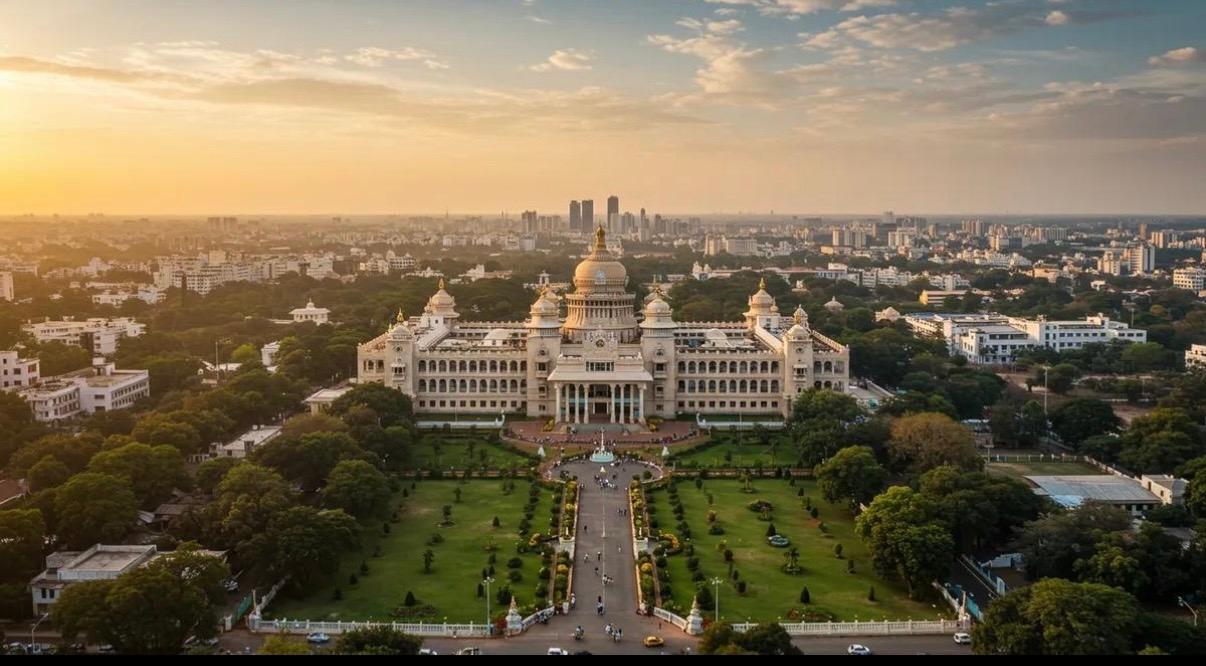
Bengaluru is a symbol of modern India: a global technology center, an entrepreneurial hub, and a magnet for talented people. Yet its achievements coexist with traffic congestion, pressure on water supplies, flooding, pollution, rising housing costs, and unequal access to basic urban amenities.
This is not an argument against growth. It is a call for growth that improves everyday life.
1. From Garden City to Global Technology Capital
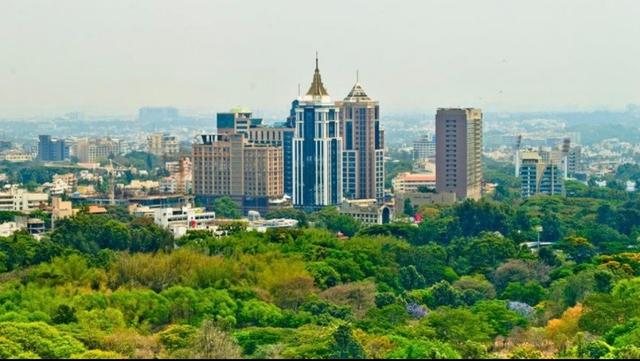
Bangalore's reputation as the Garden City grew from its climate, tree-lined avenues, parks, and lakes.
Institutions such as the Indian Institute of Science, Hindustan Aeronautics Limited, and the Indian Space Research Organisation established a foundation for scientific and technical excellence.
The information technology boom, accelerated by economic liberalization, transformed the city into an international center for software, research, startups, and business services.
Whitefield, Electronic City, Sarjapur Road, and the Outer Ring Road corridor became major employment districts.
The speed of development, however, often exceeded the pace at which roads, drainage, sewage networks, and public transportation could be built.
A city can attract investment faster than it can build the systems needed to sustain it.
2. Traffic Congestion: The Cost of Growth
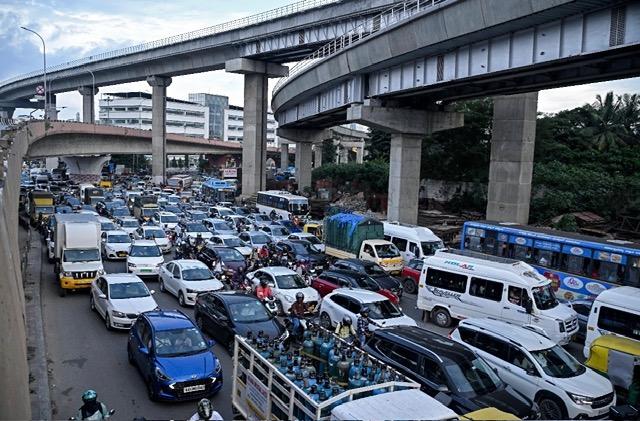
Traffic is the most visible expression of this imbalance.
The 2025 TomTom Traffic Index ranked Bengaluru second worldwide by congestion level, behind Mexico City. It recorded 74.4% average congestion, a 36-minute-and-9-second average trip for 10 kilometers, and an estimated 168 hours lost annually in rush-hour traffic under TomTom's methodology.
The same 10-kilometer journey took about 34 minutes and 5 seconds in 2024.
Bengaluru traffic indicators for 2025
IndicatorTomTom estimateGlobal congestion ranking2ndAverage congestion level74.4%Average 10 km driving time36 min 9 secRush-hour time lost per year168 hoursThe human consequences go beyond inconvenience.
Long commutes reduce time available for exercise, sleep, family, and recreation. They increase transport costs and may contribute to stress and fatigue.
Consider a hypothetical example: 90 minutes of extra delay on each of 22 working days per month adds up to 396 hours annually—about 16.5 full days. This is an illustration, not a measured citywide statistic.
The solution cannot be limited to flyovers and wider roads.
Bangalore needs dependable buses and metro connections, safer sidewalks, last-mile links, better intersection management, and development patterns that reduce the distance between homes and jobs.
3. Infrastructure: Has Construction Outpaced Planning?
Rapid expansion has brought high-rise buildings, technology parks, and residential complexes into areas once characterized by villages, agricultural land, wetlands, and lower-density development.
In some locations, drainage, pedestrian paths, sewage treatment, and road capacity have lagged behind construction.
Major development approvals should include credible assessments of:
Water availability
Transport capacity
Stormwater drainage
Wastewater treatment
Neighborhood services
A building may be financially successful while imposing costs on the community around it.
Sustainable planning requires those costs to be recognized before—not after—construction.
4. Water Scarcity and the Urban Water Paradox
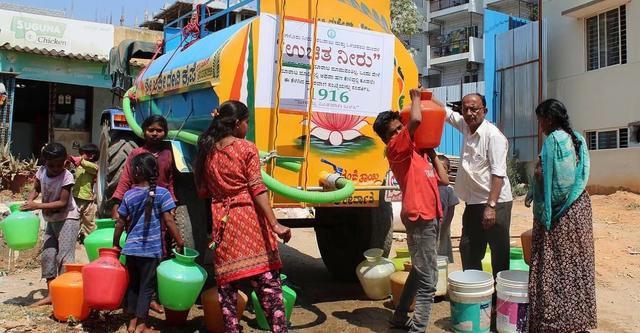
The severe water shortages of 2024 exposed vulnerabilities in Bengaluru's water system, particularly in communities dependent on groundwater or tanker deliveries.
The city relies heavily on Cauvery River supplies as well as groundwater and local infrastructure. Uneven access, leakage, and pressure on aquifers complicate the challenge.
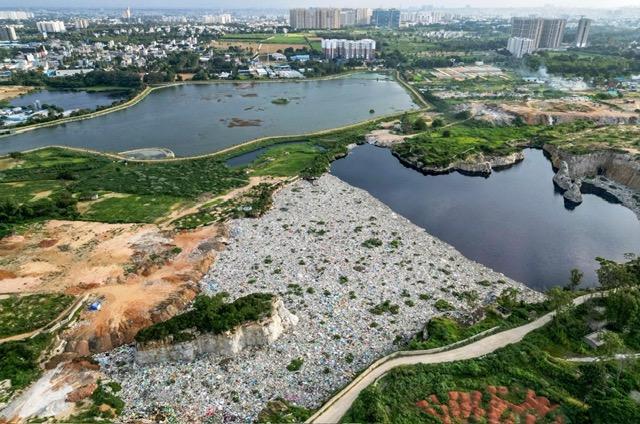
Bangalore once benefited from an interconnected network of lakes, tanks, and channels.
Encroachment, pollution, altered drainage, and expanding concrete surfaces have reduced some of the system's natural capacity to store water and recharge groundwater.
This helps explain an apparent paradox: a city can face water shortages in dry months and flooding during heavy rains.
Several priorities deserve attention:
Restore lakes and protect their connecting stormwater channels.
Expand wastewater treatment and safe reuse for non-potable purposes.
Reduce distribution losses and monitor groundwater extraction.
Promote rainwater harvesting and water-efficient building design.
Water security requires long-term planning, not just emergency responses during shortages.
5. The Disappearing Garden City
Lalbagh, Cubbon Park, and the city's remaining green spaces remind us what made Bangalore distinctive.
Urban trees cool streets, provide shade, support biodiversity, and create opportunities for outdoor activity.
Parks and walkable neighborhoods can support physical and mental well-being, although these benefits depend on safety, access, maintenance, and neighborhood conditions.
As a public-health professional, I believe urban greenery should be treated as preventive-health infrastructure.
A city should make walking, exercise, and outdoor recreation accessible to children, older adults, and people of different income levels—not only residents of private gated communities.
Protecting green spaces is not simply about preserving beauty. It is about protecting the health of the people who live in the city.
6. Air Pollution Is a Public-Health Issue
Vehicle exhaust, road dust, construction, industrial activity, waste burning, and regional atmospheric conditions contribute to urban air pollution.
Fine particulate matter (PM2.5) is particularly concerning because long-term exposure is linked to cardiovascular and respiratory illness and premature mortality.
The World Health Organization's 2021 guideline for annual average PM2.5 is 5 micrograms per cubic meter. This is a health-based benchmark, not a claim about Bengaluru's current annual concentration.
Several measures can help:
Cleaner buses and better public transportation.
Dust suppression on roads and construction sites.
Responsible construction practices.
Reliable air-quality monitoring.
Enforcement against open waste burning.
Clean air should be treated as a basic public-health requirement, not an optional environmental benefit.
7. Flooding and the Limits of Concrete Solutions
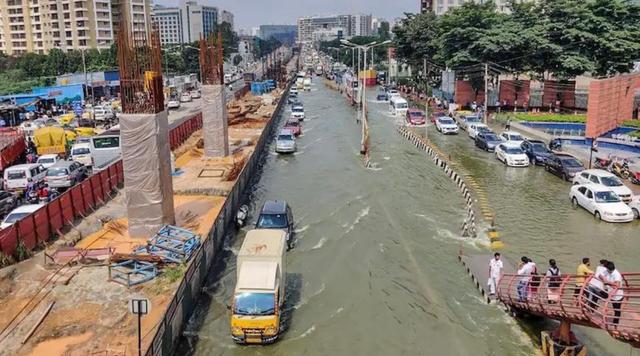
The serious floods of September 2022 illustrated the risks of developing low-lying land while disrupting natural drainage.
Intense rainfall, blocked or undersized drains, and construction near water channels can combine to inundate roads and homes.
Flooding interrupts work, damages property, and can create sanitation and health risks.
Flood resilience demands routine drain maintenance, protection of wetlands and floodplains, transparent mapping of vulnerable areas, and watershed-level planning.
The most effective intervention is often to preserve natural systems rather than trying to replace every function with concrete.
8. What Is the Government Doing?
There are important efforts underway.
In August 2025, the Namma Metro Yellow Line from RV Road to Bommasandra was inaugurated, adding more than 19 kilometers and 16 stations.
At the same event, the foundation stone was laid for Metro Phase 3, planned to add more than 44 kilometers and 31 elevated stations.
The Cauvery Water Supply Scheme Stage V was commissioned in October 2024 to expand piped supply to additional areas.
These investments matter.
But success must be measured in reliable service: shorter door-to-door journeys, accessible stations, dependable water delivery, and reduced environmental harm.
Announcing a project and improving daily life are not the same thing.
9. The Human Cost: Health, Time, and Equity
An urban system should be judged by the experience of its most vulnerable residents.
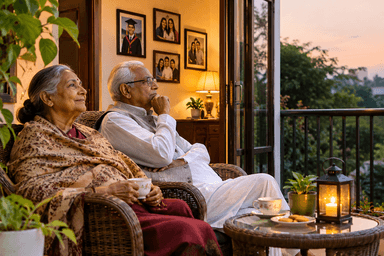
Can an older adult safely cross the street?
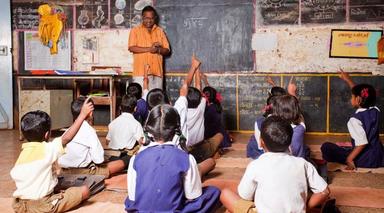
Can a child walk to school?
Can a nurse or factory worker commute affordably?
Can an ambulance travel promptly in an emergency?
Can families access clean water without paying excessive tanker charges?
A professional able to work from home experiences the city differently from a delivery worker or hospital employee who must travel daily.
Urban policy must recognize these differences.
Economic success without inclusive infrastructure can deepen inequality.
10. Lessons From Other Cities
Other cities offer useful examples of how urban planning can improve everyday life.
Singapore demonstrates the value of linking transport and land-use planning.
Copenhagen illustrates the potential of safe cycling and walking networks.
Seoul's Cheonggyecheon project offers an example of restoring ecological public space.
Bangalore cannot simply copy these models, but it can adapt their underlying principles:
Coordination between planning authorities.
Continuity in infrastructure development.
Regular maintenance.
Public accountability.
Successful urban development requires more than ambitious construction projects. It requires systems that work together.
11. Seven Priorities for a More Livable Bangalore
Bangalore has the expertise and resources to address its challenges. What is needed is a coordinated approach that places residents' everyday experiences at the center of planning.
I believe seven priorities deserve particular attention:
Make integrated public transportation a practical first choice: Provide frequent buses and reliable last-mile connections.
Protect lakes and wetlands: Prevent encroachment and pollution in lakes and drainage corridors.
Improve pedestrian infrastructure: Build continuous, accessible sidewalks, safe crossings, and neighborhood parks.
Plan before approving major developments: Require credible infrastructure-capacity assessments.
Make civic performance transparent: Publish indicators on traffic, water supply, air quality, drainage, and road maintenance.
Use technology responsibly: Apply local technology expertise to improve civic systems while protecting privacy.
Prioritize health and equity: Include health, accessibility, and fairness in major urban planning decisions.
These priorities should be evaluated through measurable improvements in residents' lives.
12. Bangalore's Most Famous Excuse: "But Bro, the Weather Is Amazing!"
There is a popular joke about Bangalore that I find particularly amusing.
One version goes something like this:
"Traffic is terrible. Roads are broken. Rent is sky-high. Water is scarce. Everything is expensive. But bro… the weather is amazing!"
Perhaps that one sentence captures Bangalore's personality better than any economic report.
No matter how long someone sits in traffic or how frustrated they become with the roads, the conversation somehow returns to the same comforting conclusion: at least the weather is good!
To be fair, Bangalore's relatively moderate climate has historically been one of its greatest attractions, especially compared with the extreme summer heat experienced in many other Indian cities.
But here is the irony:
Good weather is a gift of geography. Good infrastructure is a responsibility of governance.
A pleasant breeze cannot repair a pothole. Comfortable temperatures cannot eliminate traffic congestion. And a beautiful evening sky cannot guarantee clean drinking water or prevent flooding.
I appreciate Bangalore's weather as much as anyone else. But a city with such extraordinary talent and economic resources deserves much more than pleasant temperatures.
Perhaps the next generation of Bangalore memes should proudly say:
"Bro, the weather is amazing… and so are the roads, public transportation, clean lakes, and quality of life!"
Now that would be a Bangalore worth celebrating.
13. My Personal Reflection: Bangalore Deserves Better
Travel gives us an opportunity to see places beyond their reputation.
Bangalore is an inspiring example of India's technical talent and entrepreneurial ambition. Its universities, research institutions, startups, and global businesses are genuine strengths.
But a city should not have to sacrifice its environmental heritage or the well-being of its residents to achieve prosperity.
I do not believe these problems are irreversible.
Bangalore has the human capital, engineering expertise, resources, and civic energy to address them.
What it needs is sustained coordination between government, business, and communities—and the willingness to evaluate progress by outcomes rather than announcements.
The city's future should not be defined only by the number of technology companies it attracts or the buildings it constructs. It should also be defined by the quality of life it provides to its residents.
Conclusion: From Technology Capital to Livable City
Bangalore has already shown the world that it can build a global technology economy.
Its next challenge is to show that it can build an equally impressive urban environment.
A truly successful city is not measured only by skyscrapers, exports, and corporate campuses.
It is measured by the health, safety, mobility, opportunity, and happiness of its people.
Will we build cities around economic growth alone—or will we build cities around the people who call them home?