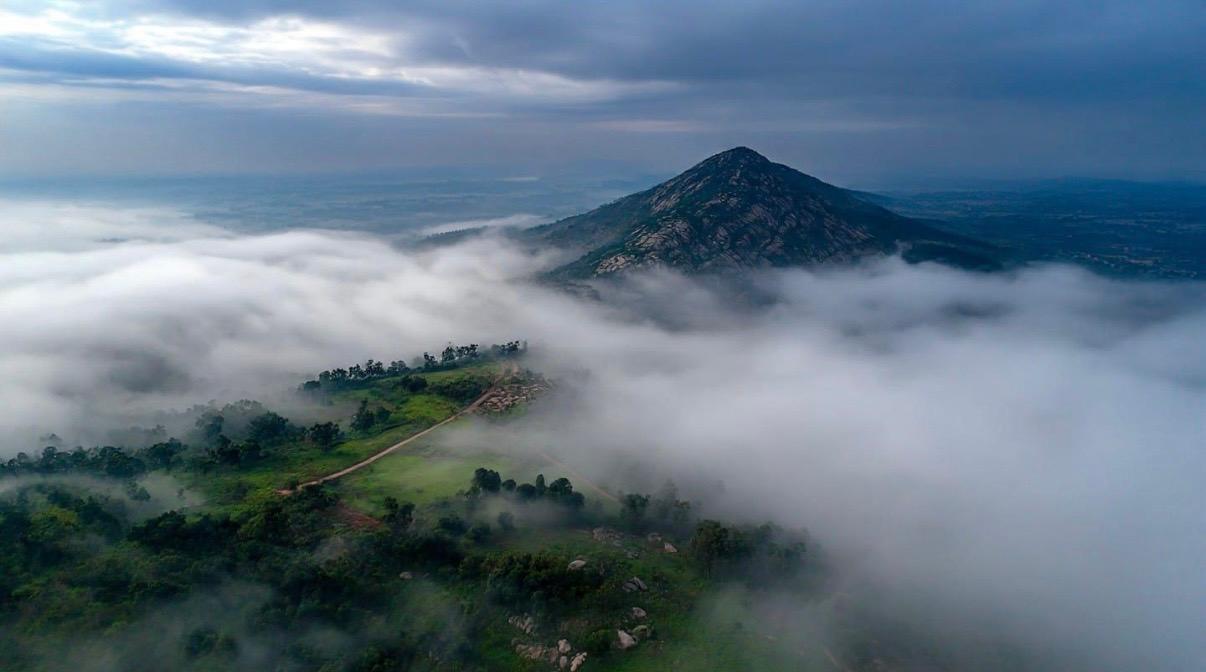
Nandi Hills, Karnataka: Where Modern India Meets Ancient Spiritual Heritage
A Personal Journey Through Nature, History, Spirituality, and India's Changing Landscape
Introduction: A Journey That Became More Than a Journey
Sometimes we travel to a destination for a particular reason, only to discover that the journey itself offers unexpected opportunities to learn, reflect, and appreciate the world around us.
My recent visit to Nandi Hills in Karnataka was one such experience.
I had traveled to Bengaluru for a very special family occasion: the wedding celebrations of our daughter Karishma and Tarun at Amita Rasa, a beautiful destination wedding property in the Nandi Hills region.
Naturally, my thoughts were occupied with family, wedding preparations, guests, and the excitement of the celebrations ahead.
But as someone who enjoys traveling, observing different cultures, and understanding the historical significance of places, I soon found myself fascinated by the region.
What began as a drive from Bengaluru's international airport to our resort gradually became a journey through modern infrastructure, natural beauty, ancient Indian history, and Hindu spirituality.
And it all became even more interesting because of a simple conversation with a young bellboy at the resort.
1. My First Impression: A World-Class Airport and Remarkable Roads
My journey began at Kempegowda International Airport in Bengaluru.
Having traveled extensively internationally, I have experienced airports across North America, Europe, Asia, and other parts of the world. I naturally find myself comparing infrastructure, organization, accessibility, and the overall traveler experience.
Bengaluru's international airport made a positive impression on me.
Its modern facilities, impressive architectural design, and expanding infrastructure demonstrate India's growing investment in international connectivity.
The airport originally opened in 2008. Its newer Terminal 2, inaugurated in November 2022, reflects Bengaluru's identity as the Garden City through a design inspired by nature.
The airport is a reminder that India is capable of developing infrastructure comparable with international standards.
However, what impressed me just as much was the journey that followed.
As we traveled by car toward Nandi Hills, I was pleasantly surprised by the broad, multilane roads and impressive highway infrastructure along our route.
For someone who has witnessed India's transformation over several decades, this was particularly encouraging.
We often discuss India's problems: traffic congestion, pollution, inadequate road maintenance, and unplanned urban development. These problems certainly exist and must be addressed.
But when we encounter impressive infrastructure, we should acknowledge that progress as well.
I found myself thinking: Why shouldn't this quality of infrastructure become the standard across India rather than the exception?
As we moved farther from the airport, the landscape gradually changed. Modern highways gave way to quieter roads, open countryside, greenery, and distant hills.
It felt as though we were traveling between two different chapters of India's story: one representing modern economic ambition and the other reflecting the country's natural and cultural heritage.
2. Discovering Nandi Hills: Nature Beyond the City
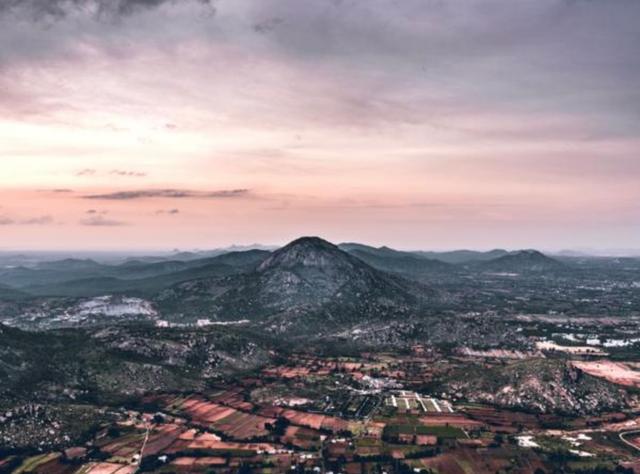
Nandi Hills is located in Karnataka's Chikkaballapur district, approximately 60 kilometers north of central Bengaluru.
Rising to approximately 1,478 meters, or 4,850 feet, above sea level, it is among the region's most popular hill destinations.
The area is known for its scenic landscapes, cooler hilltop climate, sunrise viewpoints, historic fortifications, and ancient temples.
For residents of Bengaluru, it offers an opportunity to escape the noise and congestion of the city.
What attracted my attention was the contrast between the rapidly expanding metropolitan region and the natural environment surrounding the hills.
Bengaluru has become internationally recognized as India's technology and innovation center.
But economic growth brings enormous responsibilities.
As cities expand, protecting surrounding natural environments becomes increasingly important.
Nandi Hills represents a valuable natural and cultural resource that deserves careful preservation.
Its importance goes much deeper than scenery.
3. A Conversation With a Bellboy That Sparked My Curiosity
One of the most memorable moments of my visit occurred during a casual conversation with a young bellboy at our resort.
I was thinking about the name Nandi Hills when a question suddenly crossed my mind.
Being familiar with Hindu traditions, I knew Nandi as the sacred bull associated with Lord Shiva.
In Hindu temples dedicated to Shiva, Nandi is traditionally positioned facing the sanctum, symbolizing devotion, patience, strength, and unwavering faith.
So I asked the young man:
"Does the name Nandi Hills have any connection with Lord Shiva's Nandi?"
His reaction was immediate.
He began explaining something with tremendous enthusiasm and passion.
His expressions, gestures, and excitement made it clear that he knew stories associated with the place and was proud to share them.
Unfortunately, I could not understand everything he was saying. Perhaps it was the language difference, the speed of his explanation, or my unfamiliarity with local traditions.
But I understood one thing very clearly.
He was genuinely passionate about the history and religious significance of his surroundings.
I listened with interest.
And the more he explained, the more curious I became.
Was the hill actually named after Lord Shiva's sacred bull? Was there an ancient temple associated with the name? Could the surrounding hills have some mythological significance?
Or was this one of those fascinating Indian place names where history, language, mythology, and local tradition have become intertwined over centuries?
I decided that I needed to investigate further, simply to satisfy my own curiosity.
That brief conversation reminded me that some of the most educational travel experiences come not from famous historians or professional tour guides, but from ordinary people who feel deeply connected to their local heritage.
4. The Connection Between Nandi Hills and Lord Shiva
As I began exploring the subject, I discovered that the young man's enthusiasm had a meaningful foundation.
Nandi Hills does indeed have strong connections with the worship of Lord Shiva.
According to Karnataka tourism traditions, the name Nandi is associated with the sacred bull of Shiva. Other local traditions suggest that the hill's shape resembles a resting bull.
Historical references also identify names such as Nandagiri, Nandigiri, and Nandidurga.
These variations reflect different periods and interpretations of the region's history.
In Hindu tradition, Nandi is far more than an animal associated with a deity.
He represents devotion, discipline, loyalty, and spiritual attentiveness.
His position facing Lord Shiva in temples is deeply symbolic. It reminds devotees of the importance of concentration, humility, and unwavering commitment.
What fascinates me is how geographical places in India often carry several layers of spiritual significance.
A hill may be a geological formation to a scientist, a strategic defensive location to a historian, a sacred landscape to a devotee, and a beautiful tourist attraction to a traveler.
All these interpretations can coexist.
This is one of the remarkable characteristics of India's cultural heritage.
5. Ancient Temples: The Spiritual Heart of Nandi Hills
My curiosity about the connection with Lord Shiva led me to learn about two important temples in the region.
Bhoga Nandeeshwara Temple
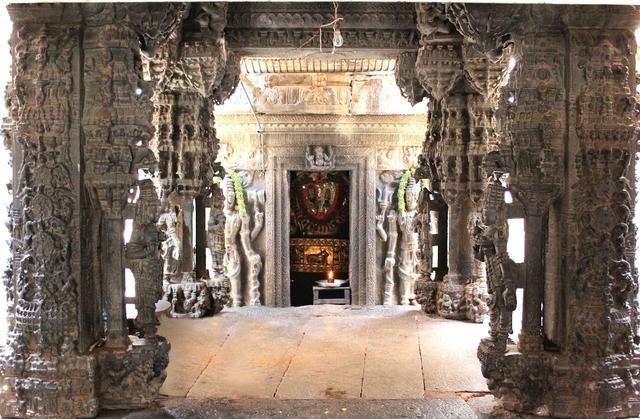
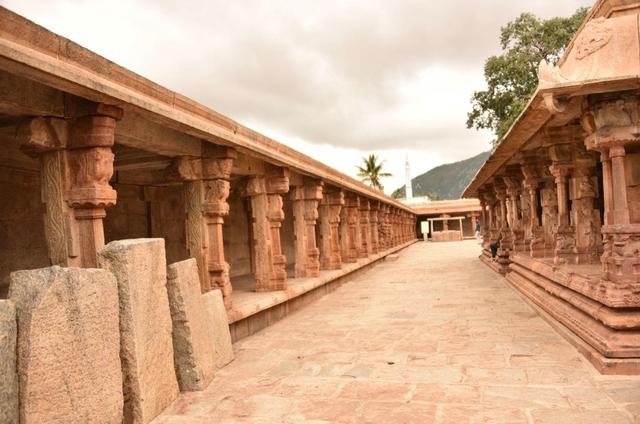
Located in Nandi village at the foothills, the Bhoga Nandeeshwara Temple is among Karnataka's historically significant Shiva temples.
Its origins are generally traced to around the ninth century, with additions and renovations associated with later dynasties, including the Cholas, Hoysalas, and Vijayanagara rulers.
The temple complex is known for its carved stone pillars, elaborate architectural details, sacred spaces, and traditional South Indian design.
The craftsmanship is extraordinary.
Whenever I study ancient Indian temples, I find myself wondering how earlier generations accomplished such sophisticated architectural work without modern machinery.
The precision, artistic imagination, and durability of these structures demonstrate remarkable engineering knowledge and dedication.
These temples were not merely places of worship. They were also centers of artistic expression, cultural continuity, and community life.
Yoga Nandeeshwara Temple
Near the summit of Nandi Hills stands the Yoga Nandeeshwara Temple, also dedicated to Lord Shiva.
Its location at the hilltop reinforces the spiritual association between the landscape and Shaivite traditions.
Together, these temples help explain why the name Nandi carries such cultural importance in the region.
My original question to the bellboy was therefore not as simple as I initially imagined.
It opened the door to a much larger story involving religion, architecture, language, and centuries of regional history.
6. Nandi Hills Through the Pages of History
Nandi Hills has also played an important role in the political and military history of southern India.
The region has historical associations with several dynasties and rulers, including the Gangas, Cholas, Vijayanagara Empire, local chieftains, and the rulers of Mysore.
Its elevated terrain made it strategically valuable.
One of the best-known historical figures associated with Nandi Hills is Tipu Sultan.
Tipu Sultan and Nandidurga
Tipu Sultan, the eighteenth-century ruler of Mysore, recognized the military advantages of the hill.
The fortifications at Nandidurga were expanded and strengthened during the period of Hyder Ali and Tipu Sultan.
The hill also served as a summer retreat.
In 1791, British forces captured the fortress during the Third Anglo-Mysore War.
Today, remnants of the fortifications remind visitors that this peaceful destination was once a location of military importance.
Tipu's Drop: Between History and Legend
Another well-known landmark is Tipu's Drop, a steep cliff associated with stories of prisoners being thrown from the height.
These accounts are part of the area's historical tradition, although specific details should be distinguished from independently documented events.
This distinction matters.
History should be studied through evidence, records, and critical inquiry, while local legends should be appreciated as part of cultural memory.
Both can help us understand how communities remember the past.
7. The Environmental Importance of Nandi Hills
Beyond its history and spirituality, Nandi Hills is environmentally significant.
The surrounding hill systems are associated with the headwaters of several regional rivers and drainage networks, including the Arkavathi and Ponnaiyar systems.
Such landscapes contribute to local biodiversity, water movement, soil protection, and ecological balance.
Vegetation helps reduce erosion, while natural drainage patterns influence the movement and storage of rainwater.
As tourism and commercial development expand, protecting these ecological functions becomes increasingly important.
India has many beautiful natural destinations that have experienced environmental damage because of excessive construction, unmanaged tourism, waste disposal, and inadequate infrastructure.
Nandi Hills should not become another example.
Development must be carefully planned to preserve the natural character that attracts visitors in the first place.
8. Tourism, Economic Development, and the Need for Balance
Tourism is an important source of economic opportunity.
It creates employment for hotel workers, drivers, restaurant employees, guides, local vendors, maintenance workers, and many others.
The growing popularity of the Nandi Hills region has also encouraged hospitality development and destination weddings.
Properties such as Amita Rasa demonstrate how the region has become attractive for family celebrations and special occasions.
These developments can contribute to the local economy.
However, economic growth and environmental conservation must advance together.
Roads, hotels, parking facilities, and commercial establishments should be developed with attention to land use, water availability, waste management, and long-term sustainability.
A destination should not lose its natural beauty because it becomes commercially successful.
The challenge is to welcome visitors while protecting the very environment they have come to enjoy.
9. A Personal Connection: Celebrating Family in Nandi Hills
For our family, this journey has an additional emotional significance.
We are here to celebrate the wedding of our daughter Karishma and Tarun.
As a father, occasions like this bring together happiness, gratitude, pride, and nostalgia.
I find myself reflecting on the passage of time.
The little girl whose childhood memories remain so vivid is preparing to begin a new chapter of life.
Family members and friends are gathering from different places, including India and the United States, to share this important occasion.
Indian weddings represent more than the union of two individuals.
They bring together families, traditions, generations, and cultural identities.
For our family, with roots in Mithila, preserving cultural heritage while embracing new relationships is particularly meaningful.
The natural surroundings of Nandi Hills provide a beautiful setting for these celebrations.
Long after the wedding festivities conclude, this region will remain connected with an important chapter in our family's history.
10. What This Journey Taught Me About India
As I reflect on the journey, I am struck by the remarkable contrasts I encountered.
I began at a modern international airport that represents India's global aspirations.
I traveled on impressive multilane roads demonstrating progress in transportation infrastructure.
I arrived in a region known for natural beauty and ancient history.
Then, through a spontaneous conversation with a young resort employee, I was introduced to a spiritual connection that reaches back through centuries of Hindu tradition.
In a relatively short journey, I encountered several different dimensions of India:
- Modern engineering.
- Economic development.
- Natural beauty.
- Historical heritage.
- Religious tradition.
- The enthusiasm of an ordinary young man who was proud of his local culture.
This is the India that fascinates me.
A country where the modern and ancient coexist, sometimes harmoniously and sometimes with challenges.
As citizens, we should recognize progress without ignoring shortcomings.
We should celebrate infrastructure improvements while demanding better environmental protection.
We should encourage tourism while preserving historical and religious landmarks.
And we should recognize that development is most meaningful when it improves people's lives without destroying their cultural and natural inheritance.
11. The Importance of Curiosity When We Travel
One lesson from this journey stands out.
Travel should never be limited to visiting places, taking photographs, and returning home.
It should also involve asking questions.
Why does a place have a particular name?
Who lived here centuries ago?
What traditions do local communities preserve?
How has the landscape changed?
What can we learn from the people who call this place home?
My question about Nandi Hills and Lord Shiva was spontaneous.
Yet it encouraged me to explore a subject I might otherwise have overlooked.
And the young bellboy's passionate explanation, even though I could not understand all of it, reminded me of the importance of listening.
Sometimes curiosity begins with a question whose answer we do not fully understand.
That is not a failure.
It is an invitation to learn more.
Conclusion: Where Modern India Meets Its Timeless Heritage
Nandi Hills is much more than a scenic destination near Bengaluru.
It represents a remarkable intersection of geography, spirituality, architecture, history, tourism, and modern development.
For some visitors, it is a place to enjoy a beautiful sunrise.
For others, it is a destination for trekking, photography, or relaxation.
For historians, it offers insights into the political and military history of southern India.
For devotees, it carries associations with Lord Shiva and the sacred traditions surrounding Nandi.
And for families like ours, it becomes a place where precious memories are created.
As I reflect on my journey from Bengaluru's impressive international airport to the peaceful surroundings of Nandi Hills, I realize that the experience represents something larger.
It reflects India's continuing journey toward modernization while remaining deeply connected to its ancient heritage.
The challenge for India is not to choose between progress and tradition, but to find ways for both to flourish together.
I came to Nandi Hills for a family celebration.
I discovered beautiful landscapes, fascinating history, ancient spiritual traditions, and impressive examples of modern infrastructure.
But perhaps the most memorable lesson came from a young bellboy whose passionate explanation reminded me that every place has a story waiting to be discovered.