What We Own Is Not Who We Are
A Reflection on Success, Simplicity, Gratitude, and What Ultimately Matters
Sometimes a photograph is simply a photograph.
You are standing somewhere on an ordinary day. Someone takes out a phone, you pause for a moment, and the picture is captured. There is no grand plan behind it and no profound message intended.
Yet years—or sometimes even months—later, you look at the same photograph and see something entirely different.
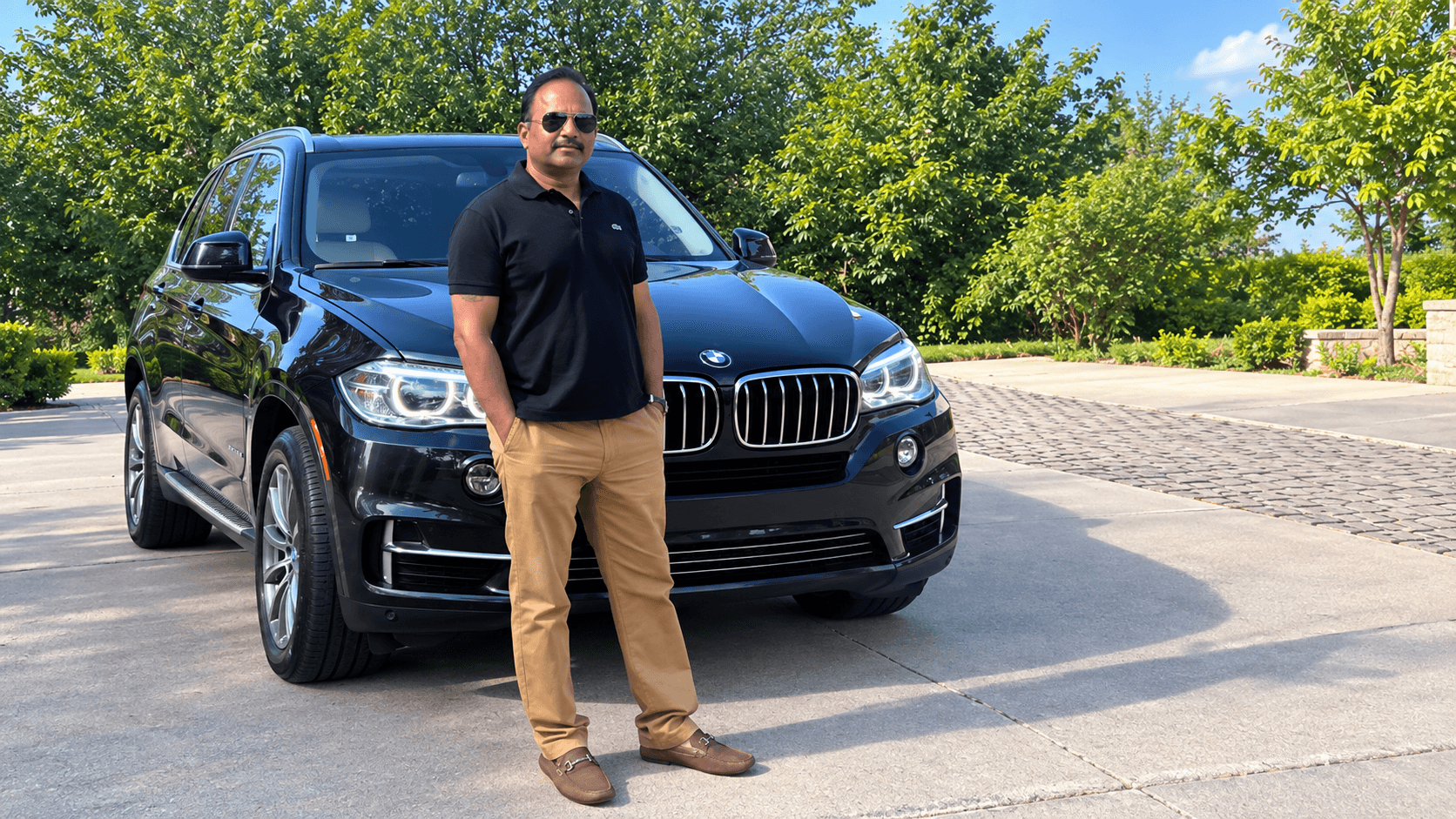
Looking at this picture of myself standing beside a car, I started thinking about success.
Not the success represented by the car. In fact, quite the opposite.
I started thinking about how our understanding of success changes as we move through life.
When we are younger, many of us naturally associate success with visible accomplishments: education, a career, a business, a home, a good car, financial stability, professional recognition, travel, or perhaps a certain lifestyle.
There is nothing wrong with wanting these things.
We work hard. We sacrifice. We study. We take risks. We spend years building careers and businesses. If that work eventually allows us to enjoy certain comforts, there is no reason to feel guilty about them.
But somewhere along life’s journey, another realization begins to emerge:
What we own may tell people something about our circumstances, but it tells them very little about who we truly are.
And perhaps one of the most important lessons of maturity is learning the difference.
When Success Had a Different Meaning
Think about what success meant when you were 18, 25, or 30 years old.
For many of us, success seemed to exist somewhere in the future.
Once I finish my education…
Once I establish my career…
Once I start earning enough…
Once I buy my first house…
Once I reach that professional position…
Once I can afford the things I once dreamed about…
Then I will have made it.
It is an understandable way to think.
Goals give us direction. Ambition pushes us forward. There is satisfaction in reaching something that once seemed far away.
But life has an interesting habit of moving the finish line.
You reach one goal and discover another waiting behind it.
You earn one degree and begin thinking about the next opportunity.
You achieve financial stability and discover new responsibilities.
You buy something you once dreamed of owning, enjoy it tremendously—and eventually it becomes part of everyday life.
The extraordinary slowly becomes ordinary.
That doesn’t mean the achievement wasn’t meaningful. It means human beings adapt.
And eventually, if we are fortunate enough to live, experience, succeed, fail, learn, lose and begin again, the questions themselves start changing.
Instead of asking:
“What else can I acquire?”
we begin asking:
“What kind of person have I become while acquiring it?”
That is a much harder question.
There Is Nothing Wrong With Enjoying What You Earn
Sometimes discussions about simplicity make material possessions sound inherently shallow.
I don’t believe that.
If you have worked hard for something, enjoy it.
Drive the car you like.
Take the vacation.
Build the comfortable home.
Wear the clothes you enjoy.
Travel to places you once dreamed about seeing.
Celebrate professional accomplishments.
There is no virtue in pretending we don’t enjoy nice things when we actually do.
The problem begins only when possessions stop being things we enjoy and become things we need in order to feel valuable.
A vehicle is transportation.
A house provides shelter, security and memories.
Money provides choices and, when managed wisely, a certain degree of freedom and security.
A professional title describes something we have accomplished.
A diploma represents education and effort.
But none of these things can completely answer the question:
Who are you?
There is a significant difference between saying, “I am grateful that I have this,” and saying, consciously or unconsciously, “This is why I matter.”
That distinction becomes increasingly important as life moves forward.
The Comparison Trap
Modern life makes comparison incredibly easy.
We see other people’s homes.
Their vacations.
Their cars.
Their promotions.
Their celebrations.
Their children’s accomplishments.
Their perfectly framed photographs.
Their seemingly successful businesses.
Their fitness achievements.
Their travel experiences.
And sometimes we forget that we are looking at selected moments, not entire lives.
Social media can show us someone’s new car without showing us their worries.
It can show us a beautiful vacation without showing us the stress waiting at home.
It can show professional success without showing the years of uncertainty behind it.
It can show smiling families without showing the difficult conversations every family occasionally experiences.
Comparison becomes dangerous because there will always be someone who appears to have more.
A larger house.
A newer vehicle.
A bigger company.
More followers.
More recognition.
More money.
More impressive credentials.
If our definition of success depends upon staying ahead of everyone else, there can never be enough.
Someone will always have more.
But something remarkable happens when we stop treating life like a competition.
We become capable of appreciating another person’s success without feeling threatened by it.
And we can enjoy our own success without needing anyone else to envy it.
That, to me, is a form of freedom.
The Things I Value More Today
As the years pass, I find myself placing greater value on things that are surprisingly difficult to photograph.
Good health.
Being able to wake up and move your body.
Being able to walk, exercise, travel and experience the world.
Peace of mind.
Going to bed without carrying unnecessary anger.
Family.
Sitting together, sharing food, laughing, disagreeing occasionally, celebrating milestones and simply knowing that people you love are nearby.
Friendship.
Not hundreds of contacts, but the handful of people who will actually answer when life becomes difficult.
Time.
Perhaps the most valuable possession of all—and ironically, the one none of us can truly possess.
Purpose.
Knowing that what you do each day has some meaning beyond simply making money.
Freedom.
The ability to make choices, explore the world, learn something new and decide how to spend at least part of your day.
The ability to help another human being.
These things rarely make impressive status symbols.
Yet increasingly, they feel like the greatest luxuries life can offer.
Experiences Become More Valuable Than Objects
When I think about my own life, many of the moments that remain strongest in my memory aren’t connected to possessions.
They are connected to experiences.
Traveling.
Standing somewhere far from home and realizing how enormous and diverse this world is.
Walking through mountains.
Running races.
Meeting people from different backgrounds.
Experiencing cultures very different from my own.
Spending time with family.
Watching children grow.
Celebrating their accomplishments.
Sitting with people I love.
Learning something unexpected from someone I had just met.
Helping someone professionally or personally and realizing that something relatively small to me meant much more to them.
Those experiences become part of us.
A vehicle eventually depreciates.
Technology becomes obsolete.
Clothes wear out.
Buildings require repairs.
The newest phone becomes an old phone surprisingly quickly.
But an experience can become more valuable with time.
Twenty years later, you may barely remember what phone you owned—but vividly remember the person you called on it.
You may forget what you wore on a particular trip but remember the view from a mountain.
You may forget what restaurant you ate at but remember who was sitting across the table.
Objects become old.
Memories become stories.
Success Should Produce Gratitude, Not Superiority
Perhaps one of the most revealing tests of success is not what it gives us.
It is what it does to us.
Does success make us more demanding or more understanding?
Does it make us believe we are better than others, or does it remind us how many people helped us along the way?
Does it make us obsessed with recognition, or secure enough that recognition becomes less important?
Nobody builds a meaningful life entirely alone.
Somewhere along the journey, somebody helped.
Parents sacrificed.
Teachers taught.
Friends encouraged.
Colleagues supported.
Mentors advised.
Employees contributed.
Customers trusted.
Someone opened a door.
Someone gave us another opportunity after we made a mistake.
Someone believed in us before there was much evidence that their belief would be justified.
And sometimes we simply benefited from being in the right place at the right time.
Acknowledging these things doesn’t diminish personal achievement.
It makes achievement more truthful.
I believe success should make us more grateful, not more important.
How We Treat People May Be the Better Measure
There is another measurement of success that doesn’t appear on a résumé.
How do we treat the person who cannot do anything for us?
It is relatively easy to be polite to someone powerful.
It is easy to be respectful toward someone whose approval we need.
But how do we speak to the receptionist?
The server?
The custodian?
The employee who made a mistake?
The person struggling financially?
The stranger asking for directions?
The person whose education or professional position is different from ours?
Those moments reveal something possessions never can.
A luxury car cannot make someone generous.
A large house cannot make someone compassionate.
A professional title cannot make someone humble.
Money cannot purchase integrity.
Those qualities must be developed internally.
And they often take much longer to acquire than material success.
The Person Beside the Car Matters More Than the Car
Eventually, the vehicle in this photograph will become old.
Someday it may belong to someone else.
The clothes will eventually disappear.
Styles will change.
Technology will change.
Even the photograph itself will eventually look like something from another era.
That’s simply life.
But hopefully something more important will remain.
The people we helped.
The family we loved.
The work we performed with integrity.
The knowledge we shared.
The people we encouraged.
The opportunities we created for others.
The kindness we offered when nobody was watching.
The memories people carry because we were part of their lives.
That is a very different kind of wealth.
And unlike material possessions, its value doesn’t necessarily decrease with time.
Sometimes it increases.
Ambition and Humility Can Coexist
I still believe strongly in ambition.
Humility does not mean lacking ambition.
I believe in setting goals.
I believe in education.
I believe in entrepreneurship.
I believe in innovation.
I believe in working hard.
I believe in taking care of our bodies.
I believe in traveling and discovering the world.
I believe in continuing to learn regardless of age.
I believe in challenging ourselves.
I believe in dreaming about things that may initially seem impossible.
There is nothing noble about deliberately becoming less than what we are capable of becoming.
But ambition becomes much healthier when accompanied by gratitude and perspective.
There is a difference between wanting to improve your life and needing your life to look better than someone else’s.
One produces growth.
The other produces endless comparison.
Perhaps the goal should not be to become better than everyone else.
Perhaps it should simply be to become better than the person we were yesterday.
The Greatest Luxury May Be Enough
There is a word we don’t hear very often in conversations about success:
Enough.
What is enough?
Enough money.
Enough possessions.
Enough recognition.
Enough professional achievement.
Enough attention.
Enough approval.
Without some internal understanding of “enough,” life can become an endless treadmill.
More.
Then more.
Then a little more.
The problem isn’t wanting progress. The problem is believing the next achievement will permanently satisfy something that material achievement cannot satisfy.
Perhaps real wealth includes the ability to sit quietly and recognize:
“I already have reasons to be grateful today.”
That doesn’t mean giving up on tomorrow.
It simply means not sacrificing today while constantly chasing it.
Time Changes Everything
The older we become, the more clearly we understand something we intellectually knew all along:
Time is limited.
We can make more money.
We can replace a car.
We can rebuild a business.
We can purchase another house.
We can sometimes recover from professional setbacks.
But nobody can purchase yesterday.
Once a day passes, it belongs to history.
That makes time incredibly valuable.
Two hours spent with someone you love may ultimately be worth more than two hours spent chasing another possession you don’t really need.
An afternoon walking outside may matter more than another afternoon worrying about things outside your control.
A conversation with an aging parent may someday become priceless.
A family gathering that seems routine today may one day become a treasured memory.
Understanding this doesn’t require abandoning ambition.
It simply helps us decide what deserves our ambition.
What Will People Remember?
This is an uncomfortable but useful question.
Years from now, what will people remember about us?
Probably not the model of car we drove.
Probably not the brand of clothes we wore.
Probably not the square footage of our house.
They may not even remember many of the professional titles we worked so hard to earn.
But they may remember how we made them feel.
Someone may remember:
“ He encouraged me when I needed it.”
“He gave me an opportunity.”
“He listened.”
“He treated me with respect.”
“He helped my family.”
“He believed in me.”
“He showed up.”
Those are quiet accomplishments.
There may never be trophies for them.
They rarely appear on résumés.
But perhaps they are among the most important accomplishments available to us.
So What Do I See in This Photograph?
I don’t really see a man standing beside a BMW.
I see a moment.
One frame from a much longer journey.
There were many years before the camera clicked, filled with education, work, mistakes, successes, responsibilities, relationships, challenges, travel, family, lessons and experiences.
And, God willing, there are many chapters still to come.
The vehicle happens to be in the photograph.
But it isn’t the story.
The story is the life surrounding it.
And perhaps that is the message I would like to leave with anyone looking at this photograph:
Enjoy what you have, but don’t let what you have become who you are.
Be proud of what you have accomplished without needing to announce that you are better than anyone.
Keep working.
Keep learning.
Keep traveling.
Keep exercising.
Keep dreaming.
Keep building.
But also keep calling your family.
Keep checking on your friends.
Keep helping when you can.
Keep saying thank you.
Keep appreciating ordinary days.
Keep your feet on the ground no matter how high life allows you to climb.
Because eventually, most of the things we spend our lives acquiring will belong to someone else.
What remains is the effect our life had on other lives.
Final Reflection
I am grateful for the things life has allowed me to experience and enjoy.
But gratitude is different from showing off.
Gratitude says:
“I appreciate what I have.”
Ego says:
“Look at what I have.”
That difference may be only a few words, but it represents two very different ways of living.
So yes—enjoy the car.
Enjoy the home.
Enjoy the trip.
Enjoy the career.
Celebrate the degree.
Celebrate the promotion.
Celebrate the business milestone.
You worked for them.
But when the celebration is over, remember what matters more.
Your health.
Your family.
Your character.
Your integrity.
Your peace of mind.
Your time.
Your relationships.
Your ability to remain curious.
And your willingness to make someone else’s journey a little easier.
Own things. Enjoy things. Take care of things. But never allow things to become your identity.
Because the most valuable thing in this photograph isn’t the automobile behind me.
It isn’t something that can be purchased at all.
It is the life still ahead of me—and what I choose to do with it.
Author Note
“Success is not measured only by what we are able to acquire, but by the person we become along the way. The most meaningful wealth is found in good health, strong relationships, gratitude, purpose, and the lives we are able to touch. May we enjoy what we have without ever allowing what we own to define who we are.”
— Dr. Vijay Kumar