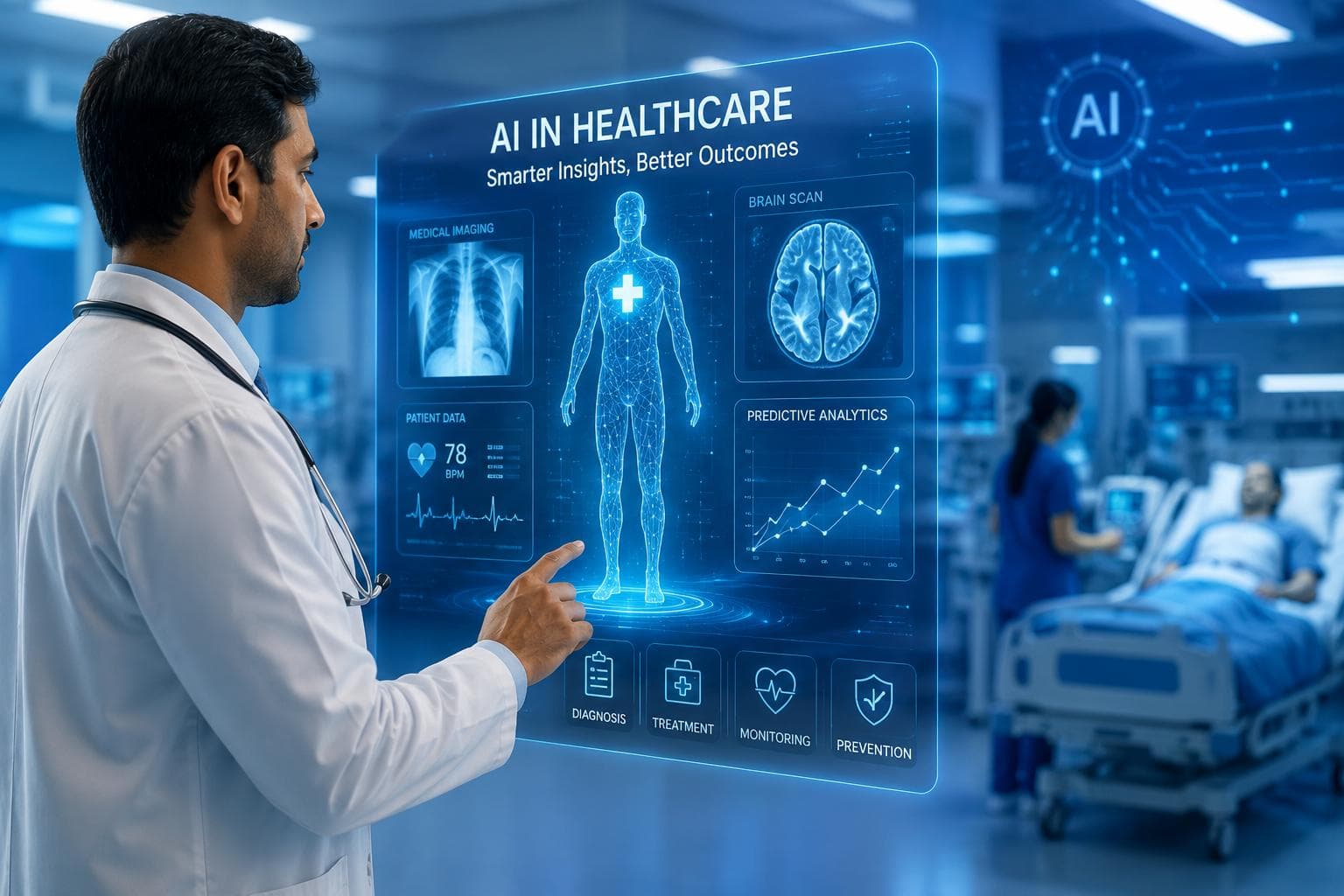
Healthcare is undergoing one of the most significant transformations in modern history, and at the center of this revolution is Artificial Intelligence (AI). Once considered science fiction, AI is now becoming an integral part of healthcare delivery, research, and patient engagement.
The future of medicine will not be defined solely by advanced technology but by how intelligently we use technology to improve human health and create more accessible, efficient, and compassionate care.
The Emergence of Intelligent Healthcare
The healthcare industry generates enormous amounts of data every day, from electronic medical records and diagnostic images to laboratory reports and wearable device information. AI has the ability to analyze this data at an unprecedented scale and speed, uncovering patterns that may not be immediately visible to healthcare professionals.
Rather than replacing physicians, AI serves as an intelligent partner that enhances clinical decision-making, improves efficiency, and enables providers to focus on what matters most: caring for patients.
Earlier Detection, Better Outcomes
One of the most exciting applications of AI is its ability to identify diseases earlier and more accurately. Advanced algorithms can analyze imaging studies, laboratory data, and patient histories to detect conditions such as cancer, cardiovascular disease, stroke, diabetic complications, neurological disorders, and chronic respiratory diseases.
Early diagnosis often means earlier intervention, better outcomes, and reduced healthcare costs. In the coming years, predictive analytics powered by AI will increasingly help healthcare providers identify patients at risk before symptoms become severe.
Personalized and Precision Medicine
Every patient is unique, and healthcare should reflect that individuality. AI is enabling a shift from generalized treatment approaches to highly personalized care plans based on genetics, lifestyle, environment, and medical history.
The future of medicine lies in precision healthcare, where treatment recommendations are tailored to each individual patient, resulting in improved treatment effectiveness, reduced adverse reactions, better chronic disease management, higher patient satisfaction, and improved long-term health outcomes.
Transforming the Patient Experience
Patients today expect healthcare to be more convenient, understandable, and accessible. AI-powered technologies are helping to meet these expectations through virtual health assistants, symptom assessment tools, medication reminders, remote patient monitoring, personalized health education, and appointment scheduling assistance.
These innovations empower patients to take a more active role in managing their health and create stronger partnerships between patients and healthcare providers.
Expanding Access and Advancing Health Equity
Access to quality healthcare remains one of the greatest challenges worldwide. Rural communities, underserved populations, and individuals facing financial or geographic barriers often struggle to receive timely care.
AI has the potential to dramatically improve health equity by expanding telehealth services, supporting multilingual healthcare communication, providing remote monitoring capabilities, delivering educational resources to underserved communities, and improving access to specialists through virtual consultations.
Technology should not widen healthcare disparities; it should help eliminate them. When implemented thoughtfully, AI can become a powerful tool for creating a more equitable healthcare system.
Supporting Healthcare Professionals
Healthcare providers face increasing demands, including documentation requirements, administrative responsibilities, and growing patient volumes. These challenges contribute significantly to burnout across the healthcare workforce.
AI can help alleviate these pressures by automating clinical documentation, generating medical summaries, streamlining administrative tasks, assisting with coding and billing, and supporting clinical decision-making.
Revolutionizing Medical Research and Drug Development
AI is also transforming scientific discovery. Drug development and clinical research traditionally require years of work and billions of dollars in investment. AI can accelerate this process by identifying potential drug candidates, predicting treatment responses, analyzing large research datasets, improving clinical trial design, and supporting precision therapeutics.
These advances have the potential to bring lifesaving treatments to patients faster than ever before.
The Rise of AI Healthcare Copilots
The next generation of healthcare will likely include intelligent healthcare copilots that assist both patients and providers. These systems may interpret medical reports in simple language, provide health education and guidance, generate clinical summaries and notes, improve communication, and support medication adherence and follow-up care.
Ethical Responsibility in the Age of AI
As AI becomes increasingly integrated into healthcare, important questions must be addressed: How do we protect patient privacy? How do we eliminate bias in algorithms? How do we ensure transparency and accountability? How do we maintain trust between patients and providers?
The future of AI in healthcare must be guided by strong ethical principles, responsible governance, and a commitment to patient safety.
Technology with a Human Touch
Despite its remarkable capabilities, AI cannot replace empathy, compassion, and human connection. Healing involves more than data and algorithms. Patients need providers who listen, understand, and care.
The future of healthcare is not about humans competing with machines. It is about humans and technology working together to create better outcomes and more meaningful patient experiences.
Looking Ahead
Artificial Intelligence represents one of the greatest opportunities in the history of healthcare. It has the potential to improve diagnosis, personalize treatments, expand access, reduce costs, and empower both patients and providers.
As healthcare leaders, innovators, and professionals, we have a responsibility to ensure that these technologies are implemented thoughtfully and ethically.
The future of healthcare will belong to those who embrace innovation while preserving the fundamental values of medicine: compassion, trust, and service to humanity.
AI will not replace healthcare professionals. It will empower them to deliver smarter, more efficient, and more equitable care for generations to come.