Successful Children, Lonely Parents: The Silent Crisis in Modern Indian Families
When children achieve their dreams, why do some parents find themselves living with memories instead of companionship?
By Dr. Vijay Kumar, MD, MPH, PhD
Introduction: A House Full of Memories, but Empty of Voices
There was a time when an Indian household rarely experienced silence.
Early mornings began with the sound of utensils in the kitchen, parents calling their children to get ready for school, grandparents offering advice, and family members gathering around the dining table.
There were arguments, laughter, celebrations, disagreements, and countless ordinary moments that made a house feel like a home.
Today, in many Indian cities and villages, those same houses tell a different story.
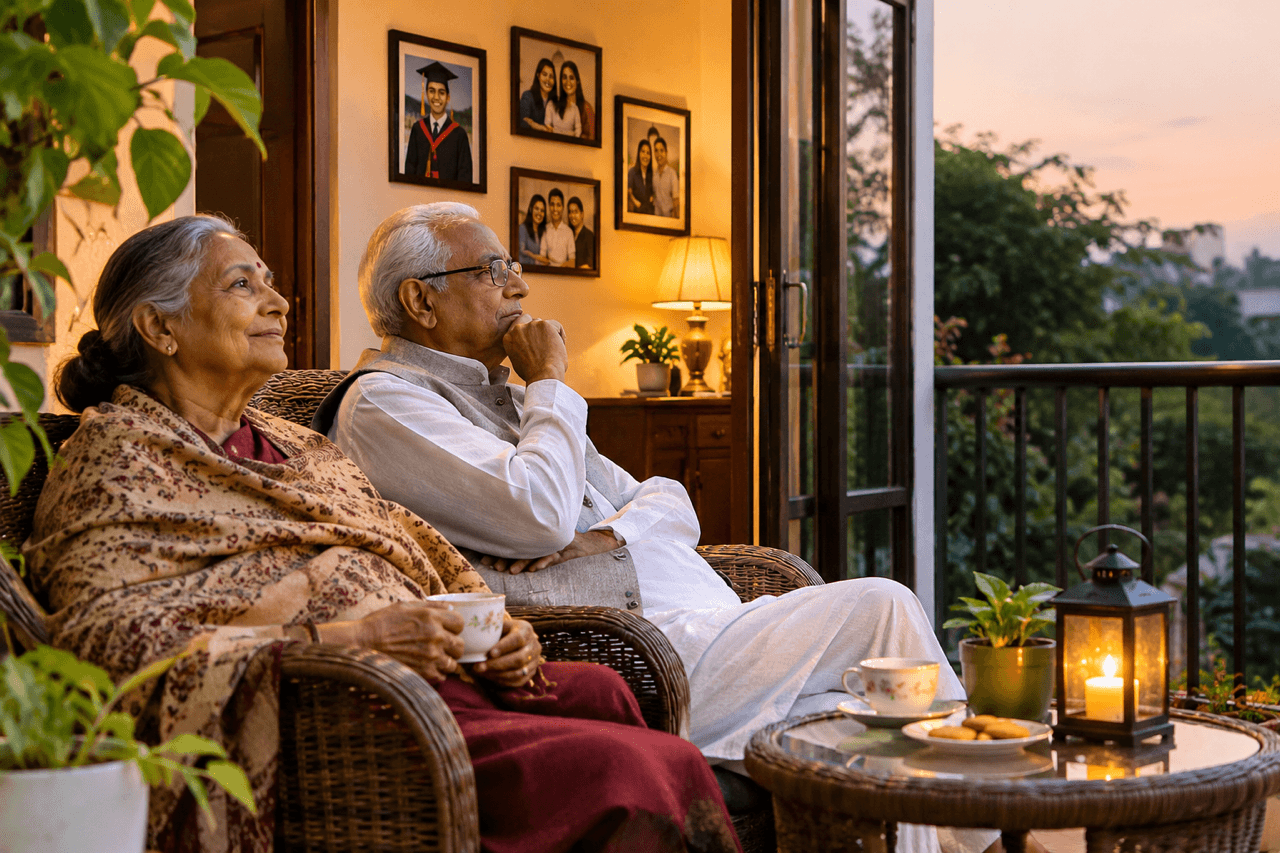
The bedrooms are beautifully maintained, but nobody sleeps in them. Family photographs decorate the walls. Academic certificates, graduation pictures, and wedding photographs proudly display the achievements of children who now live thousands of miles away.
The parents have everything they once dreamed of providing for their children.
Except their company.
Their children have become doctors, engineers, lawyers, scientists, entrepreneurs, and successful professionals. Some live in America, Canada, Australia, Europe, or the Middle East. Others have moved from smaller Indian towns to metropolitan cities.
The parents proudly tell relatives and neighbors about their children's accomplishments. Yet, when evening arrives, they sometimes sit alone, waiting for a telephone call.
This is one of the great emotional contradictions of modern Indian society: parents who sacrificed everything for their children's success may find themselves growing old without their physical presence.
1. The Indian Parenting Dream: Education, Sacrifice, and Success
For generations, Indian parents have considered their children's education one of their greatest responsibilities.
Many parents sacrificed personal comforts, postponed retirement, sold ancestral property, borrowed money, or worked additional hours to provide opportunities they never had themselves.
A farmer wanted his son to become an engineer. A schoolteacher wanted her daughter to become a physician. A small businessman wanted his children to study abroad.
For these parents, success was not measured primarily by personal wealth. It was measured by how far their children could progress in life.
And remarkably, millions of Indian families have achieved these dreams.
Indian professionals are contributing to medicine, technology, research, education, business, and public service throughout the world.
But an important question deserves attention:
While we were preparing our children for successful lives, did we also prepare ourselves for life after they left home?
Many parents never considered that their children's success might eventually create physical distance between them. They encouraged independence, but perhaps did not fully anticipate its emotional consequences.
2. From Joint Families to Nuclear Families: A Cultural Transformation
Traditional Indian family life was often built around multigenerational households.
Grandparents, parents, children, uncles, aunts, and cousins frequently lived together or maintained close daily contact.
Older adults often enjoyed a clearly defined position within the family. They helped raise grandchildren, shared household responsibilities, passed down traditions, and participated in family decisions.
This arrangement was not perfect. Joint families could experience conflicts, financial pressures, unequal expectations, and restrictions on personal independence.
Nevertheless, they often provided something valuable: readily available companionship.
Modernization, urbanization, educational mobility, changing employment patterns, and smaller family sizes have transformed these arrangements.
Today, many young adults must relocate to pursue professional opportunities.
A software engineer may move to Bengaluru. A physician may settle in London. A researcher may accept a position in Boston. A daughter may establish her career in California.
These decisions are often necessary and entirely reasonable.
But the consequences extend beyond the individual. Every relocation changes the emotional geography of a family.
3. The Psychology of the Empty Nest
Psychologists use the expression empty nest syndrome to describe feelings of sadness, loneliness, or loss that some parents experience when their children leave home.
It is not itself a formal psychiatric diagnosis.
For many parents, raising children becomes a central part of personal identity. Their daily routines revolve around school schedules, meals, extracurricular activities, examinations, and family responsibilities.
Then, gradually, those responsibilities disappear.
The children graduate. They find employment. They marry. They establish independent households.
And parents must rediscover who they are beyond their parenting responsibilities.
Some welcome this transition and enjoy renewed freedom. Others experience sadness, uncertainty, or diminished purpose.
The transition can be especially difficult when retirement, declining health, bereavement, or reduced social contact occurs around the same time.
The psychological challenge is not simply that children have moved away. It is that a familiar source of daily meaning has changed.
4. Loneliness Is More Than an Emotional Experience
Loneliness deserves serious attention from healthcare professionals and policymakers.
Research increasingly recognizes social isolation and loneliness as important public health concerns.
The World Health Organization has identified social connection as a significant determinant of health and well-being. Research has associated persistent loneliness and social isolation with increased risks of depression, cardiovascular disease, cognitive decline, and premature mortality.
These relationships are complex, and loneliness does not automatically cause these conditions. Nevertheless, the evidence supports treating social connection as an important part of healthy aging.
We routinely advise older adults to monitor blood pressure, blood glucose, cholesterol, nutrition, and physical activity.
But how frequently do we ask:
Do you have someone to talk to every day?
Do you feel emotionally connected to your family?
Do you have meaningful relationships outside your household?
Do you feel that someone would notice if you needed help?
These questions can reveal needs that routine medical examinations may overlook.
A person can have a comfortable house, adequate financial resources, and excellent medical care while still experiencing profound loneliness.
5. The Emotional Reality of Parents Living Alone
Imagine an elderly couple living in a spacious home in Delhi, Patna, Lucknow, or another Indian city.
Their children are professionally successful and financially secure. They receive regular video calls. Money is not necessarily a problem. Household help may be available.
Yet their daily lives may be shaped by a different reality.
During festivals, they remember the excitement of children running through the house.
On birthdays, they cut a cake while their children participate through a phone screen.
During illness, they may hesitate to inform their children because they do not want to create anxiety.
They proudly tell neighbors, "My son is doing very well in America," or "My daughter has an excellent career abroad."
Their pride is genuine.
So is their longing.
Financial support can provide security, but it cannot always replace emotional presence.
Sometimes, what an aging parent wants most is not money, gifts, or expensive vacations. It is simply an unhurried conversation.
6. Are Successful Children Neglecting Their Parents?
This question requires sensitivity.
It would be unfair to suggest that children who relocate for education, employment, or marriage are automatically neglecting their parents.
Many adult children maintain close emotional relationships despite living thousands of miles away. They provide financial support, coordinate medical care, arrange visits, and remain deeply involved in family decisions.
At the same time, modern professional life presents genuine challenges.
Long working hours, immigration requirements, financial responsibilities, raising young children, and limited vacation time can make frequent travel difficult.
An adult child may love their parents deeply and still struggle to visit regularly.
Parents, meanwhile, may avoid expressing their loneliness because they do not want their children to feel guilty.
Both generations may remain silent about their emotional needs. This silence can gradually create misunderstanding.
The real challenge is not choosing between professional success and family responsibility.
It is learning how to maintain meaningful relationships while respecting the independence and realities of both generations.
7. The Changing Role of Daughters in Indian Families
Traditionally, Indian society placed greater responsibility for aging parents on sons. Daughters were often expected to become primarily involved in their marital households.
Fortunately, these expectations are changing.
Educated, professionally independent daughters increasingly contribute to their parents' financial security, medical care, and emotional well-being. Many maintain close relationships with parents despite living in different cities or countries.
Family responsibility should never be determined solely by gender.
A loving daughter can be as supportive as a loving son. Similarly, parents should not assume that having sons guarantees companionship in old age.
What matters is not whether a child is male or female.
What matters is the quality of the relationship.
8. Technology Connects Families, but Does It Replace Presence?
Modern technology has transformed communication.
A generation ago, families separated by international borders depended on expensive telephone calls and letters that took days or weeks to arrive.
Today, video calls, instant messaging, and shared photographs allow families to remain connected almost continuously.
Grandparents can watch grandchildren grow up through video calls. Parents can participate virtually in birthdays, graduations, and celebrations.
Technology has unquestionably reduced some of the difficulties associated with geographic separation.
However, digital connection is not identical to physical companionship.
A video call cannot fully reproduce sitting together over morning tea.
A text message cannot replace holding someone's hand during illness.
A photograph of a family celebration cannot always substitute for being part of that celebration.
Technology should therefore be understood as a valuable bridge rather than a complete replacement for personal contact.
9. The Silent Burden of Aging in India
India is experiencing a significant demographic transition.
According to the United Nations Population Fund's India Ageing Report 2023, people aged 60 and older accounted for approximately 10.5% of India's population in 2022. The report projected that this proportion could increase to approximately 20.8% by 2050.
This means that India must prepare for a future in which a much larger share of its population will be older adults.
The implications extend beyond pensions and medical facilities.
Communities will need accessible transportation, age-friendly housing, safe public spaces, reliable home-based care, opportunities for social participation, and stronger protection against elder abuse and exploitation.
Loneliness is not merely a private family issue.
It is also a matter of public health, urban planning, social policy, and community responsibility.
A society cannot claim to be fully developed simply because its economy is growing. It must also consider how its older citizens are living.
10. What Can Adult Children Do?
Maintaining a meaningful relationship with aging parents does not always require living under the same roof.
What matters is consistent involvement.
Adult children can:
Establish predictable communication routines rather than calling only when convenient.
Listen carefully instead of limiting conversations to medication, bills, and household problems.
Involve parents in important family milestones and decisions.
Arrange dependable local assistance for emergencies without treating paid caregivers as substitutes for family relationships.
Plan visits that allow genuine time together rather than filling every day with social obligations.
Recognize that parents may not openly express their emotional needs.
Sometimes the statement, "Everything is fine here," deserves a second question.
11. What Can Parents Do to Build a Meaningful Life?
Parents also have an important role in preparing for this stage of life.
Children should not become the sole source of emotional fulfillment.
Healthy aging requires personal identity, independence, friendships, interests, and purpose.
Retirement can create opportunities to explore activities that were postponed during years of professional and family responsibilities.
These may include volunteering, teaching, mentoring younger generations, gardening, reading, music, spirituality, travel, exercise, or community service.
Regular physical activity can support mobility, mental well-being, and social engagement.
Community centers, senior groups, cultural organizations, and religious institutions may offer valuable opportunities for connection.
Parents should also feel comfortable discussing emotional needs with their children without guilt or accusation.
There is nothing wrong with saying:
"I am proud of everything you have achieved, but I miss spending time with you."
Such conversations can strengthen relationships rather than weaken them.
12. A Public Health Perspective: Building Age-Friendly Communities
The responsibility for supporting older adults cannot rest entirely on individual families.
Governments, healthcare organizations, local communities, and civil society all have roles to play.
India needs stronger community-based programs that promote social participation among older adults.
Primary healthcare providers should consider screening for social isolation and loneliness when clinically appropriate.
Municipal authorities should invest in safe walking paths, accessible parks, benches, public toilets, reliable transportation, and community gathering spaces.
These facilities are not luxuries.
For older adults, they can be essential to maintaining independence and meaningful participation in society.
A well-maintained neighborhood park may offer opportunities for daily walking, conversation, friendship, and a sense of belonging.
Community organizations can establish volunteer visiting programs, telephone companionship services, senior activity groups, and intergenerational initiatives.
Universities and schools can encourage younger people to participate in community programs involving older residents.
Such efforts can benefit both generations. Young people gain perspective and wisdom. Older adults gain opportunities for connection and continued contribution.
13. Success Should Include the Well-Being of Parents
Indian families have traditionally celebrated academic achievement, professional recognition, financial stability, and international opportunities.
These are legitimate accomplishments worthy of pride.
But perhaps our understanding of success needs to become more comprehensive.
A successful family is not necessarily one in which every child lives close to their parents. Nor is it one in which children abandon their ambitions to fulfill every parental expectation.
Instead, success should include the ability to preserve mutual respect, emotional connection, and dependable care across changing circumstances.
Parents deserve independence and dignity.
Adult children deserve the freedom to build their own lives.
Neither generation should be forced to choose between love and personal growth.
The challenge is to create family relationships strong enough to accommodate both.
14. A Personal Reflection: The Meaning of Family Changes With Time
As we move through life, our understanding of family evolves.
During childhood, we depend on our parents for almost everything.
During adulthood, we become occupied with education, careers, marriage, raising children, and establishing financial security.
Later, we begin to recognize that our parents are aging, just as we ourselves are moving toward another stage of life.
The passage of time is gradual, but its effects can be profound.
The parents who once held our hands while crossing a busy road may eventually need someone to accompany them to a medical appointment.
The people who once stayed awake when we were sick may later spend a quiet evening hoping to hear from us.
And the children who once filled our homes with noise may eventually have homes and responsibilities of their own.
This is not necessarily a tragedy.
It is part of the human life cycle.
What matters is how thoughtfully we navigate these transitions.
We cannot stop time. We cannot prevent our children from growing up. And we should never wish to limit their dreams simply to protect ourselves from loneliness.
But we can build relationships that remain meaningful despite distance.
We can create communities where older adults are respected, included, and supported.
And we can remind ourselves that human connection deserves as much attention as material success.
Conclusion: The Greatest Achievement Is Not Just Raising Successful Children
Perhaps the greatest accomplishment of parenthood is raising children who become independent, responsible, compassionate human beings.
But independence should never mean emotional disconnection.
And parental love should never become a demand for lifelong physical proximity.
Some parents genuinely enjoy living independently. Others prefer multigenerational households. Many find happiness somewhere between these arrangements.
There is no single ideal family structure.
What every generation deserves, however, is dignity, affection, respect, and the reassurance that meaningful relationships endure.
One day, the children who are busy building careers and raising families will also grow older. They, too, may sit in quiet homes, looking at photographs and remembering the years when their children were young.
Perhaps then they will understand something their parents already knew:
A house becomes valuable because of the people who fill it with love, not because of its size, location, or possessions.
Let us celebrate our children's success. Let us encourage their dreams.
But let us also build a society in which parents do not have to choose between being proud of their children and feeling connected to them.
Because the true measure of a successful family is not simply how far its children travel in life.
It is how deeply its members remain connected, no matter how far apart they live.