Sleep Apnea: The Hidden Health Risk Behind Snoring
Why sleeping seven or eight hours may still leave you exhausted, how snoring affects relationships, and what nighttime breathing disturbances can mean for your heart, brain, and overall health.
By Dr. Vijay Kumar, MD, MPH, PhD, DPT
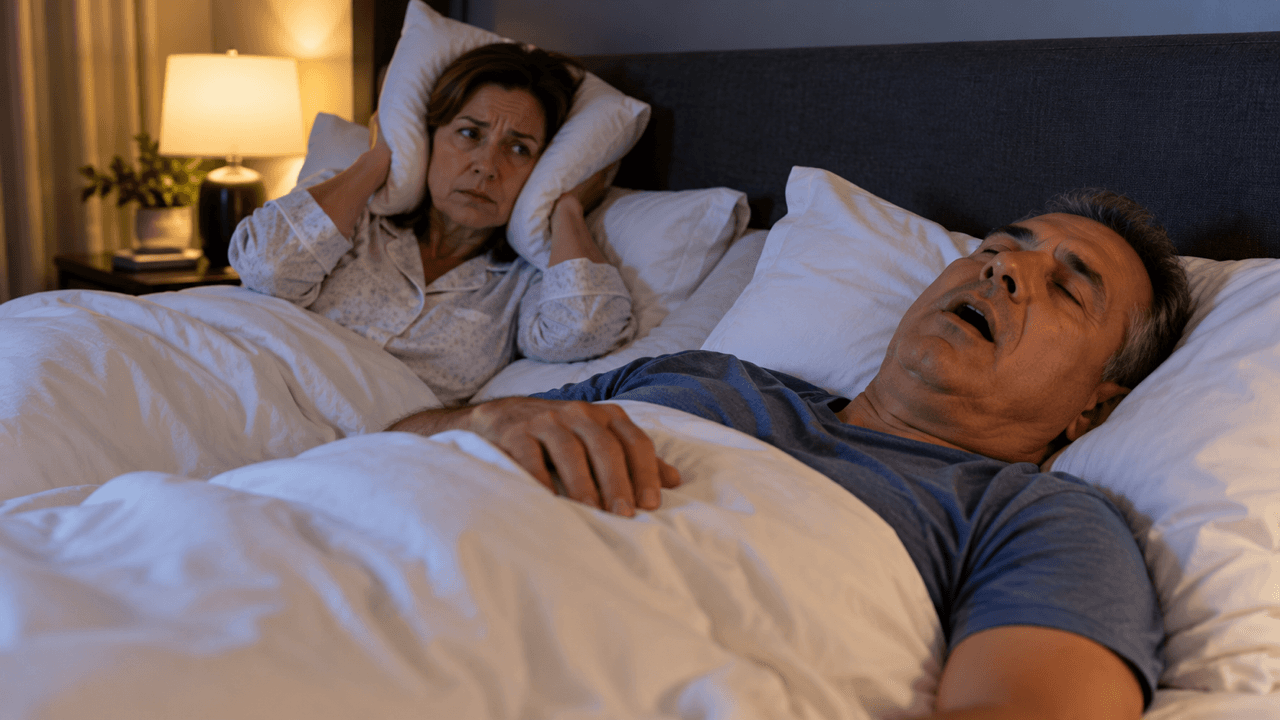
Introduction: When Snoring Becomes More Than a Family Complaint
“Doctor, my wife has started sleeping in another bedroom because I snore so loudly.”
“Doctor, I go to bed at 10 o’clock and wake up at 6 in the morning. I spend eight hours in bed, but I still wake up exhausted.”
“My husband says I sometimes stop breathing while sleeping and then suddenly gasp for air.”
These concerns may initially sound like ordinary complaints about sleep, aging, or household inconvenience. However, they can sometimes indicate a medical condition known as obstructive sleep apnea (OSA).
Snoring is often treated as a source of humor. Families joke about it, spouses complain, and some couples eventually decide to sleep in separate bedrooms. But what if loud snoring is more than a nuisance?
What if someone who appears to be sleeping peacefully is actually experiencing repeated interruptions in breathing?
As a healthcare professional with a background in medicine, public health, and physical therapy, I believe sleep health deserves the same attention we give to nutrition, physical activity, blood pressure, and other preventive healthcare priorities.
Understanding sleep apnea begins with recognizing one important fact: spending eight hours in bed does not necessarily mean receiving eight hours of restorative sleep.
1. What Exactly Is Sleep Apnea?
Sleep apnea is a sleep-related breathing disorder characterized by repeated reductions or interruptions in breathing.
There are three main forms:
Obstructive sleep apnea: The upper airway repeatedly narrows or collapses during sleep, reducing or blocking airflow even though the body continues trying to breathe.
Central sleep apnea: The brain temporarily fails to send appropriate signals to the muscles responsible for breathing.
Mixed sleep apnea: A combination of obstructive and central breathing disturbances.
Obstructive sleep apnea is the most common form.
During normal sleep, muscles throughout the body relax, including those that support the tongue and throat. In susceptible individuals, this relaxation allows the upper airway to narrow excessively.
Airflow may decrease or stop temporarily. Oxygen levels can fall, and the brain may briefly arouse the person to restore breathing. These arousals are often so short that the person does not remember waking up.
Nevertheless, repeated episodes can disrupt normal sleep and leave a person feeling tired the following day.
2. Why Does Snoring Occur?
Snoring develops when airflow causes relaxed tissues in the upper airway to vibrate.
The sound may originate from the soft palate, uvula, tongue, and surrounding throat tissues.
Factors that contribute to snoring include:
Nasal congestion.
Upper airway anatomy.
Excess body weight.
Alcohol consumption, particularly near bedtime.
Sleeping position.
Certain medications or other medical conditions.
Snoring becomes more concerning when it occurs alongside witnessed breathing pauses, choking, gasping, or excessive daytime sleepiness.
However, not everyone who snores has sleep apnea, and some people with sleep apnea do not report prominent snoring.
Ordinary snoring primarily involves sound, whereas obstructive sleep apnea involves repeated abnormalities in breathing. The two can occur together, but they are not the same condition.
3. When a Spouse Moves Into Another Bedroom
One recognizable consequence of severe snoring is its effect on relationships.
A partner may experience repeated awakenings because the snoring is loud or unpredictable. Over time, frustration and sleep deprivation can develop. Some couples use earplugs, while others choose separate sleeping arrangements to protect their rest.
Sleeping separately does not necessarily indicate relationship difficulties. For some couples, it is simply a practical solution.
However, the underlying cause of persistent loud snoring may remain unaddressed.
A spouse may also notice something the person who snores cannot recognize: breathing stops for several seconds, followed by a sudden gasp, choking sound, or loud snore.
These observations can be clinically valuable. In some cases, a bed partner is the first person to recognize possible obstructive sleep apnea.
4. “I Sleep Eight Hours, but I Still Wake Up Exhausted”
This is an important complaint that deserves attention.
A person may spend seven or eight hours in bed and assume they have slept enough. Yet they wake feeling tired, experience morning headaches, struggle to concentrate, or feel sleepy throughout the day.
The explanation may involve the difference between sleep duration and sleep quality.
Healthy sleep requires adequate duration and appropriate continuity. During obstructive sleep apnea, repeated breathing disturbances can cause brief arousals that interrupt normal sleep.
Possible symptoms include:
Unrefreshing sleep.
Excessive daytime sleepiness.
Difficulty concentrating.
Reduced alertness.
Morning headaches.
Irritability and reduced productivity.
Sleep apnea is not the only possible explanation. Insomnia, insufficient sleep, depression, anemia, thyroid disorders, medication effects, and other conditions can produce similar symptoms.
Persistent fatigue should therefore prompt an appropriate medical assessment rather than an automatic assumption that sleep apnea is responsible.
5. Why Nighttime Oxygen Fluctuations Matter
One important feature of obstructive sleep apnea is intermittent hypoxemia, which means repeated reductions in blood oxygen levels.
During an obstructive event, airflow decreases or stops while the body continues attempting to breathe. Oxygen saturation may fall until breathing resumes.
These episodes can activate the sympathetic nervous system, alter blood pressure, and increase cardiovascular workload.
The severity of oxygen fluctuations varies among individuals. Some people experience frequent respiratory events with relatively modest oxygen changes, while others develop more pronounced reductions.
This is one reason that counting breathing interruptions alone does not capture every aspect of sleep apnea severity.
Sleep fragmentation, oxygen levels, symptoms, and associated medical conditions all contribute to clinical assessment. Not everyone with sleep apnea will experience the same complications.
6. Sleep Apnea and High Blood Pressure
High blood pressure is an important medical condition associated with obstructive sleep apnea.
Repeated breathing disturbances can activate stress-response pathways, temporarily increasing heart rate and blood pressure. Over time, these responses may contribute to sustained hypertension.
Sleep apnea is particularly common among people whose blood pressure remains difficult to control despite treatment.
Healthcare professionals may consider evaluating for sleep apnea in patients with resistant hypertension, especially when symptoms such as loud snoring or daytime sleepiness are present.
Continuous positive airway pressure (CPAP) treatment can produce modest average reductions in blood pressure, although the effect varies between individuals.
Sleep apnea treatment should complement—not replace—established hypertension management. Medication when indicated, physical activity, nutrition, and regular medical follow-up remain important.
7. Sleep Apnea, Heart Disease, and Sudden Cardiac Events
Many people ask whether untreated sleep apnea can cause a heart attack or sudden death.
Obstructive sleep apnea is associated with coronary artery disease, heart failure, atrial fibrillation, and other cardiovascular conditions.
Repeated oxygen fluctuations, sleep fragmentation, nervous system activation, and changes in pressure within the chest may contribute to cardiovascular stress.
However, an association does not automatically prove that sleep apnea caused a particular heart attack or sudden death.
Many affected individuals also have other cardiovascular risk factors, including high blood pressure, diabetes, smoking, or excess body weight.
Research has not consistently shown that CPAP prevents major cardiovascular events in every population, particularly among people without significant sleepiness.
CPAP remains an important treatment for reducing obstructive breathing events and improving symptoms, but its cardiovascular benefits should not be overstated.
People with sleep apnea should receive comprehensive cardiovascular risk assessment rather than assuming that treating sleep apnea alone provides complete protection.
8. Is Sleep Apnea Associated With Stroke?
Obstructive sleep apnea is associated with increased stroke risk, although the relationship is influenced by other cardiovascular and metabolic conditions.
High blood pressure, atrial fibrillation, diabetes, and vascular disease may all contribute.
The relationship can also be complex because sleep apnea may occur after a stroke, meaning the conditions can influence one another.
Recognizing and treating sleep apnea may improve sleep-related symptoms and other outcomes, but evidence that treatment reliably prevents recurrent stroke remains uncertain.
Sudden facial drooping, arm weakness, speech difficulty, or other signs of a possible stroke require immediate emergency care. Contact your local emergency service immediately.
9. Sleep Apnea, Diabetes, and Metabolic Health
Obstructive sleep apnea frequently coexists with type 2 diabetes and metabolic dysfunction.
Repeated sleep disruption and intermittent oxygen changes may affect insulin sensitivity and glucose regulation. Excess body weight is also an important shared risk factor.
However, sleep apnea can occur in people who are not overweight, and not everyone with diabetes has sleep apnea.
People with diabetes who experience loud snoring, witnessed breathing pauses, or significant daytime sleepiness should discuss these symptoms with a healthcare professional.
Similarly, individuals diagnosed with sleep apnea may benefit from assessment of their metabolic and cardiovascular risk factors.
Effective management should consider the whole patient rather than treating sleep apnea as an isolated disorder.
10. Memory, Concentration, and Emotional Health
Sleep plays an important role in attention, learning, memory, and emotional regulation.
When sleep is repeatedly interrupted, people may experience difficulty concentrating, irritability, reduced productivity, and impaired daytime functioning.
Some describe feeling mentally foggy despite spending adequate time in bed.
Sleep apnea is also associated with depressive symptoms and reduced quality of life. These symptoms may improve with effective treatment, although the degree of improvement varies.
Not every cognitive or emotional complaint is caused by sleep apnea. Medication effects, mood disorders, neurological conditions, and other sleep disorders may also need to be considered.
Nevertheless, sleep health should be part of a comprehensive evaluation of persistent daytime fatigue and concentration difficulties.
11. The Danger of Daytime Sleepiness
Excessive daytime sleepiness is more than an inconvenience. It can affect driving, workplace safety, and everyday responsibilities.
Some individuals fall asleep while watching television or sitting quietly. Others struggle to remain alert during meetings, conversations, or long drives.
The most concerning situation occurs when someone becomes sleepy while operating a vehicle or machinery.
Untreated sleep apnea accompanied by significant sleepiness can increase the risk of motor vehicle crashes.
People who feel drowsy while driving should stop driving as soon as it is safe and seek medical evaluation. Coffee, energy drinks, and opening vehicle windows are not reliable substitutes for alertness.
Persistent daytime sleepiness deserves professional attention, particularly when accompanied by loud snoring or witnessed breathing pauses.
12. Who Is Most Likely to Develop Sleep Apnea?
Sleep apnea can affect adults of different ages and body sizes.
Common risk factors include:
Excess body weight.
Certain upper airway anatomical characteristics.
Larger neck circumference.
Older age.
Male sex and postmenopausal status.
Family history of sleep apnea.
Alcohol consumption near bedtime.
Certain sedating medications.
Nasal congestion may also contribute to breathing difficulties in some individuals.
Importantly, normal body weight does not exclude sleep apnea. People who exercise regularly and appear physically fit may still have anatomical or physiological characteristics that increase their risk.
Healthcare professionals should evaluate symptoms and risk factors rather than relying on appearance alone.
13. How Is Sleep Apnea Diagnosed?
Diagnosis begins with a clinical assessment.
A healthcare professional may ask about snoring, witnessed breathing pauses, choking, gasping, sleep duration, daytime sleepiness, medications, and medical history.
Questionnaires such as STOP-Bang and the Epworth Sleepiness Scale can help assess risk, but they cannot independently diagnose sleep apnea.
A sleep study is generally required.
Home sleep apnea testing may be suitable for selected adults with suspected moderate-to-severe obstructive sleep apnea who do not have certain complicating medical conditions.
In-laboratory polysomnography provides more comprehensive monitoring, including sleep stages, respiratory events, oxygen saturation, and other physiological signals.
A negative or inconclusive home study does not necessarily exclude sleep apnea when clinical suspicion remains high. A healthcare professional may recommend laboratory testing in such cases.
14. Understanding Sleep Study Results: What Does AHI Mean?
Sleep studies often report the apnea-hypopnea index (AHI). This represents the average number of qualifying breathing disturbances per hour of sleep.
An apnea is a significant interruption in breathing, while a hypopnea is a reduction in airflow that meets specified clinical scoring criteria.
For adults, commonly used AHI classifications are:
AHI (events per hour)ClassificationUnder 5Below the usual diagnostic threshold for obstructive sleep apnea5–14.9Mild sleep apnea15–29.9Moderate sleep apnea30 or moreSevere sleep apneaHow to understand these results:
Under 5: The result is below the usual AHI threshold for diagnosing obstructive sleep apnea in adults. Symptoms may still require evaluation for other sleep or medical conditions.
5–14.9: This range is classified as mild sleep apnea.
15–29.9: This range is classified as moderate sleep apnea.
30 or more: This range is classified as severe sleep apnea.
These categories provide useful information, but treatment decisions should not depend on AHI alone.
Symptoms, oxygen levels, associated medical conditions, sleep-study methods, and patient preferences are also important. Two people with similar AHI values may experience very different levels of daytime impairment.
Home sleep apnea tests may report a respiratory event index based on monitoring time rather than actual sleep time, so results should be interpreted in the context of the test used.
A qualified healthcare professional should interpret the findings and explain the next steps.
15. Can Smartwatches Detect Sleep Apnea?
Wearable technology has increased public awareness of sleep health.
Some devices estimate oxygen saturation, monitor sleep patterns, or identify possible breathing disturbances. Certain devices have regulatory authorization for specific sleep apnea notification functions.
However, consumer devices have limitations. They may miss clinically important events or produce alerts that do not represent a confirmed diagnosis.
A normal wearable reading does not reliably exclude sleep apnea, and an abnormal alert does not automatically establish that the condition is present.
Wearable information may be useful when discussing symptoms with a healthcare professional, but it should not replace appropriate diagnostic testing.
16. CPAP Therapy: How Does It Work?
Continuous positive airway pressure, commonly called CPAP, is a standard treatment for obstructive sleep apnea.
The device delivers pressurized air through a mask to help keep the upper airway open during sleep. By reducing airway collapse, CPAP can substantially decrease obstructive breathing events.
Many patients experience improvements in snoring, daytime sleepiness, and sleep-related quality of life.
Some notice benefits relatively quickly, while others need time to adjust.
Common difficulties include:
Mask discomfort or air leakage.
Nasal dryness or congestion.
Feeling claustrophobic.
Difficulty adapting to the pressure.
These problems can often be addressed through mask adjustments, humidification, pressure-setting review, and follow-up support.
Consistent use is important for obtaining benefits. Patients should work with their sleep medicine team rather than abandoning treatment because of initial discomfort.
17. What If Someone Cannot Tolerate CPAP?
CPAP is not the only treatment option.
Depending on the individual's condition, alternatives or additional approaches may include:
Oral appliances: Custom mandibular advancement devices may help selected patients keep the airway open during sleep.
Weight management: May improve sleep apnea severity when excess body weight contributes to the condition.
Positional therapy: May benefit people whose breathing disturbances occur predominantly when sleeping on their backs.
Surgery: Selected patients may benefit from procedures addressing upper airway obstruction.
Hypoglossal nerve stimulation: An option for carefully selected patients who meet specific eligibility criteria.
Treatment selection depends on anatomy, disease severity, symptoms, other medical conditions, and personal preferences.
A qualified sleep medicine professional can help determine the most appropriate approach.
18. Can Lifestyle Changes Improve Sleep Apnea?
Lifestyle measures can play a valuable supporting role.
Regular physical activity, balanced nutrition, and weight management when indicated may improve sleep apnea severity and overall cardiovascular health.
Other potentially helpful measures include:
Avoiding alcohol near bedtime.
Reviewing sedating medications with a clinician.
Maintaining a consistent sleep schedule.
Addressing nasal congestion when appropriate.
Trying side sleeping if breathing disturbances are position-dependent.
However, lifestyle changes do not reliably eliminate clinically significant obstructive sleep apnea in every patient.
People should not discontinue prescribed treatment simply because their snoring seems quieter or their weight has changed. Reassessment may be appropriate when symptoms or clinical circumstances change.
19. The Role of Physical Therapy and Exercise
Physical activity contributes to cardiovascular fitness, metabolic health, muscular endurance, and overall well-being.
For people with sleep apnea, exercise may improve general health and sometimes reduce disease severity, even without substantial weight loss.
Physical therapists can help patients who have limited exercise tolerance, chronic pain, mobility difficulties, or other physical limitations. Individualized programs can improve strength, endurance, and functional independence.
Certain upper airway muscle-training approaches, sometimes called oropharyngeal exercises, have also been studied as additional interventions for snoring and sleep apnea.
Although some research suggests potential benefits, these exercises should not be treated as equivalent substitutes for established treatment in people with clinically significant sleep apnea.
Physical therapy can support a comprehensive health plan, but it does not replace diagnostic sleep testing or appropriate sleep medicine treatment.
20. Sleep Apnea and the Aging Population
Sleep-disordered breathing becomes more common with increasing age.
Older adults may also experience changes in sleep patterns, medical conditions, and medication use that complicate evaluation.
Persistent fatigue is sometimes dismissed as a normal consequence of aging. That assumption can delay diagnosis.
An older adult who regularly wakes exhausted, experiences witnessed breathing pauses, or struggles with excessive daytime sleepiness deserves appropriate assessment.
Treatment decisions should consider overall health, functional status, symptoms, and patient preferences. The objective is not simply to improve a numerical sleep-study result but to improve meaningful outcomes such as daytime functioning, sleep quality, and quality of life.
21. Why Sleep Apnea Often Remains Undiagnosed
Many individuals do not recognize that they have a sleep-related breathing disorder because the events occur while they are asleep.
Some patients live alone and have no partner to observe their breathing. Others consider loud snoring normal because several family members snore.
Fatigue may be attributed to aging, work stress, or insufficient sleep.
Access to sleep testing can also be limited, particularly in rural communities, where transportation challenges and specialist availability may delay evaluation.
Improving awareness among patients and primary care professionals is an important part of preventive healthcare.
22. When Should You Seek Medical Evaluation?
Consider discussing sleep apnea with a healthcare professional if you experience:
Persistent, loud snoring.
Witnessed pauses in breathing.
Choking or gasping during sleep.
Unrefreshing sleep despite adequate time in bed.
Excessive daytime sleepiness.
Persistent concentration difficulties.
Difficult-to-control high blood pressure alongside other possible symptoms.
A spouse's observations can be particularly helpful.
Not everyone who snores needs an immediate sleep study. The decision should be based on symptoms, medical history, clinical findings, and professional assessment.
Severe daytime sleepiness that compromises driving or workplace safety requires prompt attention.
23. My Perspective: Sleep Deserves Greater Attention in Preventive Healthcare
Throughout my professional experience, I have emphasized the importance of physical activity, healthy nutrition, cardiovascular prevention, and maintaining independence.
But sleep is equally important.
A person may exercise regularly, eat nutritious meals, and attend medical appointments yet still experience significant sleep disruption.
I find it particularly important to recognize the concerns patients express in everyday language:
“My wife sleeps in another room because of my snoring.”
“I spend eight hours in bed, but I wake up exhausted.”
“I cannot stay awake during the day.”
These statements may sound ordinary, but they deserve thoughtful clinical attention.
We should neither frighten every person who snores nor dismiss persistent symptoms as harmless. The appropriate approach is education, evaluation when indicated, and individualized treatment.
Preventive healthcare means recognizing possible problems before they cause avoidable suffering. Sleep health belongs in that conversation.
Conclusion: Your Snoring May Be Telling You Something
Snoring is common, and in many cases it does not indicate a serious medical disorder.
However, loud, persistent snoring accompanied by breathing pauses, gasping, unrefreshing sleep, or excessive daytime sleepiness can be a warning sign of obstructive sleep apnea.
Untreated OSA is associated with important cardiovascular, metabolic, cognitive, and safety concerns. Fortunately, effective diagnostic methods and treatment options are available.
We must remember that spending eight hours in bed is not the same as obtaining eight hours of restorative sleep. We must also recognize that a spouse who complains about snoring may be observing something medically important.
The goal is not simply to stop the noise. It is to understand whether normal breathing and healthy sleep are being disrupted.
If your spouse has moved into another bedroom because of your snoring, consider discussing the problem with a healthcare professional.
If you consistently wake exhausted despite adequate time in bed, investigate the reason. And if you struggle to remain awake during the day, do not dismiss it as an unavoidable part of aging.
Better sleep can improve daily functioning, well-being, and quality of life.
Sometimes the first step toward better health begins by listening to what happens while we sleep.
Medical disclaimer: This article is for general educational purposes only and does not replace individualized medical advice, diagnosis, or treatment. Sleep apnea symptoms and severity vary, and diagnosis requires appropriate clinical assessment. Consult a qualified healthcare professional if you suspect a sleep disorder.