The Oath Beyond Graduation: What Medicine Asks of Us for a Lifetime
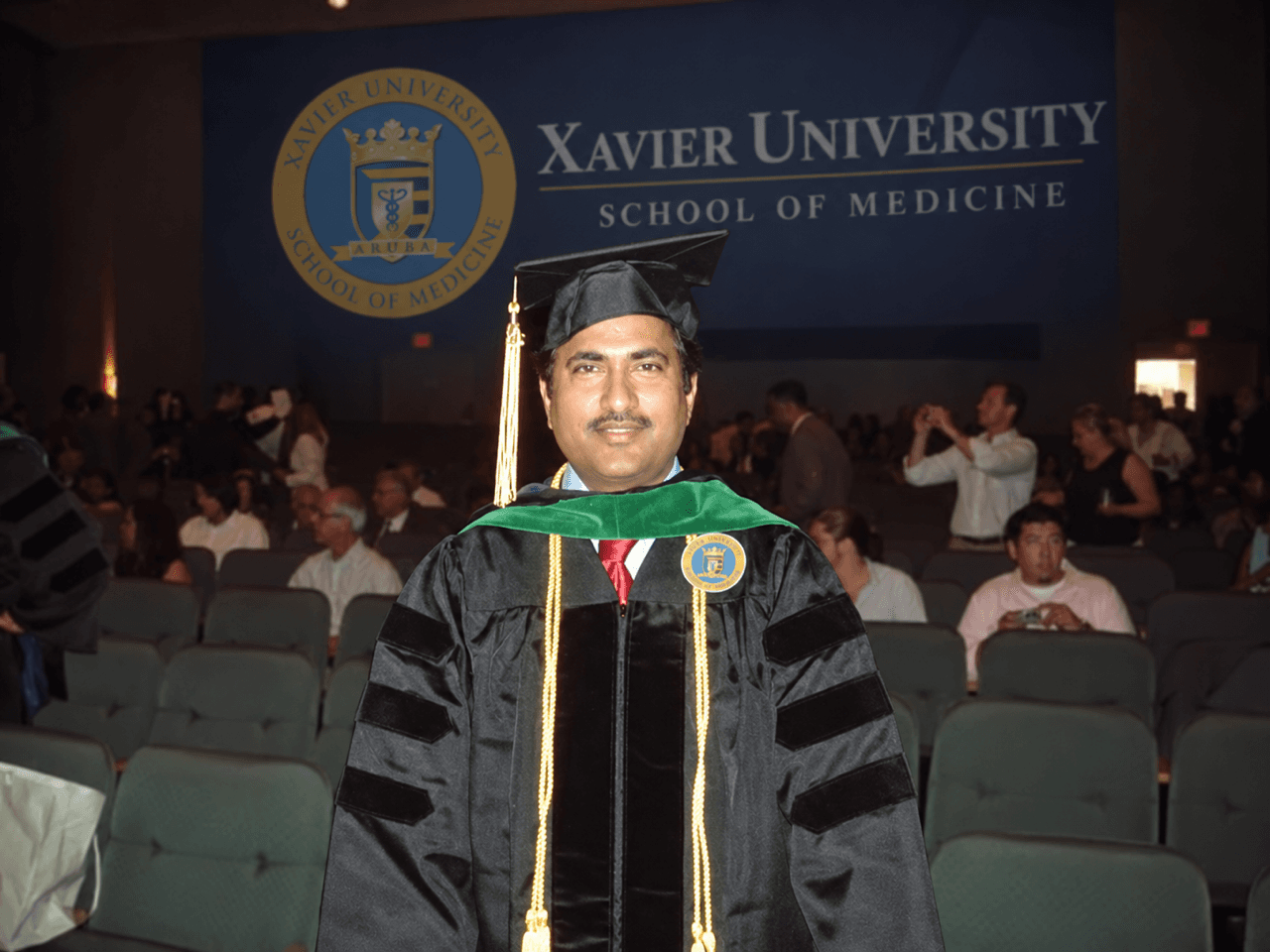
When I look at this photograph from my medical education journey, I see more today than I did when it was taken.
At the time, I saw graduation — a milestone reached after years of study, examinations, clinical training, sacrifice, and perseverance. I saw the academic gown, the hood, the diploma, and the satisfaction of completing an important chapter of my life.
Years later, something else stands out.
I think about the oath.
For generations, entering the medical profession has carried an ethical commitment that reaches far beyond academic achievement. Medical schools may use different versions of a physician's oath, many influenced by the ancient Hippocratic tradition and subsequently adapted to modern medicine. The wording has evolved, appropriately, as medicine and society have changed.
But the central idea remains remarkably powerful:
Medical knowledge is not simply something we possess. It is something entrusted to us for the benefit of others.
A graduation ceremony lasts a few hours. A medical degree has a date printed on it. But the responsibilities represented by the physician's oath are intended to last an entire professional lifetime.
And perhaps that is why, decades later, the oath may mean even more than it did on graduation day.
What Are We Really Promising?
People sometimes think of the physician's oath simply as "do no harm."
That principle is certainly important, although the familiar expression "first, do no harm" is not a literal sentence from the classical Hippocratic Oath.
The ethical responsibilities of medicine are much broader.
When we enter the profession, we accept obligations that include doing what benefits the patient, avoiding unnecessary harm, respecting the patient's right to participate in decisions, maintaining confidentiality, practicing within our competence, continuing to learn, treating people with dignity, and recognizing our responsibilities to society.
These concepts may sound philosophical until we encounter real patients. Then they become intensely practical.
Consider an older patient with several medical conditions who is offered an aggressive intervention. Technically, the procedure may be possible. But is it the best option for this particular person?
Consider a frightened patient who does not fully understand the diagnosis. Have we fulfilled our responsibility simply because we explained it once using medical terminology?
Consider a patient who chooses a different treatment from the one we would personally select. Can we respect that informed decision?
Consider a clinician facing a condition outside his or her expertise. Is asking for help a weakness — or an ethical responsibility?
These are situations in which the oath leaves the ceremonial hall and enters everyday medicine.
1. Beneficence: Our Knowledge Should Be Used to Do Good
One of medicine's fundamental ethical principles is beneficence — acting for the patient's benefit.
That sounds obvious. Why else would someone enter healthcare?
Yet beneficence can become complicated.
Doing something to a patient is not necessarily the same as doing something for a patient. More testing is not automatically better medicine. More treatment is not necessarily better care. A technologically advanced intervention is not always the right intervention.
The real question is: will what I am recommending meaningfully help this person?
That requires us to consider the whole patient — not simply a laboratory result, radiological image, diagnosis, or injured body part.
In rehabilitation, for example, increasing a patient's range of motion by several degrees may be clinically meaningful. But what may matter much more to that individual is being able to climb the stairs, return to work, drive again, attend a grandchild's graduation, or walk independently.
The science gives us measurements. The patient gives those measurements meaning.
2. "Do No Harm" in Modern Healthcare
Nonmaleficence — the obligation to avoid unnecessary harm — is another foundation of healthcare ethics.
Historically, we may imagine harm primarily as giving the wrong medication or performing an inappropriate procedure.
Today the concept is considerably broader.
Harm can result from unnecessary treatment. It can come from medication interactions. It can occur when fragmented healthcare leads to duplication or conflicting recommendations. It can result from failing to recognize the limits of our own competence.
There can even be harm from communication.
Words matter enormously in healthcare. A poorly explained diagnosis can leave someone terrified. A clinician who dismisses a patient's concern can discourage that person from seeking help later. Conversely, thoughtful communication can give a patient understanding, confidence, and a sense of control during an uncertain time.
Modern medicine therefore requires us to ask not merely "can we do this?" but also "should we do this, and does its likely benefit justify its risks for this particular patient?"
Those are very different questions.
3. Patient Autonomy: The Patient Is a Partner
Medicine has changed significantly from the era when physicians commonly made decisions with limited patient involvement.
Today, patient autonomy is a fundamental ethical principle. Patients have the right to understand their condition and participate meaningfully in decisions concerning their bodies and their health.
That means informed consent must be more than obtaining a signature.
True informed decision-making requires communication. What is the diagnosis? What treatment is being recommended? What are the likely benefits? What are the important risks? What reasonable alternatives exist? What could happen without treatment? And importantly: what matters most to this particular patient?
Two patients with the same diagnosis may make different decisions because their values, circumstances, responsibilities, tolerance for risk, and goals are different.
Our responsibility is not simply to tell patients what to do. Our responsibility is to bring our medical knowledge to the conversation, explain the evidence as clearly as possible, make recommendations when appropriate, and help patients make informed decisions consistent with their circumstances and values.
That is not a loss of medical authority. It is a more mature expression of medical responsibility.
4. Confidentiality in the Digital Age
The physician's obligation to protect patient confidentiality is ancient. The environment in which we must protect it is entirely modern.
A generation ago, medical information might largely have existed in paper charts kept inside hospitals and physician offices.
Today health information travels through electronic medical records, patient portals, insurance systems, pharmacies, laboratories, imaging centers, telehealth platforms, mobile devices, wearable technologies, and increasingly sophisticated digital systems. Artificial intelligence introduces additional questions about how health information is processed and used.
The technology has changed. The patient's expectation of trust has not.
Patients tell healthcare professionals things they may tell very few other people. They discuss their bodies, fears, symptoms, families, habits, medications, emotional struggles, and deeply private experiences.
That information is not ours merely because it appears on a screen available to us. It remains theirs, entrusted to us for a legitimate healthcare purpose.
Confidentiality, therefore, should never be viewed merely as a regulatory requirement. It is part of the moral architecture of the clinician-patient relationship.
5. Justice: Does Everyone Have a Fair Opportunity to Be Healthy?
Perhaps one of the most challenging principles in healthcare ethics is justice. It forces us to look beyond an individual examination room.
We have extraordinary medical technology in the United States and around the world. Yet access to that technology — and even to basic healthcare — remains uneven.
Where someone lives can matter. Income can matter. Transportation can matter. Insurance coverage can matter. Availability of specialists can matter. Health literacy can matter.
In rural communities, these challenges can become especially visible. A treatment does little good to a patient who cannot realistically access it.
This is why public health and clinical medicine ultimately cannot be separated completely.
As healthcare professionals, we certainly cannot solve every social problem individually. But we can recognize barriers, design better systems, advocate for access, educate communities, embrace appropriate telehealth solutions, and remember that healthcare justice begins with treating every person with equal dignity.
Quality healthcare should not depend upon whether someone appears important when walking through the door. Every patient is important.
6. Humility: Perhaps Medicine's Most Underrated Virtue
Medical education gives us knowledge. Experience gives us judgment. But neither makes us infallible.
One of the most important lessons I have learned through medicine, public health, research, rehabilitation, administration, and healthcare leadership is the importance of saying: "I don't know — but I will find out."
There is strength in those words.
Medicine advances too rapidly for any individual to know everything. The evidence changes. Guidelines evolve. New medications emerge. Old assumptions are challenged. Technology changes clinical practice. Specialization continues to deepen.
The ethical clinician therefore must recognize when consultation is necessary, when another healthcare professional possesses greater expertise, and when new evidence requires us to reconsider something we previously believed.
That is why lifelong learning is not merely a professional preference. It is an ethical responsibility.
Patients deserve care informed by what we know today — not simply what we learned years ago.
7. The Oath in the Age of Artificial Intelligence
This generation of healthcare professionals faces an ethical challenge previous generations could scarcely have imagined: artificial intelligence.
AI has tremendous potential. It can help analyze medical images, identify patterns in large datasets, assist documentation, support clinical decision-making, accelerate research, and potentially make certain forms of healthcare more accessible.
I welcome innovation. But innovation should never eliminate accountability.
If an algorithm makes a recommendation, who remains responsible for deciding whether that recommendation makes sense for the patient?
The clinician does.
AI can process information. It cannot assume our moral responsibility. A machine may identify statistical patterns across millions of data points. But it does not sit beside a frightened family and assume responsibility for explaining an uncertain prognosis.
It does not replace informed consent. It does not replace professional judgment. It does not replace human compassion.
The question for medicine should therefore not be whether AI will replace physicians. A more useful question is: how can healthcare professionals use increasingly powerful technology while remaining faithful to the ethical responsibilities that made patients trust us in the first place?
The physician's oath may actually become more important as our technological capabilities increase. The greater our power, the greater our responsibility in deciding how to use it.
8. The Oath Applies When Nobody Is Watching
Ethics is easiest when the right decision is convenient. Character becomes more important when it isn't.
Healthcare professionals encounter pressures — time pressures, financial pressures, administrative pressures, productivity expectations, competing interests, difficult patients, incomplete information, and increasingly complex healthcare systems.
The oath cannot remove those pressures. But it can remind us what should remain at the center of our decisions.
The patient.
Ethics matters when nobody is applauding. It matters when acknowledging a mistake is uncomfortable. It matters when ordering another test would be easier than explaining why it isn't necessary. It matters when a patient cannot afford something we routinely recommend. It matters when we must tell someone something they do not want to hear. And it matters when doing the right thing is less convenient than doing the easy thing.
Professional integrity is not demonstrated primarily during ceremonies. It is demonstrated through thousands of ordinary decisions made throughout a career.
9. When We Cannot Cure, We Can Still Care
Modern medicine sometimes creates an expectation that every problem must have a solution. Unfortunately, it does not.
There are diseases we cannot cure. There are injuries from which full recovery may not be possible. There are moments when medicine reaches its limits.
But reaching the limits of treatment does not mean reaching the limits of care. This distinction is essential.
Sometimes the physician's role changes from curing to relieving suffering. Sometimes rehabilitation shifts from complete restoration toward maximizing independence and quality of life. Sometimes the most important intervention is an honest conversation.
And sometimes medicine's greatest responsibility is simply ensuring that a human being does not feel abandoned during one of life's most difficult moments.
We may not always be able to cure. We should always be capable of caring.
10. The Oath Extends Beyond Physicians
Although I am reflecting here on the physician's oath, its underlying values belong to healthcare more broadly.
Nurses, physical therapists, occupational therapists, pharmacists, psychologists, physician assistants, technicians, public health professionals, caregivers, and countless others participate in the care of patients.
Healthcare today is a team endeavor. No profession owns compassion. No degree gives one profession exclusive ownership of wisdom. And excellent patient care frequently occurs when professionals respect one another's expertise and communicate effectively.
My own journey through medicine, public health, research, and physical therapy has strengthened my appreciation for this interdisciplinary approach.
The patient does not benefit when healthcare professions compete for importance. The patient benefits when healthcare professionals collaborate around a common purpose.
11. Prevention Is Also Part of Our Promise
There is another dimension of our responsibility that deserves greater attention.
Healthcare cannot be concerned only with treating illness after it develops. We must also help people understand how to preserve health.
Many of the greatest health challenges facing society — including cardiovascular disease, type 2 diabetes, obesity, frailty, and loss of mobility — are influenced to varying degrees by modifiable risk factors.
Physical activity matters. Nutrition matters. Sleep matters. Blood pressure matters. Metabolic health matters. Maintaining muscle mass and physical function as we age matters. Avoiding tobacco matters. Preventive screening and appropriate vaccination matter. Health education matters.
The dramatic rescue in an emergency room will always attract attention. But helping someone avoid the emergency in the first place may represent an equally important achievement.
Prevention may be one of medicine's quietest forms of success.
12. What Patients Should Expect From Us
The physician's oath should not be meaningful only to physicians. It should mean something to patients too.
Patients should reasonably expect healthcare professionals to listen to them. They should expect explanations they can understand. They should be able to ask questions. They should expect their privacy to be respected. They should expect recommendations based on medical need rather than prejudice or social status. They should expect clinicians to acknowledge uncertainty when uncertainty exists. They should expect us to seek consultation when a problem exceeds our expertise. And they should expect to be treated as human beings rather than diagnoses, numbers, or appointments on a schedule.
Medicine cannot promise every patient a cure. But it can promise every patient dignity.
Looking at This Photograph Differently
That brings me back to the photograph.
When it was taken, I naturally thought about accomplishment. Today I think more about responsibility.
The gown represented education. The degree represented achievement. The oath represented what I was expected to do with both.
That distinction becomes more meaningful with time.
Degrees and credentials are important. They represent rigorous education and professional preparation. But credentials alone cannot define a healthcare professional's contribution.
Ultimately, our careers are written in human experiences.
The patient who walked again. The person whose disease was recognized early. The family whose questions we took time to answer. The frightened patient we treated with dignity. The person whose privacy we protected. The student or younger professional we mentored. The patient to whom we admitted, "I don't know," and then found someone who did.
Those moments rarely appear on a résumé. Yet they may represent some of the most meaningful work we ever do.
A Promise Without an Expiration Date
Medicine today bears little resemblance technologically to medicine practiced generations ago. And medicine several decades from now will undoubtedly look different from medicine today.
Artificial intelligence will become more capable. Precision medicine will advance. Genomics will increasingly influence treatment. Robotics will evolve. Remote monitoring will expand. Rehabilitation technology will improve. Perhaps diseases we struggle with today will eventually become preventable or curable.
But there is something I hope medicine never outgrows.
The promise.
The promise that knowledge will be used responsibly. The promise that patients will be treated with dignity. The promise that confidentiality will be respected. The promise that we will continue learning. The promise that we will recognize our limitations. The promise that technology will serve humanity rather than allowing humanity to become secondary to technology. And the promise that when another human being comes to us vulnerable, frightened, injured, or ill, we will remember the extraordinary trust being placed in our hands.
Looking at my graduation photograph today, that is what I see. Not simply the completion of medical education. I see the beginning of an obligation.
We graduate from medical school once. But we spend the rest of our professional lives trying to remain worthy of the oath we took.
And perhaps that is what the white coat, the graduation gown, and the letters after our names should ultimately represent — not status, but service; not privilege, but responsibility; and not simply knowledge, but the wisdom and humanity to use that knowledge well.
Author Note
"The photograph that inspired this piece sits on my desk, and I catch myself looking at it more now than I did the year it was taken. Not out of nostalgia — out of accountability. An oath sworn once means little if it isn't renewed in practice, quietly, in rooms no one else sees. That's the version of medicine I try to show up for every day." — Dr. Vijay Kumar