My Father, My First Teacher: A Legacy of Love, Sacrifice, and Life Lessons
Some Losses Change Us Forever
Some losses do not simply leave an empty space in our lives. They change the way we understand time, love, family, and even ourselves.
Losing my father was one of those losses.
For most of my life, I carried an unspoken belief that my father would always be there. No matter how old we become or how far life takes us, there remains a part of us that believes we can return home, sit beside our parents, ask a question, share a concern, or simply enjoy their presence.
I never truly imagined a day when I would have to live without him.
My father was my strength. But before I understood the depth of that strength, he was simply Dad—the man whose presence made life feel secure, whose example shaped my character, and whose lessons reached me long before I was mature enough to recognize them.
He taught me without standing at a blackboard.
His classroom was our home, our village, our garden, and the ordinary hours we spent together.
Only after losing him did I fully understand how much of the person I became had first been planted by him.
My First Teacher
I grew up in a village in India, where life was simple and opportunities were not always abundant. The wider world could feel distant, and the possibilities beyond the village were not always visible to a young child.
My father made sure my world was larger than my immediate surroundings.
He encouraged me to read books and newspapers. He wanted me to know what was happening beyond our village and to become curious about people, places, ideas, and events.
He understood something important about education: it does more than prepare a person for employment.
Education opens the mind.
It teaches us to ask questions, recognize opportunities, form independent opinions, and imagine a different future.
At the time, I may have thought my father was simply telling me to study. Looking back, I realize he was teaching me to think.
He was telling me, in his own way, that where a person begins does not have to determine how far that person can go.
A newspaper was not merely paper and ink in our home. It was a window through which the wider world entered our village.
Books were not simply schoolwork. They were bridges to lives, places, and possibilities I had not yet experienced.
My father encouraged me to cross those bridges.
The Garden Where Memories Grew
Some of my most beautiful memories of my father live in our garden.
We grew fruits and vegetables together, and there were many varieties of flowers. He took genuine pride in caring for them.
As a child, I thought we were simply gardening.
I did not realize that we were also creating memories I would carry for the rest of my life.
There was something peaceful about watching my father work with the soil. Gardening demanded attention, but it also demanded humility.
You can prepare the ground, plant the seed, provide water, remove weeds, and protect a young plant—but growth still follows a rhythm greater than our own.
My father seemed to understand that good things cannot always be rushed.
Years later, I recognize the lesson hidden in those ordinary hours.
Life, like a garden, requires patience and care.
Some hopes take years to mature. Some relationships need regular attention. Some dreams survive because someone protects them during their most vulnerable stage.
A garden also teaches us that care is not a single act.
Watering once is not enough.
Removing weeds once is not enough.
Love, responsibility, education, and family all require us to return again and again with patience.
That is what my father did for our family. He kept returning to our needs, often placing them before his own.
And a garden carries another truth that is harder to accept: every season eventually changes.
Flowers bloom and fade. Fruit ripens and is gathered. Leaves fall.
The gardener learns to appreciate beauty without believing that he can possess it forever.
I did not understand that lesson then.
I understand it now.
Some things, despite all our care, must eventually be released. But what they gave us during their season remains.
Whenever I see a carefully tended garden, a flowering plant, or fresh vegetables growing from the earth, I feel close to my father again.
My Father Was Also My Friend
My father was not only the person who raised me.
He was also my friend.
We played badminton, carrom, and snakes and ladders. We competed, laughed, teased each other, and enjoyed the simplicity of being together.
There was no grand occasion required.
Happiness could be found in a game, a conversation, or a quiet evening at home.
Those moments seemed ordinary while they were happening. That is one of life's great illusions.
We often imagine that our most important memories will announce themselves. We expect them to arrive during ceremonies, achievements, or major events.
Yet after someone is gone, it is often the unremarkable moments we miss most deeply.
A game of carrom.
The sound of a shuttlecock during badminton.
Sitting together with the newspaper.
Walking through the garden.
Sharing a cup of tea.
Hearing a familiar voice from another room.
These moments rarely seem historic when we are living them, but love quietly gathers inside them.
We spend so much of life waiting for something extraordinary that we can overlook the extraordinary beauty of an ordinary day with someone we love.
My memories of my father taught me to see those moments differently.
Presence is not small. Time together is not ordinary.
One day, those minutes may become the treasures we protect most carefully.
The Quietest Kind of Love
My father was one of the most polite and loving people I knew.
His love was not always expressed through elaborate words. It appeared in responsibility, discipline, sacrifice, and the steady work of caring for a family.
He worked, worried, provided, and repeatedly put our needs before his own.
He sacrificed his health and well-being so that we could have what we needed.
Like many parents of his generation, he did not keep a record of what he gave up. He did not present his sacrifices as evidence that we owed him something.
He simply did what he believed a father should do.
Children naturally see what their parents provide, but they do not always see what that provision costs.
A child sees food on the table, school fees paid, clothing, books, and opportunities.
The child may not see the long hours, private worries, postponed needs, or personal comforts that were quietly surrendered.
Only as we grow older do we begin to understand.
Behind an education was sacrifice.
Behind stability was hard work.
Behind every opportunity may have been a choice our parents made against their own immediate interest.
My father rarely spoke about those sacrifices.
He simply made them.
That was his language of love.
When Love Could Not Make Him Stay
Years ago, our family entered the hardest chapter of our lives.
My father's kidneys eventually stopped functioning.
We did everything we could. We arranged the best treatment available to us. Our family surrounded him with love, attention, care, and support.
We hoped.
We prayed.
We waited for encouraging news.
We searched for possibilities and wanted to believe that one more treatment, one more doctor, or one more intervention might change the outcome.
When someone you love is seriously ill, hope becomes both a source of strength and a source of pain.
It carries you through difficult days, but it can also make acceptance feel like betrayal.
You keep searching because stopping seems impossible.
You want to be certain that nothing has been overlooked.
You bargain privately with time:
One more day.
One more conversation.
One more chance.
But sometimes medicine does everything it can, a family gives everything it has, and life still does not give us the ending we want.
We could not save him.
Even now, that sentence is difficult to write.
It contains the helplessness of watching someone you love suffer and knowing that love itself cannot repair a failing body.
As a family, we gave him our presence and our care. Yet eventually we had to face the truth none of us wanted to accept:
He was leaving us, and no amount of love could make him stay.
There are moments in life when all our achievements, knowledge, and resources become painfully small.
Loss teaches us that human beings can act with courage and devotion and still remain unable to control the final outcome.
What Grief Taught Me
I once thought grief was mainly the feeling of missing someone.
I now know it is much more complicated.
Grief is the conversation that will never happen.
It is the question you think of too late.
It is the family milestone you wish someone could have witnessed.
It is reaching for the phone before remembering that the person you want to call is no longer there.
It is seeing something beautiful and instinctively thinking:
I wish Dad could see this.
It is hearing news and knowing exactly how he would have reacted.
It is remembering a phrase in his voice.
It is sitting quietly with a memory that arrives without warning.
Grief does not always appear dramatically.
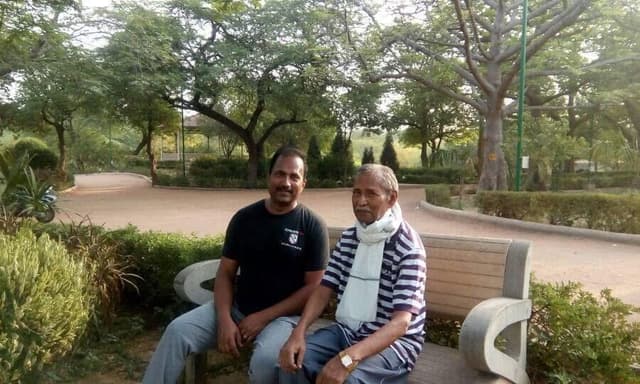
Sometimes it enters through the smallest doorway—a flower, a newspaper, a familiar game, a particular food, or the sight of a father and son sitting together.
A moment that seems ordinary to everyone else can suddenly carry the full weight of absence.
Over time, however, grief also taught me something gentler.
The people we love do not completely disappear when they die.
Their physical presence ends, but their influence continues moving through the lives they shaped.
They remain in our habits and values, in the standards we hold for ourselves, in the kindness we offer others, and in the lessons we pass to our children.
They remain in the way we respond to hardship and in the voice within us that asks what they would have done.
Their love becomes part of our moral memory.
Grief slowly changes form.
In the beginning, memory can feel like a wound.
Later, the same memory may become a source of comfort.
The sadness never completely disappears, nor should it.
Sadness is evidence that someone mattered.
But alongside it grows gratitude—the gratitude that this person lived, that we belonged to one another, and that we were given years together before we were asked to say goodbye.
The Legacy He Left Me
My father did not leave me a perfect life.
No parent can.
What he left was far more useful:
a way of looking at life.
He taught me to continue learning and to remain curious.
He taught me to work hard without becoming arrogant, to value education without forgetting humility, and to treat people with kindness regardless of their position.
He taught me to appreciate what I have, care for family, and remember where I came from even as life carried me far from the village where my story began.
He also taught me that success cannot be measured only through degrees, titles, possessions, or public recognition.
Those things may have value, but they do not provide the complete measure of a life.
A life is also measured by:
- Whom we encourage
- Whom we protect
- What we sacrifice
- How we treat people
- How people feel in our presence
My father's life reminds me that legacy is not always found in property or material wealth.
Sometimes a person's greatest legacy is the character of the children he raised, the values they carry, and the good they choose to do because of what they witnessed at home.
If that is true, then my father remains with me every day.
He is present when I choose patience over anger, learning over complacency, humility over pride, and generosity over selfishness.
He is present whenever I encourage someone to see beyond present limitations.
He is present when I care for my family or remember that achievement without compassion is incomplete.
I cannot repay him directly for what he gave me.
I can only honor him by living those lessons and passing them forward.
If I Could Sit Beside Him Once More
If I could sit beside my father one more time, I do not think I would prepare a long speech.
I would simply want to be with him.
Perhaps we would walk through a garden and look at the vegetables, fruits, and flowers.
Perhaps we would play one more game of carrom or talk about something in the newspaper.
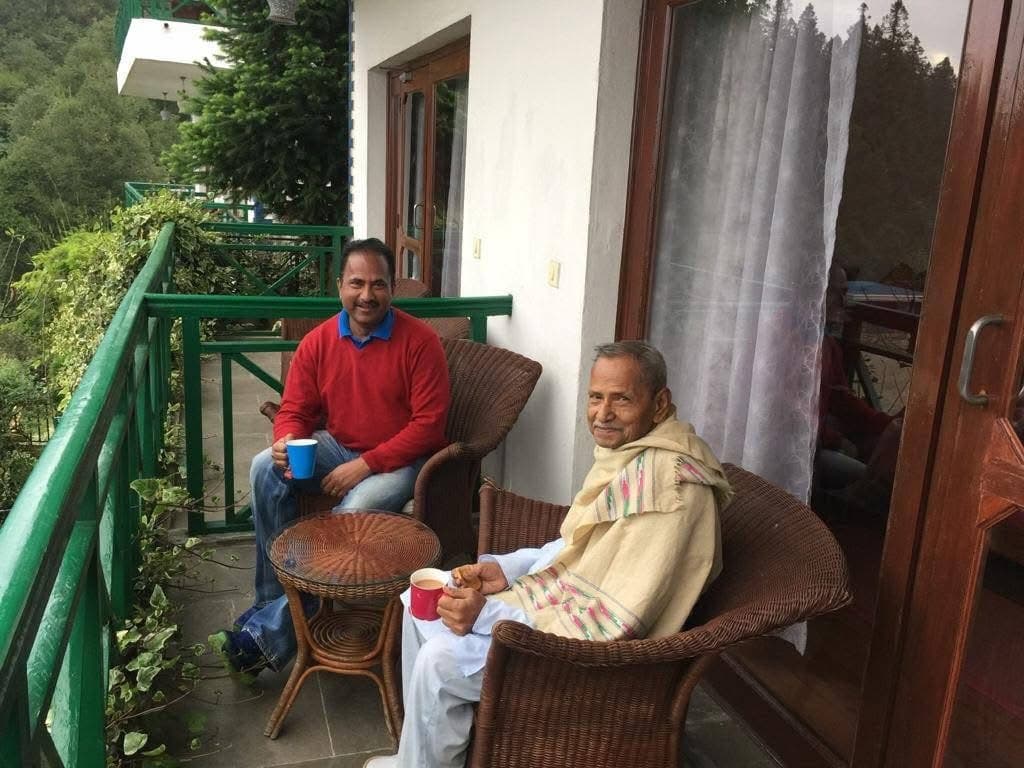
Maybe we would sit quietly, each holding a cup of tea, with no need to fill every moment with words.
Then I would say what children do not always say often enough while their parents are alive.
Thank you, Dad.
Thank you for teaching me before I understood that I was being taught.
Thank you for believing in me and for helping me see a world beyond our village.
Thank you for every sacrifice I understood, and even more for the sacrifices I failed to understand at the time.
Thank you for giving me roots while encouraging me to look beyond the horizon.
Thank you for teaching me to read, question, work, and remain curious.
Thank you for the garden, the games, the laughter, and the ordinary hours that became some of the most valuable memories of my life.
Thank you for being my father.
And thank you for being my friend.
A Part of Him Will Always Walk With Me
I still miss my father in ways that words cannot fully explain.
But I no longer want the story of his life to be defined only by the day I lost him.
Death was one moment.
His love filled years.
I want to remember the life we shared—the garden and its flowers, the fruits and vegetables, the books and newspapers, the badminton games, the carrom board, the laughter, the simple village life, and the steady love that held our family together.
Those are the memories I choose to carry forward.
They remind me that our parents do not give us a promise that they will remain beside us forever.
Instead, if we are fortunate, they give us enough love, wisdom, strength, and direction to continue walking after they are gone.
My father was my strength.
He was my first teacher.
He was my friend.
I had to learn how to live without his physical presence, but I will never have to live without the lessons he gave me.
They are woven into who I am.
They guide my decisions, shape the way I treat people, and remind me that the most meaningful parts of life are often found in humility, curiosity, family, service, and time shared with those we love.
I miss you every day, Dad.
A Reflection from Dr. Vijay Kumar
“Our parents may not walk beside us forever, but the lessons they plant in us can continue to guide every step we take. My father taught me that education should open the mind, success should remain grounded in humility, and love is often expressed most powerfully through quiet sacrifice. I carry those lessons with me every day.”
— Dr. Vijay Kumar