When the Sky Turns Gray: A Wake-Up Call from Michigan’s Air Quality Crisis
There are moments in life when nature quietly reminds us that our world is more interconnected than we often realize.
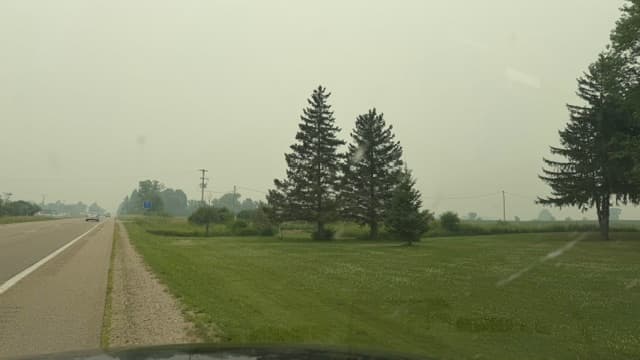
Recently, as I drove through the beautiful countryside of Michigan, I expected to see the clear blue skies and lush green landscapes that define our summers.
Instead, I found myself driving through an eerie gray haze. The horizon had nearly disappeared, the sun struggled to shine through the smoky sky, and the air carried the unmistakable scent of burning wood.
It looked like dense fog, but it was something far more concerning.
This was not ordinary weather.
It was wildfire smoke.
A Gray Sky with a Serious Message
The smoke had traveled hundreds of miles from massive forest fires burning across Canada, including northern Ontario, along with additional smoke from fires in parts of northern Minnesota.
Driven by atmospheric winds and trapped near the ground by weather conditions, the smoke spread across the Great Lakes region, including Michigan, creating a serious air quality event.
For many people, the sight was unsettling. For healthcare and public health professionals, it was also a reminder that the air we breathe can change quickly, and those changes can affect millions of lives.
When Air Becomes Hazardous
The impact was dramatic.
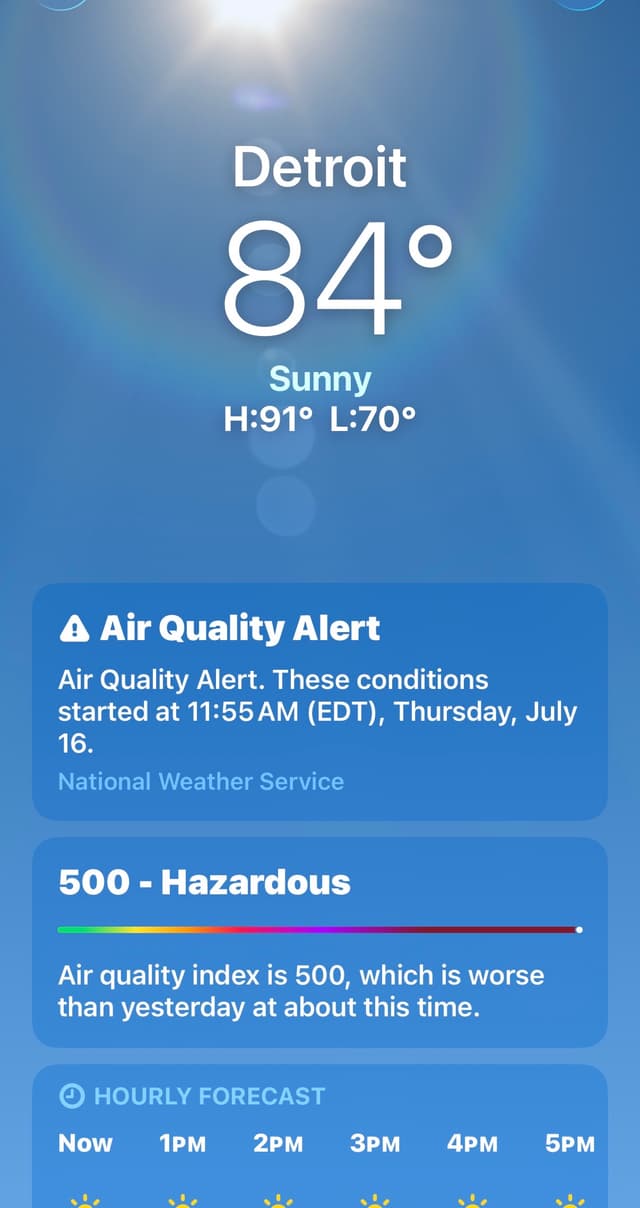
In parts of Michigan, air quality reached levels considered dangerous for everyone, not only children, older adults, or individuals with asthma, heart disease, or chronic respiratory conditions.
Detroit’s Air Quality Index, or AQI, was reported to have climbed above 500, reaching the hazardous range.
At this level, outdoor air can become unsafe for the general population. Even healthy individuals may experience eye irritation, coughing, difficulty breathing, headaches, chest discomfort, fatigue, or reduced lung function after exposure.
For vulnerable individuals, the risks can be even greater.
Understanding PM2.5: The Invisible Threat
What makes wildfire smoke especially dangerous is the presence of microscopic particles known as PM2.5.
These particles are extremely small, much smaller than the width of a human hair. Because of their tiny size, they can bypass many of the body’s natural defenses, travel deep into the lungs, and in some cases enter the bloodstream.
Exposure to fine particulate pollution has been linked to increased risks of:
- Asthma attacks
- Coughing and breathing difficulty
- Worsening chronic respiratory disease
- Cardiovascular stress
- Heart-related complications
- Stroke risk
- Emergency room visits
- Reduced lung function
- Greater health risks for children, older adults, and people with existing medical conditions
This is why wildfire smoke should never be dismissed as only a visibility problem. It is a serious public health concern.
Environmental Health Is Human Health
As someone who has dedicated much of my professional life to healthcare and public health, I see this event as more than a weather story.
It is a public health warning.
Environmental health and human health are inseparable. The air we breathe, the water we drink, the food we grow, and the climate conditions around us all influence our well-being.
When air quality becomes hazardous, the consequences are not abstract. They are felt in homes, hospitals, clinics, schools, workplaces, and communities.
Pollution Does Not Recognize Borders
One of the most striking lessons from this experience is that pollution does not recognize borders.
Fires burning hundreds of miles away in another country affected the air that millions of people in Michigan breathed.
In today’s interconnected world, environmental challenges are no longer isolated events. Wildfires, climate patterns, air pollution, and public health risks can move across regions, states, and countries.
The health of one region can directly influence the well-being of another.
That reality should remind us that environmental responsibility is not only local. It is regional, national, and global.
Protecting Ourselves During Hazardous Air Quality
During periods of hazardous air quality, everyone has a responsibility to protect themselves and those around them.
Important precautions include:
- Staying indoors whenever possible
- Keeping windows and doors closed
- Using air conditioning with effective filtration when available
- Avoiding strenuous outdoor activity
- Wearing a properly fitted N95 mask if outdoor exposure is unavoidable
- Monitoring local AQI updates
- Checking on children, older adults, and people with asthma, COPD, heart disease, or other health conditions
- Using indoor air purifiers when possible
- Following guidance from local health and environmental agencies
Preparedness matters because air quality can change rapidly.
A Larger Public Health Conversation
Beyond immediate precautions, this crisis points to a larger conversation.
Communities, policymakers, healthcare professionals, environmental leaders, and technology innovators must continue investing in:
- Wildfire prevention
- Climate resilience
- Emergency preparedness
- Public health education
- Air quality monitoring
- Community alert systems
- Protection for vulnerable populations
- Cleaner energy and sustainable planning
- Better coordination across regions and borders
These events are becoming more frequent and more disruptive. Preparing for them is no longer optional. It is essential.
The Role of Healthcare Professionals
Healthcare professionals have an important role to play during environmental health events.
We must help patients understand risks, recognize symptoms, and take preventive action. We must also advocate for stronger public health systems that protect communities before emergencies become crises.
Air quality events affect more than the lungs. They affect daily routines, school activities, outdoor work, mental well-being, and overall quality of life.
Public health is not only about treating illness. It is about preventing harm before it happens.
A Reminder from the Gray Sky
As I looked across Michigan’s smoke-filled landscape, I was reminded that the air we breathe connects us all.
The challenges facing our environment are shared challenges.
Protecting our planet ultimately means protecting ourselves, our families, our communities, and future generations.
Sometimes, the gray sky above us carries a message.
Today, that message is clear: our health, our environment, and our future are deeply connected.
Looking Ahead
This air quality crisis should serve as a wake-up call.
It reminds us that healthcare cannot be separated from environmental responsibility. It reminds us that prevention matters. It reminds us that preparedness saves lives.
Most importantly, it reminds us that every community must work together to build a healthier, safer, and more resilient future.
“The air we breathe connects us all. Protecting the environment is not separate from protecting public health — it is one of the most important ways we protect each other.”
— Dr. Vijay Kumar, MD, MPH, DPT, PhD