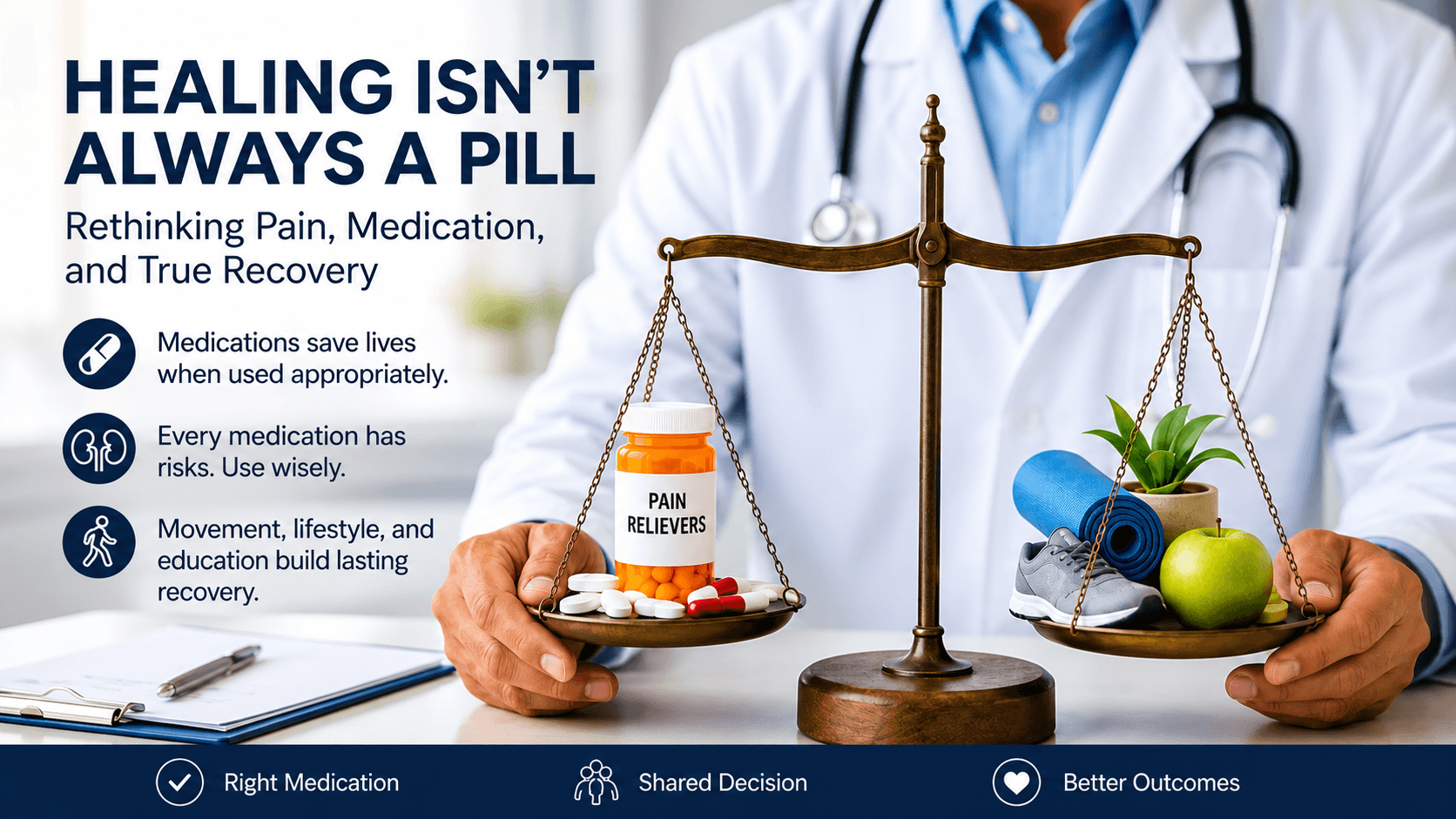
Are We Losing Our Tolerance for Pain? Rethinking Modern Medicine and the Culture of Quick Relief
By Vijay Kumar, MD, MPH, PhD, DPT
Pain has always been part of the human experience. It is one of the body’s most important communication systems—a signal that alerts us when something may be injured, inflamed, infected, strained, or otherwise in need of attention. Pain can make us stop, rest, protect an injured area, and seek medical care when necessary.
Yet modern society often communicates a very different expectation: pain should disappear immediately.
A headache is expected to resolve after taking a tablet. A sore back should feel better before the workday begins. A sprained ankle should not interrupt a busy schedule. Postoperative discomfort is sometimes viewed as a failure of treatment rather than a normal, carefully managed part of recovery.
This desire for relief is understandable. No one should be expected to suffer unnecessarily, and effective pain treatment remains an essential responsibility of healthcare. However, the growing expectation of immediate and complete relief raises an important question:
Are we losing our tolerance for pain, and are we becoming too dependent on medication as the first response to discomfort?
This question is not intended to criticize patients, clinicians, or modern medicine. Medications have transformed healthcare, prevented suffering, supported recovery, and saved countless lives. Appropriate pain relief is compassionate and medically necessary.
The concern arises when every symptom is treated as something that must be eliminated immediately, even before its cause, expected course, severity, and potential treatment risks have been properly considered.
A thoughtful approach to pain requires balance. It requires us to distinguish between pain that protects us, pain that accompanies healing, pain that signals a serious medical problem, and pain that has become chronic and no longer serves a useful protective purpose.
It also requires us to understand that medication is an important tool—but it is rarely the only tool.
What Is Pain, and Why Do We Experience It?
Pain is not simply a physical sensation located in an injured body part. It is a complex sensory and emotional experience involving the nervous system, the brain, previous experiences, expectations, stress levels, sleep quality, and the meaning a person assigns to the sensation.
The National Institutes of Health describes pain as an unpleasant sensory and emotional experience. Pain may feel sharp, aching, burning, shooting, throbbing, tingling, or dull, and different people can experience the same type of injury in very different ways.
When tissue is injured or threatened, specialised nerve endings can detect potentially harmful changes. These signals travel through the nervous system and are processed by the brain. The resulting experience encourages us to respond.
If a person touches a hot surface, pain causes the hand to move away. If an ankle is injured, pain may discourage weight-bearing and reduce the risk of further damage. If abdominal pain becomes severe, it may prompt urgent medical evaluation.
In this sense, pain is not always the enemy. It is often an alarm system.
However, an alarm is useful only when it is interpreted correctly. A smoke detector may signal a dangerous fire, burnt food, or a malfunctioning sensor. Similarly, pain may indicate a serious medical emergency, a minor injury, normal postoperative healing, muscular tension, nerve sensitisation, or a chronic condition that requires a more comprehensive treatment strategy.
The purpose of healthcare is not simply to silence the alarm. It is to understand why the alarm is sounding and determine the safest, most appropriate response.
Acute Pain and Chronic Pain Are Not the Same
A balanced discussion of pain must distinguish between acute and chronic pain.
Acute pain
Acute pain generally begins suddenly and is associated with an identifiable injury, illness, procedure, or inflammatory process. Examples include:
1. A sprained ankle
2. A surgical incision
3. A muscle strain
4. A dental procedure
5. A fracture
6. An acute infection
7. A burn or cut
Acute pain often serves a protective purpose. It encourages caution and helps prevent further injury while the body heals. As the underlying condition improves, acute pain usually decreases.
Appropriate treatment may include medication, rest, ice or heat when indicated, elevation, temporary activity modification, physical therapy, rehabilitation, or treatment of the underlying medical condition.
Chronic pain
Chronic pain is different. It lasts beyond the expected period of healing or continues for months or years. It may be associated with arthritis, nerve injury, migraine, back disorders, fibromyalgia, cancer, previous trauma, or other medical conditions.
In chronic pain, the nervous system can become more sensitive. Pain may continue even when there is no ongoing tissue damage that fully explains its severity. Sleep disturbance, anxiety, depression, reduced movement, social isolation, and fear of reinjury can further intensify the experience.
It would therefore be inaccurate and potentially harmful to tell every person with chronic pain simply to “tolerate it.” Chronic pain deserves careful evaluation, compassion, and an individualised treatment plan.
The goal of chronic pain treatment may not always be complete elimination of pain. In many cases, the more realistic and meaningful goals are improved function, better sleep, increased mobility, greater independence, reduced distress, and an improved quality of life.
Pain Is Not Always the Enemy—but It Should Not Be Ignored
Recognising that pain can have a biological purpose does not mean that people should suffer unnecessarily or avoid appropriate treatment.
Severe, unexplained, worsening, or persistent pain should be evaluated by a qualified healthcare professional. Certain symptoms may require urgent medical attention, particularly when pain is accompanied by:
1. Chest pressure or difficulty breathing
2. Sudden weakness, numbness, confusion, or difficulty speaking
3. A severe or unusual headache
4. High fever or a stiff neck
5. Significant trauma
6. Loss of bladder or bowel control
7. Progressive weakness
8. Severe abdominal pain
9. Unexplained weight loss
10. Persistent vomiting
11. Signs of infection
12. Pain that repeatedly wakes a person from sleep
13. Pain that continues to worsen instead of improving
Pain should be respected, assessed, and understood. The problem is not treating pain. The problem is assuming that every uncomfortable sensation requires immediate medication or complete suppression.
Some discomfort may be part of a safe recovery process. For example, mild muscle soreness after appropriate exercise does not necessarily indicate damage. Temporary discomfort during supervised rehabilitation may occur as strength, flexibility, and movement improve.
The appropriate response depends on the cause, severity, duration, associated symptoms, medical history, and functional impact.
How the Culture of Instant Relief Entered Healthcare
Modern life is built around speed.
We expect same-day delivery, immediate communication, rapid search results, instant entertainment, and quick solutions to everyday problems. Waiting has become increasingly unfamiliar and uncomfortable.
It is therefore unsurprising that these expectations have extended into healthcare.
A patient experiencing pain may arrive at a clinic expecting to leave with:
1. A prescription
2. Immediate pain relief
3. A diagnostic test
4. A quick cure
Confirmation that recovery will be rapid
Some patients may feel disappointed when the recommended treatment involves exercise, physical therapy, hydration, sleep improvement, gradual weight management, stress reduction, activity modification, or watchful waiting.
These interventions can sound less powerful than medication. A prescription feels immediate and tangible. It gives the impression that something decisive has been done.
However, the most visible intervention is not always the most effective one.
A clinician who carefully evaluates the patient, rules out dangerous conditions, explains the likely course of recovery, recommends appropriate movement, and avoids an unnecessary prescription may be providing excellent care—even if the patient leaves without medication.
The challenge is that education takes time. Discussing the expected duration of symptoms, possible side effects of treatment, non-medication alternatives, warning signs, and recovery strategies often requires more time than writing a prescription.
In busy healthcare settings, this creates pressure on both sides.
Patients want reassurance and relief. Clinicians face limited appointment times, administrative demands, satisfaction expectations, documentation responsibilities, and the fear that a patient may feel dismissed.
As a result, medication can sometimes become the fastest response rather than the most carefully considered response.
Does Receiving a Prescription Mean Receiving Better Care?
Many people understandably associate treatment with action. When they seek medical help, they want the clinician to do something.
A prescription is visible evidence of action. Education, reassurance, clinical reasoning, and watchful waiting are less visible.
This may create the perception that a doctor who does not prescribe medication has provided less care. In reality, choosing not to prescribe can require considerable expertise.
Responsible non-prescribing may involve determining that:
The condition is likely to improve naturally
The risks of medication outweigh the likely benefits
A medication would not treat the underlying cause
The patient is taking another drug that may interact with it
The patient has kidney, liver, gastrointestinal, cardiovascular, or other risk factors
A lower-risk intervention is more appropriate
Further observation is needed before escalating treatment
Good medical care should not be measured by the number of prescriptions, scans, tests, or procedures ordered.
It should be measured by the quality of assessment, the accuracy of diagnosis, the safety of the treatment plan, the strength of communication, and the outcome that matters to the patient.
Sometimes excellent care includes medication. Sometimes it includes a clear explanation of why medication is not currently necessary.
Medications Save Lives—But Every Medication Has Risks
Modern medicine would be unrecognisable without medication.
Antibiotics have made previously life-threatening bacterial infections treatable. Anaesthesia has made complex surgery possible. Anti-inflammatory drugs help reduce pain and improve mobility. Anticoagulants prevent dangerous blood clots. Insulin allows people with diabetes to live longer and healthier lives.
Pain medication can also be essential. It can support recovery after surgery, help a person participate in rehabilitation, reduce suffering during serious illness, and improve daily function.
However, no effective medication is entirely free of risk.
The question should not be, “Is this medicine good or bad?”
A better set of questions is:
Is there a clear medical reason to use it?
Is it appropriate for this particular patient?
What benefit is reasonably expected?
What are the possible risks?
Is there a safer alternative?
What is the lowest effective dose?
How long should it be taken?
Does the patient need monitoring or follow-up?
Medication safety depends on context.
A drug that is appropriate for one person may be risky for another. A medicine that is safe for several days may create problems when taken regularly for months. A treatment that is necessary for a severe condition may be unnecessary for a minor one.
NSAIDs: Effective Medications That Require Respect
Nonsteroidal anti-inflammatory drugs, commonly called NSAIDs, include medications such as ibuprofen and naproxen. They are widely used to treat pain, fever, inflammation, headaches, arthritis symptoms, menstrual discomfort, muscle strains, sprains, and postoperative pain.
NSAIDs can be highly effective. For the right patient and condition, they may reduce inflammation, improve mobility, and make it easier to sleep or participate in rehabilitation.
However, their widespread availability can create the impression that they are harmless.
NSAIDs are associated with potential gastrointestinal, kidney, blood-pressure, and cardiovascular risks. FDA prescribing information includes warnings about serious gastrointestinal events such as bleeding, ulceration, and perforation, as well as an increased risk of serious cardiovascular thrombotic events with non-aspirin NSAIDs.
Risk may be greater in people who:
Take high doses
Use NSAIDs for extended periods
Are older
Have kidney disease
Have a history of stomach ulcers or gastrointestinal bleeding
Have heart disease or uncontrolled high blood pressure
Are dehydrated
Take blood thinners or certain other medications
Use more than one product containing an NSAID
Are pregnant, particularly at certain stages of pregnancy
This does not mean NSAIDs should never be used. It means they should be used thoughtfully.
The principle of using the lowest effective dose for the shortest appropriate duration is often relevant, but individual medical advice is essential. Patients should also be aware that different over-the-counter cold, flu, headache, and pain products may contain overlapping ingredients.
A person may unknowingly take multiple products containing the same or similar medication.
Patients with chronic health conditions, people taking several medications, pregnant patients, and older adults should speak with a qualified clinician or pharmacist before using NSAIDs regularly.
Antibiotics and the Expectation of a Quick Cure
Antibiotics provide another important example of how expectations can influence treatment.
Antibiotics treat certain bacterial infections. They do not treat viruses such as those responsible for most common colds and influenza. The Centers for Disease Control and Prevention advises that antibiotics are not effective against viral infections and that unnecessary antibiotic use can expose patients to side effects without providing benefit.
Despite this, some patients seek antibiotics for sore throats, sinus symptoms, coughs, fevers, or respiratory illnesses before the cause has been established.
The desire is understandable. When people are unwell, they want a treatment that will help them recover quickly.
However, prescribing an antibiotic when it is not indicated does not represent stronger care. It may cause allergic reactions, gastrointestinal symptoms, drug interactions, or other adverse effects. Unnecessary use also contributes to antimicrobial resistance, making bacterial infections more difficult to treat over time.
Certain antibiotics require especially careful monitoring.
Gentamicin, for example, can affect kidney function and hearing, particularly at higher exposures or in vulnerable patients. Vancomycin can also be associated with kidney injury, especially when blood concentrations are elevated, treatment is prolonged, or other kidney-affecting medications are used.
These medications remain critically important. They can be life-saving in serious bacterial infections.
The lesson is not that powerful antibiotics should be feared. The lesson is that their use should be guided by diagnosis, dosing principles, laboratory information when relevant, patient-specific risk factors, monitoring, and antimicrobial stewardship.
The right antibiotic, given to the right patient for the right infection, can save a life. The wrong antibiotic may provide no benefit while creating avoidable risk.
Pain Relief Should Not Be Confused With Treatment of the Cause
One reason medication can become overused is that relief is sometimes mistaken for recovery.
A pain reliever may reduce a symptom without correcting the underlying condition.
For example:
Medication may reduce back pain without correcting weakness or poor movement patterns.
An anti-inflammatory drug may reduce knee discomfort without improving strength or joint stability.
A headache medication may provide temporary relief without addressing dehydration, inadequate sleep, visual strain, stress, or frequent medication use.
A muscle relaxant may reduce spasm without correcting the activity or posture contributing to the problem.
Symptom relief can still be valuable. Reducing pain may allow a person to sleep, move, work, or participate in physical therapy.
The concern arises when temporary relief becomes the entire treatment plan.
When medication makes activity possible, that opportunity should often be used to support recovery through appropriate movement, rehabilitation, education, sleep, nutrition, and management of the underlying condition.
The goal should not simply be to feel better for a few hours. The goal should be to recover safely, restore function, reduce recurrence, and improve long-term health whenever possible.
Are Patients Becoming More Dependent on Medication?
The word “dependence” requires careful use.
Medication dependence is not always the same as addiction. A person may become psychologically dependent on the idea of medication without developing a substance-use disorder.
They may begin to believe:
Every symptom requires a pill.
Every fever requires an antibiotic.
Every muscle ache requires an anti-inflammatory drug.
Every injury should become pain-free within hours.
Discomfort always means that something is being damaged.
Recovery cannot occur without medication.
These beliefs can change behaviour.
A person may avoid movement because they fear pain. They may stop rehabilitation when it becomes uncomfortable. They may repeatedly seek stronger treatment instead of gradually rebuilding strength and confidence.
This can create a cycle:
Pain produces fear.
Fear leads to reduced movement.
Reduced movement contributes to weakness and stiffness.
Weakness and stiffness make activity more difficult.
Increased difficulty reinforces the belief that movement is dangerous.
Medication becomes the primary coping strategy.
This does not mean pain is imaginary. The pain is real. However, the way a person interprets and responds to pain can influence recovery.
Patient education can help break this cycle by distinguishing between hurt and harm. Some discomfort during recovery may be safe, while certain types of pain indicate that an activity should be stopped or modified.
That distinction should be made with appropriate professional guidance.
The Role of Physical Therapy and Rehabilitation
For many musculoskeletal conditions, recovery involves more than symptom suppression.
Physical therapy and rehabilitation can help address:
1. Muscle weakness
2. Reduced joint mobility
3. Poor balance
4. Abnormal movement patterns
5. Fear of movement
6. Reduced endurance
7. Functional limitations
8. Recovery after surgery or injury
A rehabilitation plan may include graded activity, strengthening, mobility exercises, balance training, posture or movement education, and strategies for returning to work, exercise, or daily activities.
For some types of pain, non-pharmacological approaches are recommended either before medication or alongside it. American College of Physicians guidance has included options such as exercise and other non-invasive approaches for certain forms of low-back pain, depending on whether the pain is acute, subacute, or chronic.
Physical therapy is not simply “doing a few exercises.” A well-designed programme considers diagnosis, functional goals, medical history, current limitations, pain behaviour, safety, and progression.
Medication may still have a role. For example, appropriate pain relief may help a patient tolerate movement or participate more fully in rehabilitation.
The most effective approach is often not medication versus physical therapy. It is an individualised combination of treatment methods.
Movement Can Be Medicine—When It Is Appropriate
Rest is sometimes necessary, particularly after an acute injury, surgery, or serious illness. However, excessive or prolonged inactivity can also delay recovery.
Muscles weaken when they are not used. Joints become stiff. Cardiovascular fitness declines. Confidence in movement decreases. Everyday activities begin to feel more difficult.
For many common musculoskeletal problems, gradual and appropriate movement can support recovery.
This may include:
1. Walking
2. Gentle range-of-motion exercises
3. Strengthening
4. Stretching when appropriate
5. Water-based exercise
6. Balance training
7. Supervised rehabilitation
8. Gradual return to normal activities
The key words are gradual and appropriate.
Movement should not be prescribed as a universal answer without evaluation. A person with a fracture, serious infection, neurological symptoms, unstable medical condition, or certain postoperative restrictions may require a very different plan.
The purpose is not to push through every type of pain. It is to avoid assuming that all pain means movement must stop.
Sleep, Stress, Nutrition, and Pain Perception
Pain does not occur in isolation.
Sleep, emotional health, stress, physical conditioning, nutrition, social support, and daily routines can influence how pain is experienced and managed.
Sleep
Poor sleep can increase pain sensitivity, while pain can make sleep more difficult. This creates a self-reinforcing cycle.
Improving sleep routines, evaluating possible sleep disorders, and addressing nighttime pain can therefore be important parts of pain management.
Stress
Stress can increase muscle tension, disrupt sleep, reduce recovery, and intensify attention to symptoms. It may also reduce a person’s ability to cope with discomfort.
Stress-management strategies do not imply that pain is “all in the mind.” They recognise that the brain and body are connected.
Nutrition and hydration
Adequate nutrition supports tissue repair and general health. Dehydration can worsen certain symptoms and may increase medication-related risk in vulnerable individuals.
Physical conditioning
A stronger, more mobile, and better-conditioned body may tolerate daily activity more effectively. Gradual conditioning can improve confidence and function, even when some pain remains.
These measures should not replace necessary medical care. They are components of comprehensive care.
Lessons From Clinical Experience
Throughout my medical and healthcare career, I have witnessed the remarkable benefits of medications used appropriately.
I have seen pain relief allow patients to breathe more comfortably, participate in rehabilitation, sleep after surgery, regain function, and return to meaningful activities. I have seen antibiotics control dangerous infections and prevent severe complications.
I have also seen situations in which medications became routine responses without enough consideration of long-term consequences, patient-specific risks, or safer alternatives.
These experiences reinforced an important principle:
Good medicine is not measured by the number of prescriptions written.
It is measured by thoughtful clinical decision-making, careful assessment, individualised treatment, and honest communication.
Sometimes the most appropriate treatment involves medication.
Sometimes it involves surgery or another procedure.
Sometimes it involves physical therapy, exercise, better sleep, improved nutrition, stress management, patient education, or allowing natural healing processes sufficient time.
Often it involves several of these strategies working together.
Knowing the difference is part of the science and art of medicine.
The Importance of Shared Decision-Making
Healthcare works best when patients and clinicians become partners.
Shared decision-making means that clinicians contribute medical knowledge and experience while patients contribute their goals, values, preferences, concerns, and lived experience.
A treatment may be medically reasonable but poorly suited to a patient’s circumstances. Another patient may accept a certain risk because the potential improvement in function is especially important to them.
These decisions should be informed rather than automatic.
Patients should feel comfortable asking:
What is the likely cause of my pain?
Do I need this medication?
1. What benefit should I expect?
2. What are the possible side effects?
3. Could it interact with my other medications?
4. Are there non-medication options?
5. How long should I take it?
6. What should I do if it does not help?
7. What symptoms should prompt urgent medical attention?
8. What can I do to support my own recovery?
Clinicians should also feel empowered to educate patients rather than prescribing solely to meet expectations.
A patient who understands why a medication is not indicated is less likely to feel dismissed. A patient who understands the expected timeline of recovery is less likely to interpret every day of discomfort as treatment failure.
Trust is built through communication—not simply through prescriptions.
Setting Realistic Expectations for Recovery
Recovery is rarely perfectly linear.
Symptoms may improve one day and temporarily worsen the next. Increasing activity may produce short-term soreness. Sleep, stress, workload, and other illnesses can affect how a person feels.
Patients may become discouraged when they expect uninterrupted improvement.
Realistic expectations can include:
1. Understanding the probable duration of symptoms
2. Knowing which changes are normal
3. Recognising warning signs
4. Knowing when to increase or reduce activity
5. Understanding what the medication can and cannot accomplish
6. Identifying meaningful functional goals
7. Scheduling follow-up when symptoms do not improve as expected
A person recovering from an injury may still have some pain while walking farther, sleeping better, or returning to work. Those functional improvements matter.
Pain intensity is important, but it is not the only measure of recovery.
Resilience Does Not Mean Ignoring Pain
The idea of increasing pain tolerance can easily be misunderstood.
Resilience does not mean denying symptoms, refusing care, or enduring severe pain without help. It does not mean judging people who experience pain differently.
Resilience means developing the knowledge, confidence, support, and coping strategies needed to participate actively in recovery.
This may involve:
1. Understanding the condition
2. Following a rehabilitation programme
3. Taking medication as directed
4. Avoiding unnecessary medication
5. Gradually returning to activity
6. Improving sleep
7. Managing stress
8. Asking questions
9. Seeking help when warning signs appear
10. Accepting that some healing processes require time
The purpose is not to glorify suffering.
The purpose is to prevent fear of all discomfort from becoming an additional barrier to recovery.
The Clinician’s Responsibility
Clinicians play an important role in shaping expectations.
Responsible pain care requires more than choosing a medication. It may involve:
1. Identifying the likely cause of pain.
2. Screening for urgent or dangerous conditions.
3. Reviewing the patient’s health history and medications.
4. Understanding how pain affects function and quality of life.
5. Discussing treatment benefits, limitations, and risks.
6. Recommending non-medication strategies when appropriate.
7. Creating a clear follow-up plan.
8. Reassessing treatment if recovery does not progress.
Clinicians should avoid dismissing pain simply because imaging appears normal or because symptoms have lasted longer than expected. Pain is influenced by complex biological, psychological, and social factors.
At the same time, clinicians should not feel obligated to prescribe medication that is unlikely to help or may create unnecessary risk.
Compassion does not require automatic prescribing. It requires listening, explaining, validating, and making decisions in the patient’s best interest.
The Patient’s Responsibility
Patients also have an active role in safe pain management.
This can include:
1. Providing a complete medication list
2. Disclosing allergies and health conditions
3. Taking medications only as directed
4. Avoiding the use of someone else’s prescription
5. Not combining products without checking their ingredients
6. Attending follow-up appointments
7. Reporting side effects
8. Participating in rehabilitation when recommended
9. Following activity restrictions after surgery or injury
10. Seeking urgent care for concerning symptoms
11. Discussing fears or barriers that interfere with recovery
Healthcare is most effective when responsibility is shared.
A clinician cannot fully understand the patient’s experience without honest communication. A patient cannot make a truly informed decision without clear medical information.
Finding the Right Balance
The debate should not be framed as medication versus no medication.
That is an oversimplification.
The real goal is to balance relief, safety, function, recovery, and long-term health.
When used appropriately, NSAIDs can reduce pain and inflammation.
When indicated, antibiotics can save lives.
When carefully selected, pain medications can improve recovery and quality of life.
When properly designed, physical therapy and exercise can restore function.
When patients understand their condition, they are better prepared to make informed decisions and participate in recovery.
The central principle is simple:
The right treatment, for the right patient, at the right dose or intensity, for the right duration, at the right time.
That principle applies not only to medication but also to rehabilitation, diagnostic testing, procedures, and watchful waiting.
A Better Definition of Successful Pain Care
Successful pain care should not always be defined as reaching zero pain immediately.
Depending on the condition, success may mean:
1. Sleeping through the night
2. Walking farther
3. Returning to work
4. Participating in family activities
5. Reducing medication use safely
6. Regaining strength
7. Improving mood
8. Increasing independence
9. Preventing another injury
10. Understanding how to manage future symptoms
11. Recognising when medical attention is needed
Complete pain relief may be possible in some conditions. In others, improvement in function and quality of life may be the more realistic goal.
Healthcare becomes more effective when these goals are discussed openly.
Final Thoughts
As healthcare continues to evolve, perhaps one of the most important prescriptions we can offer is education.
Patients deserve to understand what pain means, why it occurs, what treatments are available, what medications can accomplish, and what risks must be considered.
They also deserve to know that not receiving a prescription does not necessarily mean that their concerns have been dismissed.
Sometimes the safest and most effective plan is medication.
Sometimes it is physical therapy.
Sometimes it is movement, sleep, nutrition, stress management, or gradual activity.
Sometimes it is additional testing, surgery, or urgent medical treatment.
Sometimes it is watchful waiting with clear instructions and follow-up.
Medicine should never become a race to write prescriptions. It should remain a profession grounded in science, compassion, clinical judgement, communication, and a commitment to doing what is truly best for each individual patient.
The goal is not to eliminate every uncomfortable human experience.
The goal is to recognise serious pain, relieve unnecessary suffering, support natural healing, restore function, and use every available treatment wisely.
Sometimes healing comes from medication.
Sometimes healing comes from movement.
Sometimes healing comes from rehabilitation and education.
Sometimes healing comes from allowing the body the time it needs.
The wisdom lies in knowing which path—or combination of paths—is right for each patient.
Medical Disclaimer
This article is intended for general educational and informational purposes only. It does not provide individual medical advice, diagnosis, or treatment and should not replace consultation with a qualified healthcare professional. Do not begin, stop, or change any medication without discussing it with an appropriately licensed clinician. Seek prompt medical attention for severe, sudden, worsening, or concerning symptoms.