From the World’s Largest Democracy to the World’s Greatest Democracy: India and America
Two nations. Two remarkable democratic journeys. Different histories, different cultures, yet a shared belief that ultimately the power of a nation belongs to its people.
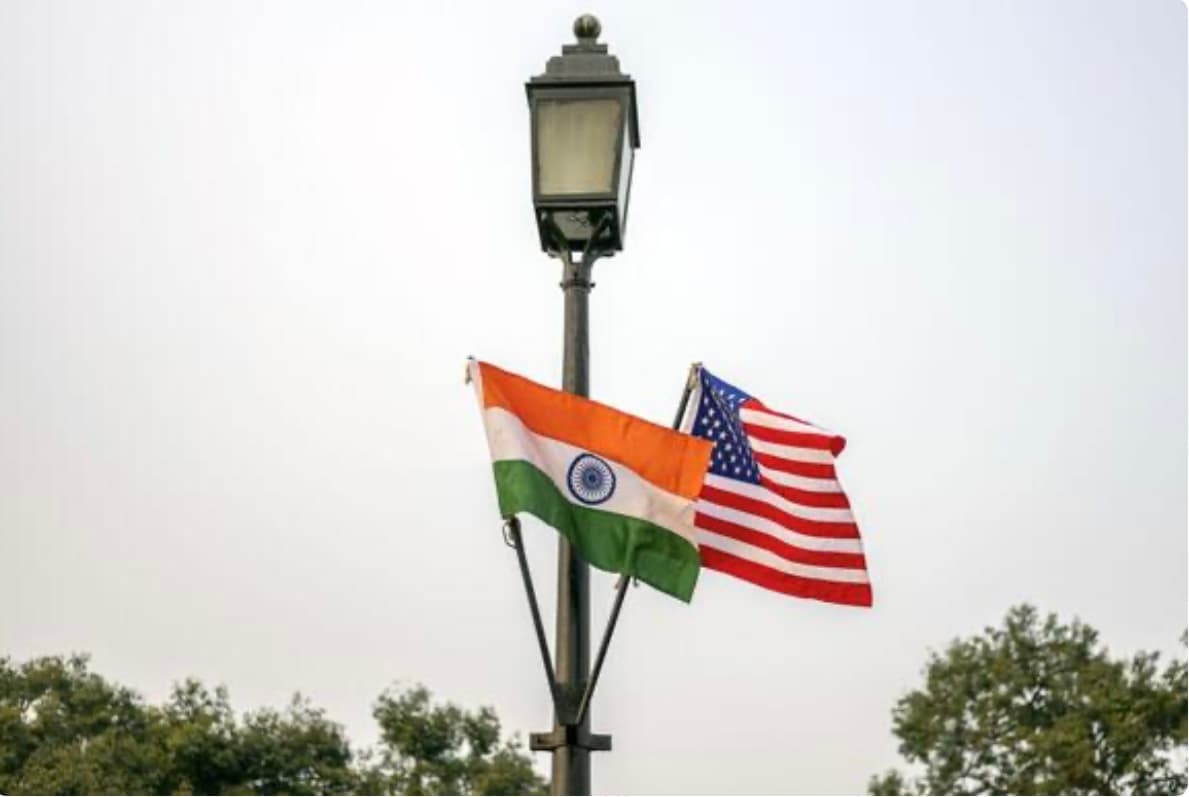
There is something deeply meaningful about seeing the flags of India and the United States of America flying side by side.
For me, they represent much more than two countries. They represent two extraordinary democratic experiments—one rooted in an ancient civilization that emerged from colonial rule to become the world’s largest democracy, and another built around a revolutionary experiment in self-government that became one of the world’s most influential democracies.
India is often called the world’s largest democracy, while America has long presented itself as a model of constitutional government and individual liberty.
Rather than arguing over which democracy is “better,” perhaps there is a more important story to tell:
What can the world’s largest democracy and one of the world’s most influential democracies learn from each other?
India: The Extraordinary Leap of Faith
When India became independent on August 15, 1947, the challenges confronting the new nation were enormous.
There was poverty, limited infrastructure, widespread illiteracy, tremendous linguistic and religious diversity, and the painful aftermath of Partition. Many observers wondered whether democracy could survive under such difficult circumstances.
India answered that question with remarkable confidence.
The Constitution established a democratic republic based on the sovereignty of the people. Most importantly, independent India embraced universal adult suffrage rather than gradually extending voting rights over generations.
Every eligible adult citizen—regardless of wealth, caste, gender, education, religion, or social standing—would have a voice.
That decision was revolutionary.
India’s first general election in 1951–52 involved an electorate of approximately 173 million people.
Think about the magnitude of that achievement.
A newly independent country with enormous logistical challenges decided that ordinary citizens—not monarchs, colonial authorities, military leaders, or privileged elites—would determine who governed them.
It was democracy on an unprecedented scale.
More than seven decades later, that experiment has expanded dramatically. India’s 2024 Lok Sabha election involved nearly 980 million registered voters, with approximately 646 million participating.
That achievement deserves recognition far beyond India’s borders.
America: An Enduring Democratic Experiment
The American democratic journey followed a very different path.
The United States emerged from revolution with a powerful proposition: government derives its legitimacy from the governed.
America’s constitutional system established institutions designed to distribute political power and prevent its excessive concentration. Over generations, American democracy expanded beyond the limitations and contradictions of its founding era.
Its journey has never been perfect.
Slavery, racial segregation, restrictions on voting, discrimination against women, and other injustices are inseparable from American history.
Yet one of America’s enduring strengths has been its capacity for self-correction.
Constitutional amendments, civil-rights movements, court decisions, elections, journalism, peaceful protest, and civic activism have repeatedly pushed the nation toward a broader interpretation of its founding ideals.
That may be one of democracy’s greatest virtues.
A democracy does not have to claim perfection.
It must retain the ability to recognize injustice and peacefully correct itself.
Democracy Is More Than Elections
We sometimes reduce democracy to voting.
Voting is essential—but democracy is much larger.
Democracy requires independent institutions, constitutional limitations on government, freedom of expression, an independent judiciary, accountability, peaceful political opposition, and respect for the rights of minorities.
Most importantly, democracy requires citizens willing to participate.
A Constitution can establish institutions.
But citizens must sustain them.
Democracy therefore carries both rights and responsibilities.
We have the right to criticize our governments.
We also have the responsibility to remain informed.
We have the right to vote.
We have the responsibility to respect the democratic rights of people whose votes differ from ours.
We have freedom of expression.
But we should exercise that freedom without destroying the dignity of those with whom we disagree.
That is where democratic maturity begins.
India and America: Different Roads, Shared Values
India and America are not identical democracies, nor should they attempt to become so.
India operates under a parliamentary system.
The United States operates under a presidential system.
Their constitutions, political parties, histories, and social structures differ considerably.
Yet beneath those differences are powerful common principles:
Government should ultimately answer to the people.
Citizens should have the ability to choose their leaders.
Power should be constrained by law.
Individual dignity should matter.
Political disagreement should be settled through ballots, institutions, and dialogue rather than violence.
These principles connect democracies far more deeply than any temporary political disagreement separates them.
What America Can Learn From India
India’s democratic scale is extraordinary.
Conducting elections across mountains, deserts, forests, islands, enormous cities, and remote villages presents logistical challenges almost unimaginable in many countries.
Yet election officials work to reach citizens across that enormous geography.
India also demonstrates how democracy can function within astonishing diversity.
Hundreds of languages and dialects are spoken across the country. Religious traditions, cuisines, cultures, and political priorities vary dramatically from state to state.
India reminds the world that national unity does not require cultural uniformity.
People can disagree profoundly and still belong to the same democratic nation.
That lesson has increasing relevance everywhere.
What India Can Learn From America
America’s democratic experience also offers valuable lessons.
Its constitutional tradition demonstrates the importance of checks and balances, institutional independence, federalism, freedom of expression, and the ability of citizens to challenge government authority.
America’s history also demonstrates something equally important:
Democracy must continually evolve.
Rights that seem obvious today were often achieved only after decades—or generations—of struggle.
Democracy therefore cannot survive simply because previous generations built strong institutions.
Every generation inherits those institutions temporarily.
Every generation must decide whether to strengthen them or weaken them.
That lesson applies equally to India.
Patriotism Does Not Require Blindness
Perhaps one of the greatest misunderstandings about patriotism is the belief that loving your country requires defending everything it does.
I believe the opposite.
True patriotism includes the courage to recognize a nation’s shortcomings.
An Indian can love India while demanding greater equality, accountability, and justice.
An American can love America while acknowledging racism, inequality, political polarization, or failures of government.
Criticism made in good faith is not necessarily disloyalty.
Sometimes it is citizenship at its best.
The strongest nations are not those that pretend they have no problems.
They are those confident enough to confront their problems.
The Danger of Political Polarization
Today, democracies around the world face another challenge: extreme polarization.
Political disagreement is increasingly becoming personal hostility.
People are labeled according to party, ideology, religion, geography, caste, race, or social identity before anyone listens to what they actually believe.
Social media often magnifies outrage because anger travels faster than thoughtful discussion.
But democracy cannot function if political opponents begin viewing one another as enemies.
We can disagree strongly about taxes, immigration, healthcare, foreign policy, religion, economic policy, or social issues.
But after the election, we still share neighborhoods, workplaces, schools, and countries.
Democracy requires disagreement.
It does not require hatred.
The Real Strength of Democracy
The strength of democracy is not demonstrated when our preferred candidate wins.
It is demonstrated when our preferred candidate loses—and we continue to believe in constitutional processes.
It is easy to support institutions when they produce outcomes we like.
The real test comes when they do not.
Democratic culture therefore requires humility.
No political party owns a nation.
No politician is greater than its Constitution.
No election victory gives permanent ownership of government.
Power is temporary. Institutions must endure.
From the Largest to the Greatest
So what does it mean to move from being the world’s largest democracy to the world’s greatest democracy?
It cannot simply mean having the largest electorate.
And “greatest” should not be treated as a trophy that one country permanently possesses.
Great democracy must be measured by something deeper:
How freely can citizens speak?
How fairly are elections conducted?
How independently do institutions operate?
How effectively does the law protect the weak as well as the powerful?
How respectfully can citizens disagree?
How peacefully does political power change hands?
How much opportunity exists for an ordinary person to participate in the future of the nation?
By those standards, every democracy—including India and the United States—remains a work in progress.
And perhaps that is exactly how democracy should be understood.
Not as a destination.
As a continuing responsibility.
Two Flags, One Powerful Message
When I look at the Indian and American flags together, I see two remarkable chapters of my own broader understanding of freedom and opportunity.
One represents a civilization and homeland whose democratic experiment astonished many who doubted it could succeed.
The other represents a country whose ideals of liberty, opportunity, and constitutional government have influenced generations around the world.
Neither nation is perfect.
Neither democracy is finished.
Both have made mistakes.
Both have overcome enormous challenges.
And both possess something precious that billions of people throughout history never had:
The ability of ordinary citizens to influence who governs them.
That privilege should never be taken for granted.
India can continue demonstrating how democracy works at extraordinary scale.
America can continue demonstrating the resilience of constitutional self-government.
And together, the world’s largest democracy and one of its most influential democracies can demonstrate something even more important:
That diversity does not have to divide us, disagreement does not have to destroy us, and democracy—when protected by informed and engaged citizens—remains one of humanity’s greatest instruments for peaceful self-government.
The Indian tricolor and the American Stars and Stripes may represent different histories.
But when they fly together, they can symbolize a common aspiration:
Liberty. Opportunity. Equality. Dignity. Democracy.
And ultimately, the greatness of any democracy will not be determined by the size of its population, the strength of its economy, or the power of its military.
It will be determined by the character of its citizens and their willingness to protect the freedom they inherited for the generations that follow.