The Humble Yellow School Bus: More Than Just a Ride, a Lifetime of Memories
From childhood adventures to the FIFA World Cup, how an ordinary yellow school bus continues to bring people together, create laughter, and remind us that life's greatest pleasures are often the simplest.
By Dr. Vijay Kumar
An Ordinary Bus, An Extraordinary Memory
Sometimes, the simplest things in life leave the most lasting impressions.
We travel in airplanes, ride luxurious trains, drive sophisticated cars, and admire the latest transportation technology. Yet, amid all these modern conveniences, one familiar vehicle continues to hold a special place in American life: the humble yellow school bus.
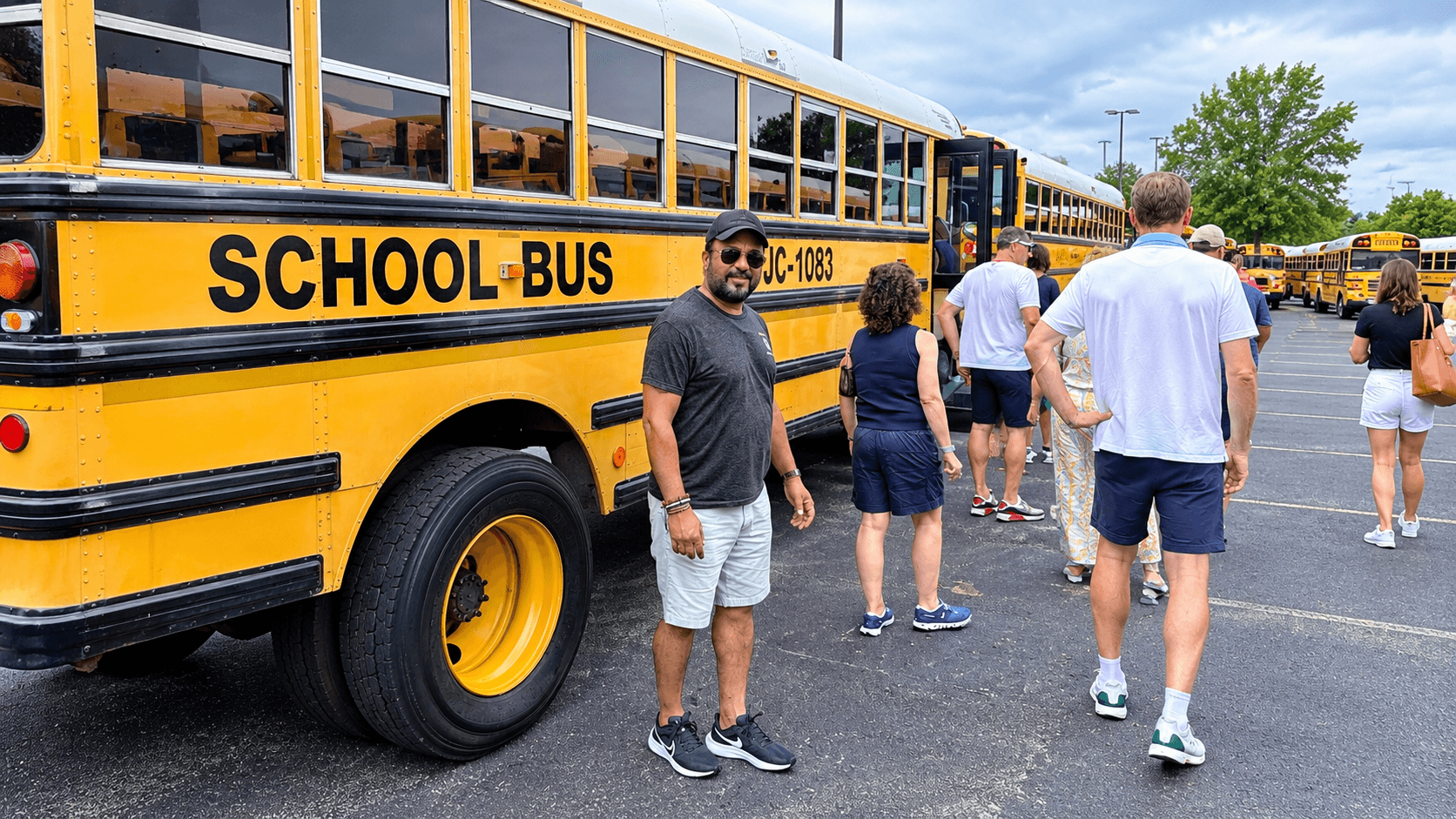
Recently, while standing beside one of these iconic yellow buses, I found myself reflecting on how frequently school buses have been part of my sporting adventures, community events, and travels.
Whether attending a marathon, participating in a state-level race, visiting a sporting arena, or navigating a major international competition, I have repeatedly encountered school buses quietly performing an essential service.
They may not offer luxurious seating or sophisticated entertainment systems, but they accomplish something far more important.
They bring people together and get them where they need to go.
One of my most enjoyable memories involving a school bus came during my experience attending the FIFA World Cup.
And believe it or not, the highlight of that particular bus ride was not transportation.
It was singing, laughter, and the unexpected joy of feeling like a child again!
When the FIFA World Cup Bus Turned Into a Singing Bus
Imagine the atmosphere surrounding the FIFA World Cup.
People from different countries, cultures, and backgrounds gather to celebrate the world's most popular sport. Supporters proudly display their national colors, conversations revolve around football, and excitement fills the air.
During my World Cup experience, spectators were transported between a designated parking area and the sporting arena aboard school buses.
Yes, ordinary yellow school buses!
There was something wonderfully amusing about the arrangement. Here we were, adults attending one of the most prestigious international sporting competitions, yet traveling aboard the same type of vehicle that millions of American children use every school day.
Nobody seemed particularly concerned about the lack of luxury. We were simply excited about the experience ahead.
Then something unexpected happened.
A few of us spontaneously started singing the familiar childhood song, The Wheels on the Bus.
Someone began singing, and others quickly joined in. Before long, our little group was laughing, singing, and giggling like excited schoolchildren on a field trip.
There was no rehearsal, no musical arrangement, and certainly no professional performance.
Just a group of grown adults enjoying a completely spontaneous moment.
What made it especially funny was the contrast. We were heading toward a world-class international sporting event, surrounded by the excitement of professional football, yet our entertainment had suddenly become a children's song!
For those few minutes, age seemed irrelevant.
Nobody cared about professional titles, responsibilities, daily stress, or the seriousness of adult life.
We were simply having fun.
We boarded the bus as adults heading to the FIFA World Cup, but for a few joyful minutes, we became schoolchildren again.
That memory has stayed with me. The World Cup offered the excitement of international football, but the humble yellow bus gave us something equally meaningful: an unexpected moment of togetherness.
Sometimes, the journey becomes part of the destination.
The Yellow School Bus: An American Cultural Icon
The yellow school bus is one of the most recognizable vehicles in the United States.
Its bright color, distinctive shape, flashing warning lights, and rows of seats have become part of American culture.
For generations, children have begun their school days by climbing aboard these familiar vehicles.
But have you ever wondered why school buses are yellow?
The story goes back to 1939, when educator Frank W. Cyr helped organize a national conference focused on standardizing school transportation. Among the recommendations was a distinctive yellow-orange color selected for visibility and safety.
The color, combined with dark lettering, made buses easier to recognize. Over time, this practical transportation decision became a national symbol.
Today, school buses remain an essential part of American education and daily life. Millions of students rely on organized school transportation to reach classrooms, sporting activities, and educational events.
Think about the scale of that operation.
Every morning, drivers begin their routes, transportation departments coordinate schedules, and families trust these vehicles to carry their children safely.
It is a remarkable transportation network, yet it often receives little attention.
Perhaps that is because the school bus has become so familiar that we forget how important it is.
From Classrooms to Marathons and Sporting Arenas
My appreciation for school buses goes far beyond childhood nostalgia.
As someone who enjoys running, marathons, sporting competitions, and community activities, I have seen firsthand how useful these buses can be.
Consider a major marathon.
Thousands of runners may gather before sunrise. Roads may be temporarily closed, parking areas may be located far from the starting line, and organizers must move large groups of participants efficiently.
School buses and other shuttle vehicles can become an important part of the solution.
They transport runners from parking areas to starting points, assist with event logistics, and sometimes help participants return after completing a race.
I have encountered similar arrangements at sporting events and competitions.
Whenever I see a long line of yellow school buses waiting to transport participants, I feel a sense of reassurance.
Someone has planned ahead. Someone has considered the transportation needs of the athletes and spectators. And someone has arranged a practical solution.
For young athletes, school bus journeys can be especially meaningful.
Imagine a group of students traveling to a state championship. Some may be nervous. Others may be excited. Friends share snacks, discuss strategies, tell jokes, and encourage one another.
After the competition, the same bus carries them home.
Some may be celebrating victory. Others may be disappointed by defeat. But regardless of the result, they have shared an experience.
Years later, they may forget the exact score, but they often remember the friendships, laughter, and excitement surrounding the journey.
The school bus was never simply transportation. It was part of their story.
Why a School Bus Can Make Us Feel Young Again
Our experience singing on the World Cup shuttle made me reflect on an interesting psychological question.
Why do familiar objects and experiences sometimes bring back such powerful emotions?
Human memory is closely connected to environmental cues. A familiar sound, smell, place, or object can remind us of experiences from earlier periods of life.
Psychologists refer to memories of personally experienced events as autobiographical memories. These memories often carry emotions, relationships, and a sense of personal identity.
For someone who grew up riding an American school bus, the experience may bring back memories of school friendships, field trips, and childhood adventures.
Although I grew up in India, where my childhood transportation experiences were different, I can appreciate how deeply the yellow school bus is woven into American life.
There is something universal about traveling together.
Children everywhere enjoy companionship, laughter, anticipation, and adventure. As adults, we sometimes become so focused on our responsibilities that we forget the importance of playfulness.
We worry about careers, finances, family obligations, health, and countless other matters.
Somewhere along the way, spontaneous laughter becomes less frequent.
But why should growing older mean giving up the simple joys of childhood?
That World Cup bus ride reminded me that our playful spirit does not disappear with age. Sometimes it simply needs the right opportunity to reappear.
A familiar song. A group of cheerful companions. An ordinary yellow school bus.
And suddenly, everyone is laughing again.
The Science Behind Laughter and Social Connection
Our spontaneous singing was more than a funny moment. It also illustrated something important about emotional well-being.
Positive social interactions are associated with better psychological health and a stronger sense of belonging.
Research suggests that laughter can help improve mood, encourage social bonding, and temporarily reduce feelings of stress.
Shared laughter may be particularly meaningful because it creates a common emotional experience.
Of course, laughter is not a substitute for medical treatment, and its physiological effects can vary. Nevertheless, enjoying positive experiences with others is an important part of a healthy, balanced life.
Social connection also matters in an increasingly digital world. Loneliness and social isolation can affect people across age groups, making genuine face-to-face interaction valuable.
Our bus ride was a small example of how naturally such interactions can occur.
Nobody organized a social bonding exercise. Nobody asked us to participate in a group activity.
We simply started singing.
And that was enough.
Sometimes, meaningful human connection does not require elaborate planning. It happens when people are willing to be present, approachable, and a little playful.
The Unsung Heroes Behind the Steering Wheel
Whenever we discuss school buses, we should also recognize the people who operate them.
School bus drivers are among the unsung heroes of our transportation system.
Their work involves far more than steering a large vehicle. They must remain attentive to traffic, road conditions, weather, passenger behavior, and safety procedures.
When transporting children, their responsibilities become even greater.
They must exercise patience, maintain discipline, and remain alert while caring for passengers of different ages.
During major sporting events, drivers face additional challenges. They may navigate unfamiliar routes, crowded parking areas, temporary road closures, and large groups of enthusiastic spectators.
Their contributions are rarely celebrated.
We remember the winning athlete. We remember the stadium. We remember the excitement of the crowd.
But how often do we remember the driver who transported us safely?
I believe these individuals deserve greater appreciation.
The next time you board a school bus or event shuttle, take a moment to thank the driver.
A simple expression of gratitude can mean a great deal.
Behind every successful transportation experience is someone accepting responsibility for the safety of others.
School Bus Safety: More Than Meets the Eye
School buses may appear simple, but their design reflects decades of safety research and engineering.
In the United States, school buses must meet specialized federal motor vehicle safety standards.
Large school buses generally incorporate a passenger protection concept known as compartmentalization. This approach uses closely spaced, high-backed, energy-absorbing seats to help protect occupants during certain collisions.
School buses also include specialized structural requirements, emergency exits, warning lights, and other safety features.
Seat belt requirements depend on the type of bus and applicable regulations.
School buses are widely recognized as one of the safest ways for children to travel to and from school. However, no vehicle is completely free from risk.
Proper maintenance, responsible driving, safe boarding procedures, and compliance with traffic laws remain essential.
Drivers of other vehicles also have important responsibilities. School bus warning lights and stop arms are designed to protect children entering or leaving the bus. Motorists must understand and obey applicable stopping laws.
The yellow school bus may look ordinary, but its safety systems and operating practices deserve respect.
An Efficient Solution for Large Events
Moving thousands of people into and out of a stadium is a major logistical challenge.
Imagine a large sporting arena where every spectator attempts to drive directly to the entrance.
Traffic congestion could become overwhelming. Parking facilities would require enormous space, and surrounding roads could experience substantial delays.
Shuttle transportation provides a practical alternative.
Spectators can park at designated locations and board buses that transport them to the venue.
One bus can carry many passengers who might otherwise travel in separate vehicles. This can reduce traffic pressure near crowded venues and simplify event operations.
The effectiveness of such systems depends on route planning, passenger demand, frequency, and accessibility.
A poorly organized shuttle system can create long waits and frustration. But when managed efficiently, buses can make major events significantly easier to navigate.
My World Cup experience demonstrated the value of this arrangement.
The school bus did not need to be glamorous.
It needed to be dependable.
And it was.
The Environmental Benefits of Shared Transportation
Transportation is also closely connected to environmental sustainability.
When many individuals travel separately in private vehicles, fuel consumption and emissions can increase. Shared transportation offers an opportunity to reduce the number of vehicles needed for a particular journey.
A school bus carrying a substantial number of passengers may reduce per-person transportation emissions compared with multiple individual car trips. The actual benefit depends on vehicle efficiency, passenger occupancy, route distance, and the type of transportation being replaced.
The future of school transportation is also evolving.
Electric school buses are becoming increasingly common in some American school districts. These vehicles produce no tailpipe emissions during operation and can help reduce exposure to exhaust pollution around schools.
They can also operate more quietly than conventional diesel buses.
Programs supporting cleaner school buses reflect a growing effort to modernize transportation while improving environmental conditions.
Challenges remain, including vehicle costs, charging infrastructure, electricity availability, and route planning.
Nevertheless, the transition represents an opportunity to improve an essential public service.
Perhaps future generations will enjoy the same familiar yellow school bus with cleaner technology underneath.
The appearance may remain recognizable, but the environmental impact could improve substantially.
More Than Transportation: A Community Resource
One of the school bus's greatest strengths is its versatility.
Its primary responsibility is transporting students, but when appropriately authorized, it can also serve other community needs.
School buses may transport athletic teams, students on educational field trips, community groups, and participants in special events.
Under suitable emergency arrangements, buses may also help move people during evacuations or other community transportation needs.
This flexibility can be especially valuable in smaller towns and rural areas.
Not every community has access to extensive public transportation systems or large commercial shuttle fleets.
School buses can represent an existing transportation resource that is familiar, practical, and capable of moving groups efficiently.
Their additional use must always respect student transportation priorities, safety requirements, and applicable regulations.
But when properly coordinated, these vehicles can support far more than the daily journey between home and school.
They help communities function. They help people participate.
And sometimes, as I discovered, they help create unforgettable memories.
The Beauty of Traveling Together
One of the things I enjoy most about travel is meeting people.
Whether standing in an airport line, attending a sporting event, participating in a marathon, or exploring a new destination, I have often found that unexpected conversations become some of my favorite memories.
Shared transportation creates opportunities for these encounters.
Inside a bus, people from different backgrounds sit close to one another. They may support opposing teams, speak different languages, or come from different countries.
Yet for a short time, they share the same journey.
There is something quietly democratic about that experience.
Everyone enters through the same door. Everyone travels toward the same destination.
There are no elaborate first-class compartments or exclusive lounges. The atmosphere is informal.
During our World Cup bus ride, that shared environment helped create the spontaneous singing and laughter.
I doubt the same moment would have occurred if everyone had been traveling separately in private cars.
The school bus gave us something beyond transportation.
It gave us an opportunity to interact.
And that interaction created a memory.
Learning to Appreciate Ordinary Things
Modern society often encourages us to admire expensive, sophisticated, and extraordinary things.
Luxury automobiles. Private aircraft. High-speed trains. Exclusive travel experiences.
There is nothing wrong with appreciating innovation or comfort. But sometimes our fascination with luxury causes us to overlook the value of simplicity.
The school bus does not attempt to impress anyone.
Its seats are basic. Its design is functional. Its purpose is straightforward.
Yet it has transported generations of children toward education, athletes toward competitions, and spectators toward unforgettable sporting experiences.
It has carried laughter, nervousness, excitement, disappointment, hope, and celebration.
How many lifelong friendships began during a school bus ride?
How many young athletes dreamed of becoming champions while looking through those windows?
How many children returned home with exciting stories after their first field trip?
How many adults, like us at the World Cup, rediscovered their playful spirit while sitting inside one?
These experiences rarely appear in history books, but they are meaningful parts of everyday life.
Perhaps that is precisely why they deserve recognition.
The Journey Is Sometimes as Important as the Destination
Throughout my life, I have been fortunate to experience many different journeys.
Some have taken me to beautiful landscapes, historic places, religious destinations, and international sporting events. Others have involved community activities, volunteer opportunities, and athletic competitions.
Every journey has offered something different.
But one lesson has become increasingly clear to me.
We often focus so intensely on reaching our destination that we forget to appreciate what happens along the way.
We look forward to the sporting event but overlook the journey to the stadium.
We celebrate the marathon finish line but forget the conversations shared before the race.
We admire the destination but sometimes neglect the people who helped us get there.
That simple World Cup bus ride reminded me to appreciate the entire experience.
The anticipation. The people. The singing. The laughter. The unexpected moments.
We were heading toward an exciting sporting event, but we had already begun creating memories before reaching the arena.
Perhaps life itself works in much the same way.
We spend years pursuing professional achievements, financial security, family milestones, and personal goals.
These aspirations are important.
But life is not lived only at the destination. It is lived in the moments between milestones.
Sometimes those moments happen aboard an ordinary yellow school bus.
Conclusion: Long Live the Yellow School Bus!
The next time you see a yellow school bus, I encourage you to look at it with a little more appreciation.
Think about the millions of children who depend on these vehicles.
Think about the drivers who accept responsibility for their passengers.
Think about the athletes traveling toward their dreams.
Think about the communities that rely on school buses for special events.
And perhaps think about a group of grown adults heading toward the FIFA World Cup, suddenly breaking into a childhood song and laughing like schoolchildren.
That is the memory I will always cherish.
The stadium was exciting. The football was memorable. But the spontaneous laughter aboard that humble yellow bus added something special to the experience.
It reminded me that we never become too old to laugh, sing, or enjoy simple pleasures.
Growing older is inevitable. Losing our ability to enjoy life like a child is not.
So here is my appreciation for the humble yellow school bus.
Thank you for carrying generations of children toward education.
Thank you for transporting athletes toward their dreams.
Thank you for supporting communities and bringing people together.
Thank you to the dedicated drivers who make these journeys possible.
And thank you for reminding us that sometimes, all we need for a little happiness is a familiar song, a few cheerful companions, and a bus whose wheels keep going round and round.
Long live the yellow school bus!
Because the most unforgettable journeys are not always made in luxurious vehicles. Sometimes, they happen on ordinary seats, surrounded by extraordinary laughter.
— Dr. Vijay Kumar