The Great Indian Wedding: Are We Celebrating Love or Competing for Social Status?
When a sacred union becomes a social spectacle, are we losing sight of what marriage truly means?
By Dr. Vijay Kumar, MD, MPH, PhD | Culture · Society · Family · Personal Reflection
A Wedding Is More Than a Celebration
India is a land of extraordinary traditions, colorful festivals, deep-rooted family values and celebrations that bring generations together. Among these celebrations, perhaps none is as elaborate, emotionally significant or culturally important as an Indian wedding.
A wedding in India is rarely just about two individuals getting married. It is about two families coming together, relationships being strengthened, traditions being passed down and memories being created for a lifetime.
The sound of the shehnai, the fragrance of marigolds, laughter during the haldi ceremony, intricate mehndi designs and the emotional farewell of a daughter carry profound cultural meaning.
But somewhere along the way, an uncomfortable question has emerged: Are we celebrating love and commitment, or competing for wealth, prestige and social recognition?
This question is not intended to criticize our traditions. It is an invitation to protect what makes them meaningful.
From Sacred Rituals to Grand Productions
Historically, Indian weddings have reflected the cultural, religious and regional identities of families. In Hindu traditions, marriage is often understood as a sanskara—a sacred rite of passage rather than merely a legal or social contract.
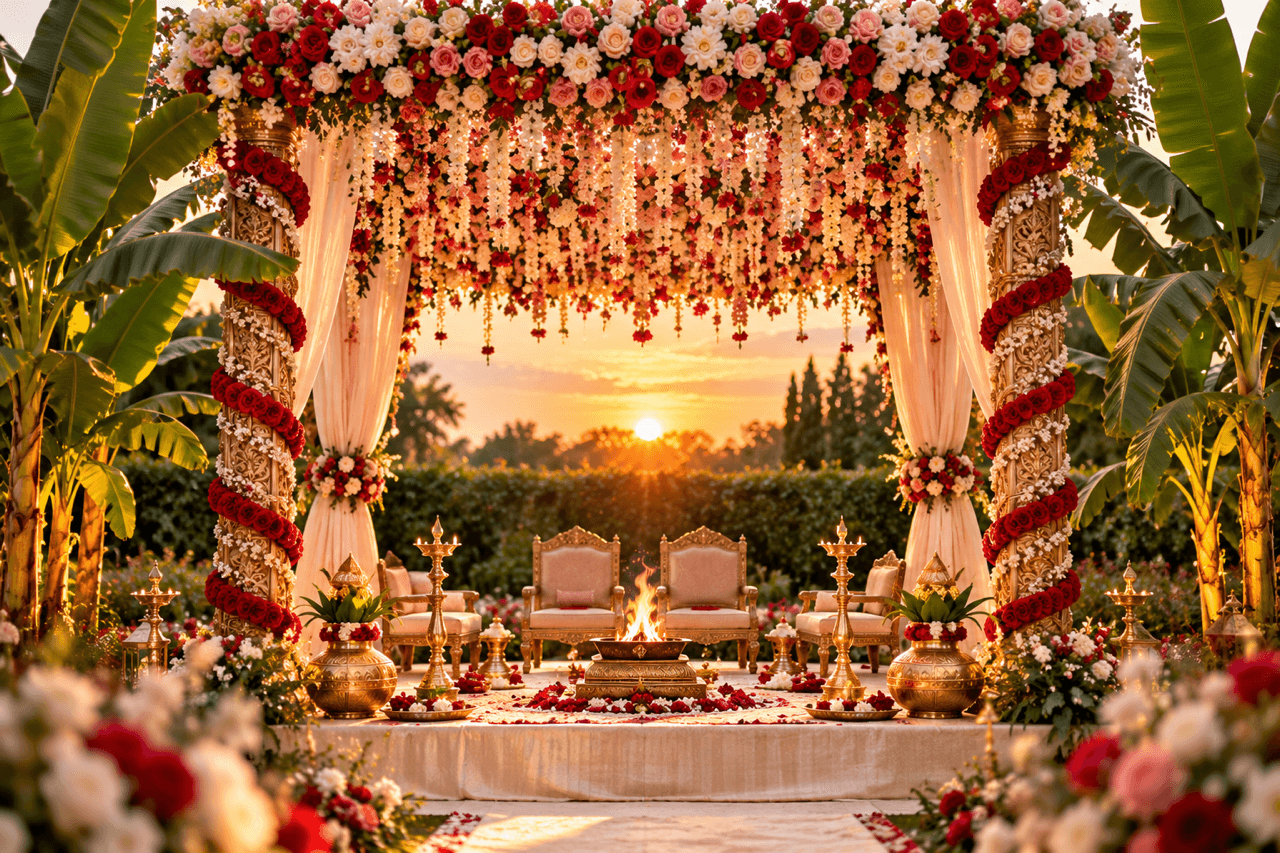
The saptapadi, or seven steps, symbolizes shared responsibilities, mutual support, prosperity and companionship. The sacred fire witnesses the promises made by the couple, while the blessings of parents and elders represent continuity between generations.
In my own cultural heritage of Mithila, wedding ceremonies carry distinctive customs, songs, blessings and family traditions. They connect younger generations with the lives and experiences of their ancestors.
Today, however, weddings are increasingly influenced by luxury hospitality, celebrity culture, destination venues, designer clothing, elaborate decorations, professional entertainment and carefully choreographed social media presentations.
There is nothing inherently wrong with beauty, creativity or celebration. The concern begins when appearance becomes more important than meaning.
A wedding should reflect the values of the people getting married, not the expectations of an audience.
The Financial Reality: How Much Is Too Much?
India's wedding economy supports countless livelihoods, including florists, decorators, cooks, musicians, photographers, drivers, tailors, artisans and small businesses. Their contribution deserves recognition.
However, the financial burden placed on individual families deserves equal attention.
Consider a hypothetical middle-class family earning ₹12 lakh annually. Spending ₹30 lakh on a wedding represents two and a half years of gross household income. If a substantial portion is borrowed, the financial obligations could continue for years.
Here is an illustrative wedding budget:
ExpenseIllustrative budgetVenue and accommodation₹8,00,000Catering₹7,00,000Decorations and flowers₹4,00,000Clothing and jewelry₹6,00,000Photography and entertainment₹3,00,000Transportation and miscellaneous₹2,00,000Total₹30,00,000Note: This is a hypothetical example, not a national average. Actual costs vary depending on location, guest count and personal choices.
A wedding should represent the beginning of a new chapter, not the beginning of financial hardship.
Families should be able to celebrate without sacrificing their retirement savings, selling essential assets or taking on debt simply to impress relatives and neighbors.
The Dangerous Question: "Log Kya Kahenge?"
"What will people say?"
These four words influence countless decisions in Indian society.
What will relatives think if the venue is simple? Will neighbors judge a smaller guest list? Will another family compare our daughter's wedding with someone else's?
Psychologist Leon Festinger's theory of social comparison helps explain why people evaluate themselves in relation to others. Social media has amplified this tendency. A neighborhood wedding may now be compared with celebrity celebrations featuring international performers, luxury resorts and extraordinary budgets.
This comparison can create pressure even among families who would otherwise prefer a modest celebration.
But a wedding is not a competition, and marriage is not a trophy.
The happiness of a couple cannot be measured by the number of guests, the cost of decorations or the luxury of the venue.
Social Media: Creating Memories or Performing for an Audience?
Photography and videography preserve precious family moments. They allow couples to revisit important memories and share celebrations with relatives who cannot attend.
However, modern weddings may involve cinematic trailers, drone footage, coordinated entrances, multiple costume changes and carefully staged social media reels.
Creative documentation can be wonderful. The problem begins when couples feel compelled to perform happiness rather than experience it.
A photograph can capture a smile, but it cannot guarantee happiness. Thousands of likes cannot predict whether two people will support one another during difficult times.
The most meaningful wedding memories may not be professionally filmed. They may be the laughter shared with grandparents, a parent's emotional blessing or a conversation with a relative who travelled a long distance to attend.
The Emotional Burden on Parents
Parents naturally want their children to feel loved and guests to leave with happy memories. For many families, organizing a wedding is an expression of affection, pride and responsibility.
Yet affection can become entangled with sacrifice beyond reasonable limits.
Some parents may use retirement savings, sell assets or borrow money to meet expectations. They may feel that a simple celebration will be interpreted as a lack of love or social standing.
But would a loving son or daughter want their parents to compromise their financial security for a few days of celebration?
A parent's greatest gift may be the education, values, stability and emotional support provided throughout a child's life.
Parents should be able to celebrate their children's milestones without feeling forced to prove their affection through extravagant spending.
Dowry and Social Expectations
India's Dowry Prohibition Act, 1961, prohibits giving, taking or demanding dowry as defined by law, subject to statutory distinctions concerning certain voluntary presents.
Despite the law, coercive expectations continue in parts of society.
Voluntary cultural gifts given with affection are fundamentally different from demands for money, vehicles, property or expensive goods.
Marriage should never become a financial transaction. Neither partner's dignity should depend on material expectations.
A healthy marriage begins with mutual respect, equality, trust and willingness to share responsibilities—not demands placed on one family by another.
What Can We Learn From Weddings in America?
Having lived in the United States while maintaining strong ties to India, I have observed different approaches to family celebrations.
American weddings can also be expensive, and social pressure is certainly not unique to India. However, I have also seen couples choose intimate ceremonies in parks, gardens, community halls and family homes.
Similar choices exist in India.
The lesson is not that one culture is superior to another. It is that people should have the freedom to celebrate according to their values, family circumstances and financial resources.
A meaningful celebration does not require everyone to follow the same formula.
Destination Weddings: Beauty or Extravagance?
Destination weddings can bring relatives together for several days and create a rare reunion for families scattered across different cities and countries.
Grandparents meet grandchildren, cousins reconnect, family stories are exchanged and memories are created.
These celebrations can be beautiful experiences.
However, thoughtful planning must consider elderly relatives, travel expenses, accessibility and the circumstances of guests. A celebration should not become a financial or physical burden for people who wish to participate.
Luxury is a choice. Hospitality, respect and emotional connection should remain priorities.
The Psychology of Wedding Expectations
Wedding planning can create considerable stress. Families may disagree over budgets, guest lists, venues, clothing and competing preferences.
Several psychological and social factors contribute to this pressure:
Social comparison: Measuring a family's celebration against those of others.
Impression management: Trying to create a particular image in front of relatives and society.
Financial strain: Spending beyond available resources to meet expectations.
Family dynamics: Managing different opinions, traditions and responsibilities.
Open conversations about boundaries, responsibilities and priorities can prevent avoidable disagreements.
The goal is not to eliminate every disagreement or planning challenge. It is to prevent stress from overshadowing the occasion.
Are We Forgetting the Marriage While Planning the Wedding?
A wedding may last a few hours or several days. A marriage may last decades.
Yet families sometimes devote more attention to decorations, menus, entertainment and guest arrangements than to the realities of married life.
Important conversations about communication, financial planning, career goals, parenting expectations, household responsibilities and conflict resolution deserve attention before marriage.
These discussions may not create glamorous photographs, but they can strengthen the foundation of a shared life.
A beautiful wedding is wonderful. A respectful and supportive marriage matters far more.
Preserving Indian Culture Without Unnecessary Pressure
Our wedding traditions represent a remarkable cultural inheritance.
The blessings of elders, sacred rituals, traditional music, regional cuisine, family gatherings and distinctive customs deserve preservation.
Tradition can strengthen identity, while social pressure can undermine freedom. Tradition can unite families, while competition can divide them.
A meaningful wedding may be elaborate or intimate. Neither is automatically better.
The right celebration reflects the couple's wishes, respects family traditions and remains financially responsible.
We should preserve the rituals that bring people together without preserving expectations that create unnecessary hardship.
A More Thoughtful Approach to Weddings
Perhaps the success of a wedding should not be measured by how much money was spent.
Instead, we should ask:
Did the couple feel supported and respected?
Did guests feel welcome?
Were family traditions celebrated meaningfully?
Did parents experience happiness rather than financial anxiety?
Did the celebration remain within a responsible budget?
A few practical choices can make a difference:
Set a realistic budget before making arrangements.
Prioritize meaningful rituals over unnecessary extravagance.
Involve the couple in important decisions.
Avoid comparing one wedding with another.
Consider the financial and physical circumstances of guests.
Discuss the realities and responsibilities of married life.
Create memories without creating long-term financial obligations.
My Personal Reflection: What Really Matters?
As someone who values family, Indian culture, education and traditions passed down through generations, I find weddings deeply meaningful.
As we grow older, we recognize how precious family gatherings become.
A wedding may be one of the rare occasions when relatives living in different cities and countries gather under one roof. The pride in a parent's eyes, the blessings of elders and the emotional farewell of a daughter cannot be measured in monetary terms.
I understand the desire to celebrate a child's milestone beautifully. But beauty and extravagance are not the same thing.
A beautiful wedding is one where people feel welcomed, traditions are respected, the couple feels loved and parents experience happiness rather than overwhelming pressure.
Conclusion: Let Love Be the Grandest Part
India does not need to abandon its magnificent wedding traditions. We should celebrate and preserve them while questioning expectations that create unnecessary burdens.
When the decorations are removed, the music stops, guests return home and photographs are stored away, what remains?
Two people beginning a shared journey. Two families connected through relationships. Memories of love, commitment and hope.
Let the traditions be rich, the blessings abundant, the hospitality generous and the memories beautiful.
But above all, let love—not social status—be the grandest part of the Indian wedding.
A marriage should be remembered for the life two people build together, not simply for the wedding they organized.