Corruption in India, Government Accountability and Police Reform: Why Preventable Deaths Demand Justice
Lessons from my firsthand experience in American public governance—and an appeal for stronger institutions, independent policing, and the protection of human life in India.
By Dr. Vijay Kumar
Introduction: A Tragedy Today, Forgotten Tomorrow
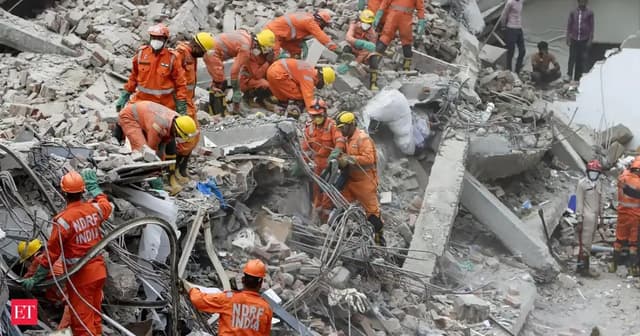
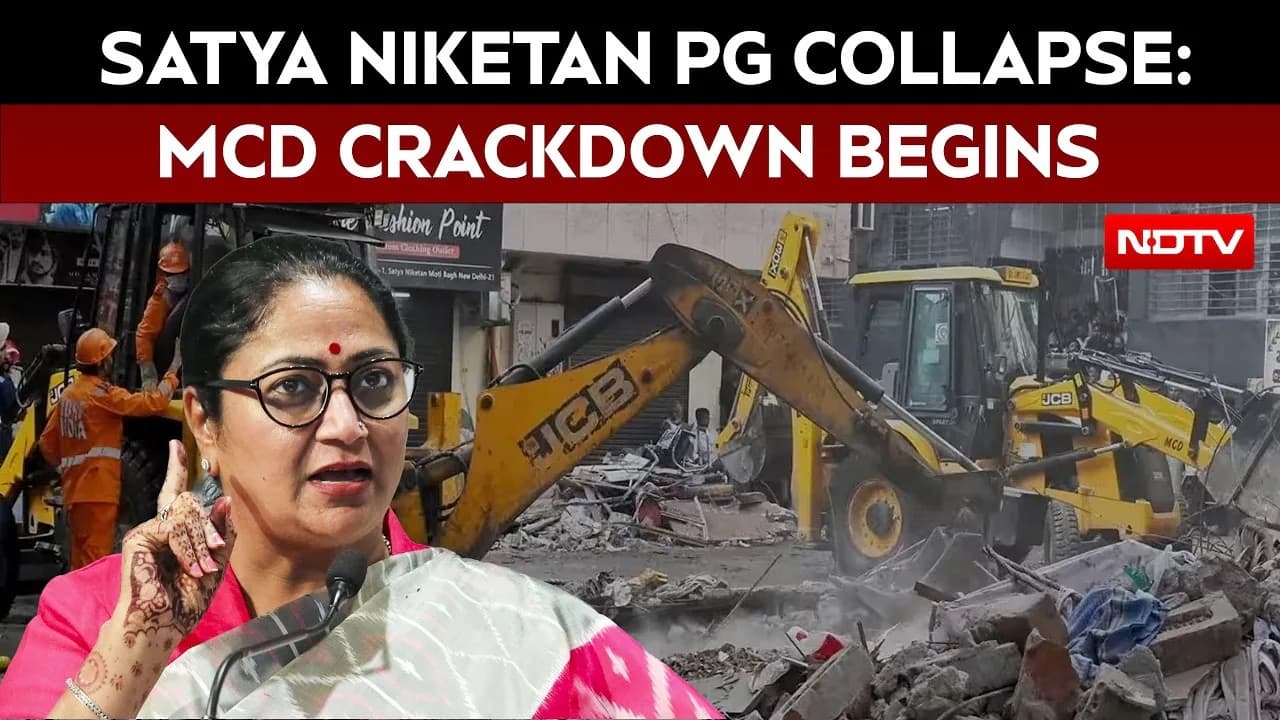
A building collapses. People scream for help. Rescue workers rush to the scene. Families gather outside, desperately searching for their loved ones.
Television cameras arrive. Politicians express condolences. Government officials announce investigations. A few employees are suspended, and financial compensation is promised to grieving families.
For several days, the tragedy dominates the headlines.
Then life moves on.
Government offices reopen. Political debates shift to other subjects. News channels find another breaking story. Public attention gradually fades.
But what happens to the families who lost their loved ones?
For them, the tragedy never ends.
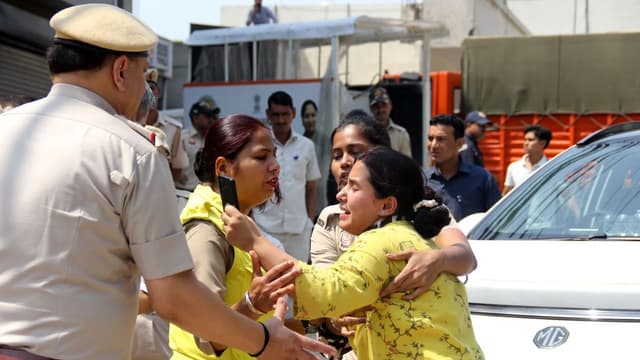
A mother will never again hear her child's voice. A young child may grow up without a father. A spouse may continue looking at an empty chair at the dining table.
No amount of compensation can restore those lives.
Whenever I hear about such incidents, one question troubles me deeply:
Why do we repeatedly accept administrative negligence, corruption, and preventable loss of life as unfortunate incidents rather than demanding meaningful accountability?
Having lived and worked in both India and the United States—and having personally served on numerous boards and committees in America—I have had opportunities to observe public administration, institutional decision-making, and accountability from within.
These experiences have shaped my understanding of how public institutions should function and what happens when responsibility is not taken seriously.
India has made tremendous progress in technology, infrastructure, and economic development. Yet corruption, bureaucratic inefficiency, political interference, and delayed justice remain serious challenges.
I believe India deserves better.
Meaningful reform must begin with a simple principle:
Public authority is a responsibility, not a privilege. When that authority is abused and innocent people suffer, accountability must follow.
1. What America Taught Me About Public Accountability: Lessons From My Own Experience
My observations about government accountability in the United States are not based merely on newspaper reports, television coverage, or casual conversations.
They come from firsthand experience.
Over the years, I have had the privilege of serving on several boards and committees in the United States, including public and professional regulatory bodies.
I served on the Michigan Board of Physical Therapy for approximately nine years, including serving as its chairperson. These responsibilities, along with my other board and committee experiences, gave me valuable exposure to public governance, professional regulation, ethical responsibilities, and institutional decision-making.
These opportunities allowed me to participate in discussions, review important matters, understand decision-making procedures, and observe how public institutions function from within.
I have seen how seriously responsibilities are taken, how decisions are documented, how rules and procedures guide discussions, and how board members are expected to act within the authority entrusted to them.
Serving in these positions taught me an important lesson:
Holding public office is not a personal privilege. It is a public trust that carries responsibility and accountability.
Even in smaller American communities, decisions made by city councils, municipal officials, and public boards can affect residents' safety, finances, property, and quality of life.
Public meetings, recorded proceedings, financial audits, ethical requirements, conflict-of-interest rules, and legal oversight create mechanisms through which government decisions can be examined and challenged.
The United States is not free from corruption, political influence, or institutional failures. Public officials have also faced prosecution for bribery, fraud, embezzlement, and misuse of office.
For example, former Los Angeles deputy mayor Raymond Chan was convicted in March 2024 on federal public-corruption charges connected with development projects.
The broader lesson is that public position should not automatically protect an individual from investigation or legal consequences.
I am not suggesting that the American system is perfect or that every unpopular decision or administrative mistake should be treated as a crime.
However, my experience has reinforced the importance of institutions where decisions are subject to scrutiny and public officials are expected to explain and justify their actions.
My concern is not simply that corruption exists. My greater concern is what happens when corruption, negligence, or abuse of authority becomes normalized—and when the people responsible begin to believe that nothing serious will happen to them.
India possesses the talent, institutional capacity, and democratic foundation necessary to establish much higher standards of accountability.
What we need is the determination to enforce those standards consistently, regardless of a person's position, wealth, or political connections.
2. Corruption in India: What the Data Reveal
Corruption is difficult to measure because many transactions happen secretly and are never reported.
Nevertheless, international assessments provide useful comparisons.
Transparency International's 2025 Corruption Perceptions Index evaluated 182 countries and territories on perceived public-sector corruption.
India scored 39 out of 100 and ranked 91st, while the United States scored 64 and ranked 29th.
These scores are not direct measurements of individual bribery incidents. They reflect assessments of perceived public-sector corruption.
India's score improved slightly from 38 in 2024 to 39 in 2025, but this modest change does not establish that bribery has declined dramatically across the country.
India has made meaningful progress through digital payments, electronic government services, online applications, and direct benefit transfers.
These reforms can reduce opportunities for unnecessary human intervention and unofficial payments.
Yet corruption has not disappeared.
In some government interactions, citizens still report facing unreasonable delays, confusing procedures, demands for unofficial payments, or pressure to use intermediaries.
The problem is particularly damaging when bribery influences decisions involving public safety, construction approvals, land records, procurement, or regulatory enforcement.
It is important to recognize that millions of Indian government employees work honestly and professionally. They should not be stereotyped because of the misconduct of others.
But when corruption becomes tolerated within an institution, honest employees and ordinary citizens both suffer.
3. When Bribery Becomes Part of the Work Culture
Imagine applying for a legitimate government permit.
You complete the paperwork, submit the required documents, and pay the official fees.
Yet your application remains pending.
An intermediary approaches and suggests that an unofficial payment could move the file faster.
You refuse.
Weeks pass.
Eventually, frustration may push you toward paying simply to obtain a service you were legally entitled to receive.
This is how petty corruption can become normalized.
The bribe may be described as a service charge, convenience payment, or something necessary to get the work done.
But changing the terminology does not change the wrongdoing.
Government employees are paid to perform public duties. Citizens should not have to purchase lawful services through unofficial payments.
Corruption also extends beyond small transactions.
Large construction projects, public procurement, infrastructure contracts, and land development can involve substantial financial interests.
When dishonest officials and private businesses cooperate to evade regulations, the consequences may be devastating.
A bribe accepted to overlook a safety violation may appear to be a financial transaction.
But if that violation later contributes to a fatal building collapse, the human cost becomes immeasurable.
Corruption is not always a victimless financial crime. Sometimes its consequences are measured in human lives.
4. When Buildings Collapse, Who Is Responsible?
Consider a hypothetical multistory residential building that collapses because of serious structural deficiencies.
Investigators discover that the building exceeded its approved height, construction materials did not meet required standards, and earlier safety warnings were ignored.
Several families lose their lives.
Who should be held accountable?
The builder? The contractor? The structural engineer? The inspector? The official who approved the construction? The supervisor who received warnings but failed to act?
The answer depends on the evidence and the legal responsibilities of each individual.
Not every building collapse results from corruption. Design defects, construction errors, unauthorized modifications, poor maintenance, and other causes may contribute.
But when corruption or criminal negligence is involved, the investigation must examine the entire chain of decisions.
National Crime Records Bureau figures cited in September 2026 reporting indicated that 32,596 people died in India between 2020 and 2024 across several categories involving fires, building collapses, potholes, and falls into manholes or sewers.
These figures combine different hazards and do not establish that all deaths resulted from corruption.
Nevertheless, they demonstrate the enormous human consequences associated with public-safety failures.
We must stop treating every disaster as an isolated event.
When similar failures occur repeatedly, government agencies should examine whether inspection systems, enforcement practices, professional standards, and regulatory oversight are functioning properly.
The question should not merely be what caused the building to collapse.
It should also be:
What warning signs existed, who had the authority to act, and why were necessary precautions not taken?
5. Suspension and Transfer Are Not Justice
Whenever a major tragedy occurs, we often hear familiar announcements.
An official has been suspended. A department head has been transferred. An inquiry committee has been established.
These actions may be appropriate preliminary responses, but they are not necessarily meaningful accountability.
Suspension is an administrative measure. Transfer changes an employee's assignment. Dismissal ends employment.
None automatically establishes criminal responsibility or ensures that wrongdoing has been thoroughly investigated.
If an employee accepted a bribe, falsified inspection records, deliberately concealed dangerous conditions, or committed an offense involving criminal negligence, the matter should be examined under applicable criminal law.
Likewise, if a senior official knowingly directed subordinates to ignore safety violations, that official should not escape investigation merely because of rank.
However, accountability must be evidence-based.
An honest mistake should not automatically be treated as a crime, and an entire department should not be punished simply because its employees worked within the same administrative hierarchy.
The objective should be to identify everyone whose conduct legally contributed to the wrongdoing.
We do not need symbolic punishment. We need thorough investigations, fair trials, proportionate penalties, and genuine institutional reform.
6. Independent Policing: The Backbone of a Just Society
A strong, independent, professional, and accountable police force is the backbone of a safe and democratic society.
No nation can achieve meaningful justice when law enforcement agencies are vulnerable to improper political interference, corruption, or intimidation.
The police must serve the Constitution and the people—not politicians, influential business interests, or powerful individuals.
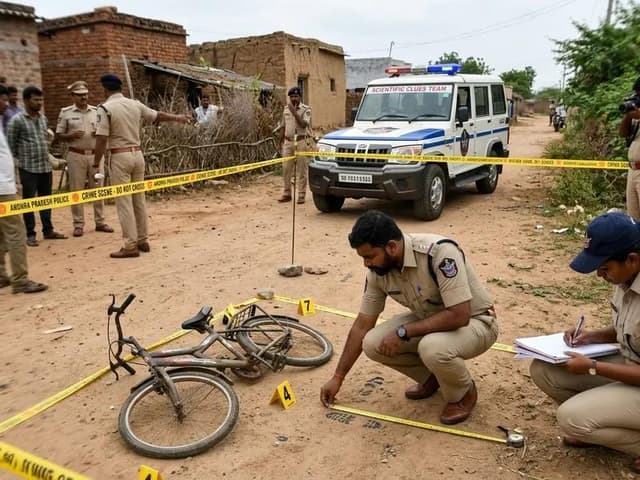
Consider a building collapse in which investigators discover evidence suggesting that safety violations were deliberately overlooked.
What happens if the investigation leads to an influential developer or senior government official?
What happens if a police officer receives a telephone call demanding that certain names be excluded from the investigation?
What happens if an honest investigator is transferred for pursuing the evidence?
What happens if witnesses are intimidated or important documents disappear?
Justice can be compromised long before a case reaches a courtroom.
A police officer should never have to choose between following the law and protecting their career.
India's Supreme Court recognized the need for police reform in its landmark Prakash Singh v. Union of India judgment in 2006.
The Court directed reforms intended to improve professional independence, reduce improper political interference, and strengthen police accountability.
Yet implementation has remained uneven.
Independent policing requires transparent appointments and transfers, professional training, adequate staffing, modern forensic resources, secure evidence management, and effective oversight.
Police officers must have the freedom to investigate credible allegations regardless of the social or political position of the individuals involved.
But independence must never become immunity from accountability.
Police corruption, fabricated evidence, custodial abuse, unlawful detention, and deliberate misconduct must also face appropriate legal consequences.
An independent police force must remain accountable to the Constitution, the courts, and the people.
The true strength of policing is not measured by how much fear it creates among ordinary citizens.
It is measured by how much confidence it inspires among law-abiding citizens and how impartially it enforces the law.
7. Political Interference: When Power Becomes More Important Than Justice
One of the greatest threats to independent policing is improper political interference.
In a democracy, elected governments have legitimate responsibilities for public policy, budgets, policing priorities, and institutional oversight.
But those responsibilities should never include manipulating evidence, protecting criminal suspects, or obstructing lawful investigations.
A politician should not be able to stop an investigation simply by making a telephone call.
A powerful business owner should not be able to influence whether an FIR is registered.
An honest investigator should not face arbitrary punishment for pursuing a case involving influential individuals.
When law enforcement becomes vulnerable to political pressure, citizens may lose confidence in the justice system.
And when citizens stop believing that institutions can deliver justice, the foundations of democracy weaken.
Police reform is therefore not merely an administrative issue.
It is a matter of constitutional governance, public safety, and human dignity.
8. India Has Laws. Why Is Enforcement Still a Challenge?
India already possesses important legal tools to address corruption and serious negligence.
The Prevention of Corruption Act, 1988, as amended, criminalizes various forms of bribery and corruption.
The Bharatiya Nyaya Sanhita, which came into force in July 2024, includes criminal provisions relevant to certain acts causing death through negligence.
Other laws regulate construction safety, financial misconduct, municipal approvals, and public administration.
India also has investigative and oversight institutions, including the Central Bureau of Investigation, Central Vigilance Commission, Lokpal, state anti-corruption agencies, and the judiciary.
The central challenge is not simply the absence of laws.
It is whether complaints are properly investigated, evidence is preserved, prosecution is effective, and justice is delivered without unreasonable delay.
Arrest alone is not accountability.
Filing charges is not the same as proving guilt.
And announcing an investigation does not guarantee meaningful consequences.
A functioning justice system must follow cases through investigation, prosecution, judgment, and enforcement.
It must also protect innocent individuals against false accusations and politically motivated proceedings.
The rule of law requires both the punishment of proven wrongdoing and protection against arbitrary state power.
9. Should Corrupt Officials Face Severe Punishment?
When innocent people die because of deliberate corruption or serious criminal misconduct, public anger is understandable.
Many citizens believe that dismissal from government service is far too lenient.
I share the concern that administrative punishment alone cannot adequately address serious criminal wrongdoing.
But punishment must remain consistent with the law, evidence, proportionality, and due process.
Life imprisonment should not automatically follow every allegation of bribery or negligence.
Criminal penalties must correspond to the offense proved in court.
Likewise, property confiscation should apply to assets legally established to be connected with corruption or other confiscable offenses, while protecting the lawful rights of innocent individuals.
The goal should be a justice system where serious offenders cannot escape consequences through money, influence, or procedural manipulation.
Severe penalties have an important role, but certainty of detection, fair investigation, and timely punishment are equally essential.
A law that promises harsh punishment but is rarely enforced may have less deterrent value than a system where wrongdoing is consistently investigated and prosecuted.
10. The Colonial Mindset Must Give Way to Public Service
India inherited administrative structures shaped in part by British colonial rule.
Independent India has transformed those institutions significantly, yet some bureaucratic attitudes still deserve examination.
In certain public offices, citizens may feel as though they are requesting personal favors rather than exercising legal rights.
An ordinary citizen may be asked to return repeatedly, submit unnecessary documents, or seek help from influential contacts.
This relationship must change.
A government official does not own a public office.
A public employee is not doing a citizen a personal favor by performing a lawful duty.
Public servants receive authority and resources to serve society.
The citizen is not subordinate to the government employee.
The citizen is the reason the public position exists.
True reform requires transparent procedures, defined service deadlines, accessible complaint mechanisms, ethical leadership, and consequences for misconduct.
Honest employees should be recognized and protected.
Corrupt employees should be investigated fairly and held accountable when wrongdoing is established.
India needs a culture in which public service is understood as a responsibility rather than an opportunity to exercise personal power.
11. What India Must Do: A Practical Reform Agenda
Meaningful reform requires more than speeches, announcements, and promises.
India should pursue several complementary measures.
Independent investigations: Serious public-safety disasters should be examined by investigators and technical experts sufficiently independent of the agencies whose actions are under scrutiny.
Police reforms: Transparent appointments, protection against arbitrary transfers, professional training, independent oversight, and adequate investigative resources should be strengthened.
Digital transparency: Construction approvals, safety inspections, enforcement notices, and other important regulatory decisions should have traceable electronic records.
Whistleblower protection: Honest employees and citizens who report credible wrongdoing should have effective protection against retaliation.
Time-bound government services: Routine public applications should have clear processing deadlines and accessible appeal procedures.
Accountability throughout the chain: Investigations should examine junior employees, senior officials, private contractors, and political interference wherever evidence warrants.
Timely justice: Serious corruption and public-safety cases require capable investigators, prosecutors, forensic resources, and sufficient judicial capacity.
Victim support: Families affected by preventable disasters deserve accessible compensation processes, legal assistance, and regular updates about investigations.
Public reporting: Major investigations should produce appropriate public findings and follow-up reports, subject to legal safeguards.
None of these reforms alone will eliminate corruption.
Together, however, they can reduce opportunities for wrongdoing and strengthen confidence in government institutions.
12. Why Public Memory Matters
Another troubling aspect of major disasters is how quickly public attention fades.
For several days, citizens demand justice.
News organizations investigate. Politicians promise action. Social media fills with criticism.
Then another controversy dominates the headlines.
The families are left behind.
They must navigate government offices, legal proceedings, financial hardship, and emotional suffering.
A society committed to accountability must not depend entirely on temporary public outrage.
Major disasters should have publicly trackable investigations, corrective actions, and accountability outcomes.
Citizens should be able to learn whether safety violations were established, whether criminal charges were filed, whether responsible individuals were convicted, and whether institutions corrected the failures that contributed to the incident.
Public accountability should continue after television cameras disappear.
Justice delayed and forgotten is not the justice grieving families deserve.
13. India Is Capable of Better
India is a country of extraordinary talent, resilience, innovation, and ambition.
Its achievements in science, medicine, technology, education, infrastructure, and democratic participation deserve recognition.
Millions of public servants, police officers, engineers, healthcare professionals, and community leaders work sincerely to improve the country.
The challenge is to ensure that honest work is supported by strong institutions.
India does not need to abandon its identity or imitate another country blindly.
It can learn from international experiences while developing reforms suited to its constitutional framework and social realities.
A truly developed nation is not defined only by economic growth.
It is defined by whether citizens can trust public institutions.
Whether government decisions are transparent.
Whether safety regulations are enforced.
Whether an honest police officer can investigate a powerful person without fear.
Whether a poor family receives the same protection under the law as a wealthy family.
And whether those responsible for serious wrongdoing face fair and meaningful consequences.
Economic development and institutional integrity must advance together.
14. A Personal Reflection: What Is the Value of a Human Life?
Whenever I see news about a collapsed building, a preventable accident, or an incident involving alleged government negligence, I think about the people who never returned home.
What if the victim were my child?
What if the person trapped beneath the rubble were my spouse?
What if someone had warned the authorities, but the warning was ignored?
Would suspension of one employee provide justice?
Would financial compensation erase the suffering?
Would another government promise bring back the person who died?
Of course not.
Compensation may help a family survive financially, but it cannot restore a human life.
That is why accountability must begin before a disaster occurs.
A building inspector must report serious violations.
An engineer must raise concerns about structural defects.
A supervisor must respond to credible warnings.
A police officer must investigate wrongdoing without fear.
A politician must not interfere with lawful enforcement.
And citizens must resist shortcuts that compromise public safety.
Everyone has a role, but criminal responsibility must always be established through evidence and law.
Human life should never become the price of administrative convenience, political influence, or private profit.
15. An Open Appeal to India's Prime Minister, Government Leaders, and Policymakers
I respectfully appeal to the Honorable Prime Minister of India, Shri Narendra Modi, the Government of India, state governments, members of Parliament, chief ministers, senior civil servants, police leadership, and policymakers across the country to place institutional accountability and public safety among our highest national priorities.
India's development ambitions are extraordinary. We are building modern highways, airports, digital infrastructure, industrial corridors, and expanding cities.
But development must also be measured by how effectively we protect human life, prevent corruption, and deliver justice.
Having personally served on boards and committees in the United States, I have witnessed the importance of transparent decision-making, institutional responsibility, ethical standards, and public accountability.
My appeal is not political or partisan. It is a sincere call for better governance.
India needs stronger implementation of police reforms, protection for honest investigators, transparent construction approvals, independent investigation of major public-safety disasters, effective anti-corruption enforcement, and timely justice for victims.
When an innocent person dies because of proven criminal negligence or corruption, the response must go beyond suspension, transfer, or financial compensation.
Responsibility must be established through an independent investigation, and everyone whose criminal misconduct is proved must face appropriate consequences under the law.
I also appeal to the country's leadership to recognize and protect honest government employees and police officers who carry out their responsibilities with courage and integrity.
The goal should not be to create fear among public servants. The goal should be to create a culture where honest service is respected, corruption is risky, and public safety is never negotiable.
India has the talent, resources, and democratic institutions to become a global example of transparent and accountable governance.
A truly developed India must be a country where an ordinary citizen can seek government services without bribery, report wrongdoing without intimidation, and trust that justice will not depend on wealth or political influence.
My humble appeal to India's leadership is simple: Let us build a nation where government authority means public responsibility, where police serve the Constitution without fear, and where every human life matters.
That would be one of the most meaningful achievements of a truly developed India.
Conclusion: A Nation Cannot Build Its Future on a Foundation of Impunity
India dreams of becoming one of the world's leading economic and technological powers.
That ambition is worthy of support.
But true development cannot be measured only by highways, airports, skyscrapers, industrial growth, or economic statistics.
A nation is also judged by the integrity of its institutions and the protection it provides to ordinary people.
When buildings collapse, innocent people die, and investigations reveal serious wrongdoing, justice must not end with a transfer order or a temporary suspension.
The entire chain of relevant decisions must be examined.
Those whose criminal responsibility is established must face proportionate legal consequences.
Victims' families deserve answers, support, and justice.
And institutions must correct the failures that allowed the tragedy to occur.
Most importantly, India needs independent policing, fearless investigators, impartial prosecutors, efficient courts, and a government culture that places public welfare above political convenience.
We do not need indiscriminate punishment or arbitrary confiscation.
We need a justice system where evidence matters more than influence, public safety matters more than private profit, and accountability does not disappear when headlines fade.
A collapsed building can be reconstructed.
A damaged road can be repaired.
A government office can reopen.
But a family that loses a loved one can never simply return to normal.
The greatest tribute we can pay to victims of preventable tragedies is not another promise that such incidents will never happen again. It is building institutions capable of preventing them—and delivering justice when wrongdoing occurs.
A nation becomes truly strong when its institutions are stronger than the individuals who temporarily control them.
And a democracy becomes truly meaningful when the most powerful person is not above the law and the poorest citizen is not beneath its protection.
India deserves that future. Its people deserve nothing less.
Dr. Vijay Kumar