Astha Kunj Park, Delhi: A Green Dream Slowly Dying — And a Citizen’s Fight to Save It
By Dr. Vijay Kumar, MD, MPH, PhD, DPT | November 5, 2026
Astha Kunj Park should be one of South Delhi's most treasured public spaces. Located near Nehru Place, Kalkaji, the Lotus Temple and surrounding residential communities, it was envisioned as a place where nature, recreation, culture and community life could come together.
Yet, during my November 2026 visit to Delhi, I found myself asking an uncomfortable question: Is this valuable public space receiving the care and protection it deserves?
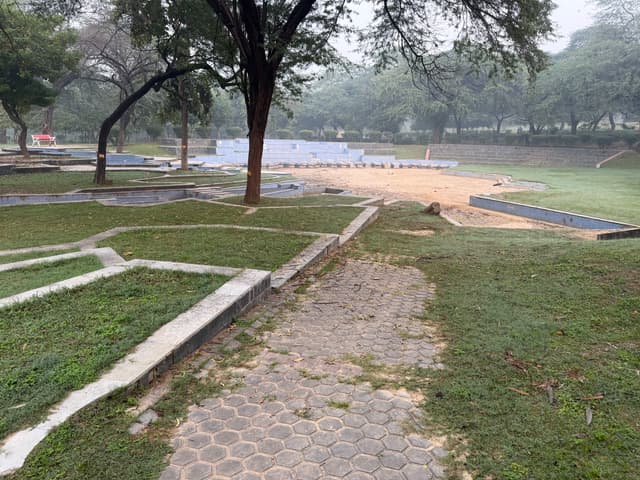
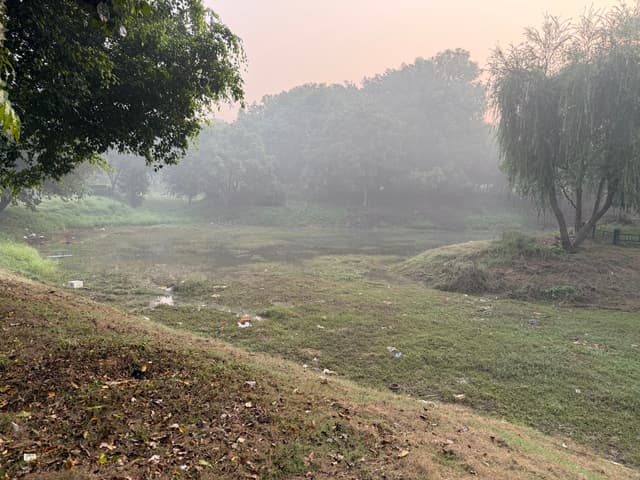
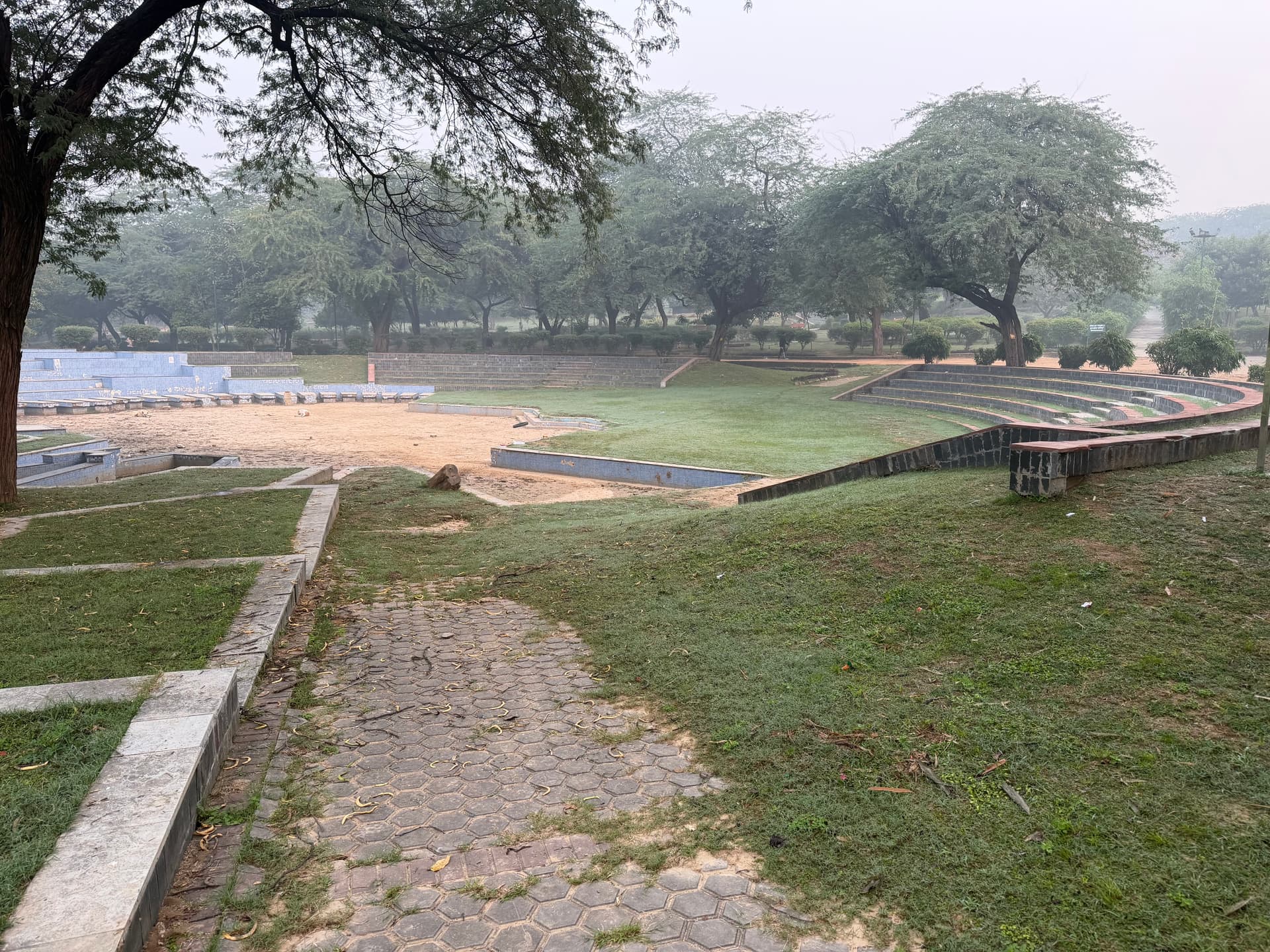
Dry ornamental water features, worn walking surfaces, neglected-looking landscaped structures and litter in a largely dry pond area caught my attention. I photographed these conditions at particular locations. They do not represent every part of the park, where some green and attractive sections remain. Nevertheless, they raise legitimate questions about maintenance, public safety and institutional accountability.
A park is not simply an attractive landscape. It is public-health infrastructure. It gives people space to walk, exercise, spend time with family, connect with their community and find relief from the pressures of city life.
1. The original vision and historical legacy
According to Delhi Tourism, Astha Kunj was inaugurated in 2002 by former Prime Minister Atal Bihari Vajpayee. The Delhi Development Authority (DDA) describes it as an approximately 200-acre landscape near Nehru Place, the Lotus Temple, ISKCON Temple and Kalkaji Temple. Published estimates of its area vary.
The original vision included ecological conservation, neighborhood recreation, cultural gathering spaces and environmental significance.
More than two decades later, we must ask whether the park's maintenance and public-safety arrangements have kept pace with that vision.
A public space of this importance should not depend on occasional renovation or public attention after an incident. It needs consistent maintenance, clear responsibility and long-term planning.
2. What my photographs show — and what they do not
The photographs I took in November 2026 document several visible conditions:
Empty water channels or basins.
Worn walking paths and paved areas.
Vegetation around landscaped structures.
Scattered waste in a dry pond area.
These observations justify a proper inspection. However, photographs alone cannot establish why the water features were dry, who was responsible for particular maintenance failures or whether the conditions represent the entire park.
The DDA should clarify the operating schedules of the water features, their intended ecological functions, maintenance standards for paths and drainage, and whether outstanding work orders address the conditions observed.
The objective should be to establish facts and identify practical solutions, not to make assumptions.
3. Public safety must become a priority
In September 2026, published media reports described an alleged sexual assault involving a 17-year-old girl inside Astha Kunj Park. The matter must be treated with sensitivity, respect for the survivor and due regard for the legal process.
The reporting brought renewed attention to concerns about lighting, CCTV coverage, boundary walls and access points. Residents also raised concerns about sanitation, substance use and inadequate security.
These reports demonstrate that serious safety concerns have been raised. They should not be interpreted as proof of every individual allegation.
Past reports have also referred to other serious incidents in or around the park. Accidental deaths, suspected suicides, unexplained deaths and confirmed homicides are different categories and must never be treated as interchangeable.
Delhi Police should make available an appropriately anonymized and reliable summary of recorded incidents and their investigative outcomes, while protecting the privacy of victims and families.
People should be able to visit a public park without fearing for their safety.
4. What the October 2026 DDA safety audit revealed
Following the September incident, the DDA assessed 736 parks. According to published reporting, the audit classified them as follows:
Safety audit category Reported numberAstha Kunj was among the parks classified as high-risk.
The reported figures mean approximately 25.8% of the audited parks were classified as high-risk. Only around 2.2% reportedly had functioning CCTV at the time of the review.
These are findings about the wider DDA park system, not figures unique to Astha Kunj. Nevertheless, they reveal a wider challenge that deserves urgent attention.
Lighting, camera functionality, boundary protection and access control should be treated as essential public-safety requirements.
5. Reported improvements — but are they working?
On October 25, 2026, Hindustan Times reported DDA statements that 105 additional lights and four CCTV cameras had been installed at Astha Kunj. The authority also reported increased patrolling, biometric attendance and boundary repairs. According to the same reporting, 340 existing lights were functional.
However, the newspaper's spot check reportedly found some dark areas and guards absent from two entry points.
Both developments deserve attention. Authorities have reported taking steps, but installation announcements alone cannot establish that visitors are safer.
The effectiveness of these measures should be independently checked through:
Regular verification of functioning lights and CCTV cameras.
Actual guard attendance at all designated entry points.
Accessible emergency assistance.
Documented police coordination.
Recorded incident-response times.
Security arrangements should also respect the park's ecological setting, including the morphological ridge.
The real measure of success is not how many cameras or lights are installed. It is whether people can use the park safely.
6. Where is the maintenance money going?
Maintaining a public park requires continuous investment in sanitation, horticulture, irrigation, engineering, lighting and security.
Residents and taxpayers have every right to ask:
How much money is allocated to Astha Kunj?
Which maintenance contracts have been awarded?
What work has actually been completed?
Who has certified the completed work?
Are contractors meeting their responsibilities?
What inspections have been conducted?
At present, the information examined for this article does not establish a verified park-specific maintenance budget, total contractor payments or any finding of financial misconduct. It would be inappropriate to allege corruption without documentary evidence.
The DDA should publish or provide sanctioned budgets, actual expenditure, tenders, work orders, completion certificates, inspection findings and contractor-performance information for financial years 2020–21 through 2026–27.
Financial transparency protects taxpayers and honest public servants alike.
7. Who is responsible?
Effective restoration requires cooperation between institutions, with each authority working within its legal responsibilities.
Delhi Development Authority: Primary park-management authority.
Delhi Police: Law enforcement, public safety and criminal investigations.
Lieutenant Governor: Important institutional role in DDA oversight.
Other Delhi government bodies and elected representatives: Responsibilities within their respective jurisdictions.
A named DDA nodal officer, working with engineering, horticulture, sanitation, security and police representatives, would give residents a clear point of contact.
Accountability becomes difficult when citizens do not know which office is responsible for a particular problem.
8. Why neglected parks are a public-health issue
As a physician and rehabilitation professional, I consider accessible public parks an important part of preventive health.
Safe walking routes support mobility, cardiovascular activity, balance and community participation. Children need safe places to play. Older adults benefit from accessible spaces that help preserve independence. Families need affordable places to spend time together.
Uneven paving can discourage older adults from walking and increase the risk of falls. Poor sanitation and security concerns can prevent families from visiting.
These effects may not appear in maintenance budgets, but they matter to public health.
Delhi's air pollution makes environmental planning even more important. The World Health Organization recommends an annual mean PM2.5 concentration of no more than 5 µg/m³. Green spaces support cooling, biodiversity and recreation, although they cannot eliminate dangerous particulate pollution. Outdoor activity should still be adapted to prevailing air quality.
A well-maintained park is not a luxury. It is an investment in healthier communities.
9. From citizen complaint to official correspondence
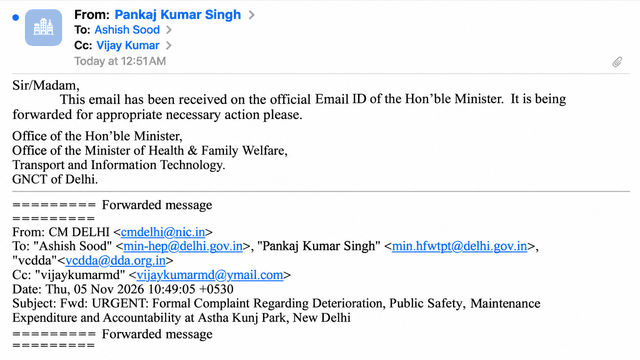
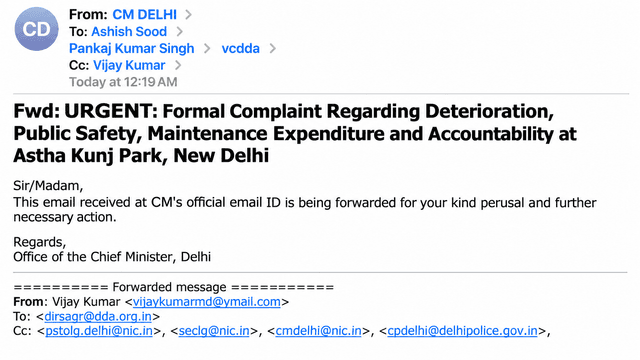
On November 5, 2026, I submitted a formal complaint documenting the conditions I had observed and requesting a site inspection, safety review, expenditure transparency and a time-bound restoration plan.
At 12:19 a.m. India time, the Office of the Chief Minister of Delhi forwarded my complaint to the offices of Ministers Ashish Sood and Pankaj Kumar Singh and the Vice-Chairman of the DDA, with a copy to me.
At 12:51 a.m., Minister Pankaj Kumar Singh's office acknowledged receipt and stated that the email was being forwarded for appropriate action.
I appreciate this prompt forwarding and acknowledgment.
However, it is important to distinguish official receipt from completed action. These emails demonstrate that the complaint was received and circulated. They do not establish that an investigation has been completed or a restoration project approved.
As of the date of this article, I have not received documented confirmation of a completed inspection or an adopted restoration plan.
The next step should be measurable action.
10. Six requests for accountable action
I respectfully request that the concerned authorities:
Provide a complaint reference number and appoint a designated nodal officer.
Arrange a multidisciplinary site inspection involving the relevant departments.
Verify lighting, CCTV coverage, guard deployment and coordination with Delhi Police.
Provide transparency regarding maintenance budgets, contracts and expenditure.
Prepare a realistic, time-bound restoration plan with clear responsibilities.
Publish written progress reports that residents can access.
These are reasonable requests concerning a public asset. They are not political demands.
11. A proposed 100-day restoration framework
To turn these requests into practical steps, I propose a 100-day framework.
Timeline Proposed actionThis is my citizen proposal, not an announced or approved government plan.
Most importantly, a one-time renovation will not be enough. The park needs recurring maintenance, regular inspections and a system that prevents the same problems from returning.
12. Lessons from public service and civic engagement
My experience serving on public regulatory boards and committees in the United States reinforced the importance of documented decisions, open records, clear institutional responsibilities and independent oversight.
American institutions also experience failures. No country has a monopoly on good governance.
India has its own accountability mechanisms, including the Right to Information Act, 2005. Citizens should use these mechanisms constructively to seek information and understand how public resources are managed.
Respecting government institutions does not mean avoiding difficult questions. Asking how public money is spent, whether public spaces are safe and whether promised work has been completed is a legitimate part of civic participation.
13. A direct appeal — and a hopeful conclusion
I appeal to the DDA, the Lieutenant Governor, Delhi Police, the Chief Minister's Office, concerned ministers and local representatives to turn acknowledgment into practical action.
My objective is not to embarrass any institution. It is to help restore a valuable public asset.
Astha Kunj's trees, grounds and cultural surroundings remain a remarkable resource for South Delhi. The questions are straightforward:
Will the walking paths be repaired? Will sanitation improve? Will security arrangements function consistently? Will residents be able to see how maintenance funds are spent? Will families once again feel comfortable using the park?
Astha Kunj does not need another ceremonial promise. It needs sustained maintenance, transparent accountability and a genuine commitment to public safety.
A public park belongs to the people. Its condition reflects how much we value community health, public resources and the dignity of our shared spaces.